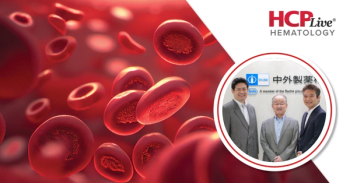
Lasker Award winners Kunihiro Hattori, Takehisa Kitazawa, and Tomoyuki Igawa recount the 2400 variants behind the drug.
Lasker Award winners Takehisa Kitazawa and Tomoyuki Igawa discuss prophylaxis gains, remaining unmet needs, and lessons for drug discovery.
The Albert and Mary Lasker Foundation presents the Lasker Awards to recognize research excellence, with a mission of improving health by accelerating support for medical research.¹ Takehisa Kitazawa, DVM, PhD, and Tomoyuki Igawa, PhD, shared the 2026 Lasker-DeBakey Clinical Medical Research Award with Kunihiro Hattori, PhD, for the discovery of emicizumab, which the 3 scientists developed at Chugai Pharmaceutical.²
Since its
In the phase 3 HAVEN 1 trial, among patients aged 12 years or older with FVIII inhibitors previously receiving episodic bypassing agents, emicizumab prophylaxis reduced the rate of treated bleeds by 87% compared with no prophylaxis (95% CI, 72.3-94.3; P < .0001).² In
Emicizumab carries a boxed warning for
In the following written interview, Kitazawa discusses how emicizumab changed care for patients with and without inhibitors and the unmet needs still facing the field, and Kitazawa and Igawa reflect on what its development offers researchers pursuing new therapeutic classes.
Takehisa Kitazawa, DVM, PhD: At the time emicizumab drug discovery was initiated, factor VIII (FVIII) agents were the most effective treatment option for hemophilia A. However, because FVIII is recognized as non-self in people with hemophilia A, approximately one-third of patients develop an immune response to infused FVIII products, resulting in the development of FVIII-inhibitory alloantibodies, known as FVIII inhibitors. This represented one of the most critical issues in the treatment of hemophilia A.
FVIII inhibitors preclude the use of FVIII products and make bleeding difficult to control, because alternative treatments, known as bypassing agents, have shorter half-lives, are more costly than FVIII products, and are not always effective. Consequently, the development of FVIII inhibitors deprived people with hemophilia A and their families of a reliable therapeutic option and significantly impaired their QOL.
Emicizumab exerts its pharmacological activity regardless of FVIII inhibitors and does not induce FVIII inhibitors, because its amino acid sequence and molecular structure are totally different from those of the FVIII molecule. Consequently, emicizumab can not only substantially improve the QOL of people with FVIII inhibitors and their families, but also greatly reduce the fear of developing FVIII inhibitors among those without them.
For people without FVIII inhibitors, around the time emicizumab drug discovery was initiated, prophylactic treatment with regular administration of an FVIII product was beginning to be widely adopted in developed countries. Before then, treatment had consisted solely of on-demand therapy, in which an FVIII product was administered to achieve hemostasis after a bleed had occurred. Prophylactic treatment aimed to convert “severe disease” (defined as <1% FVIII activity relative to the normal standard) into “moderate disease” (defined as 1%–5% FVIII activity), and it typically reduced bleeding episodes from dozens per year in people with severe hemophilia A to only a few per year. However, this treatment required intravenous administration of an FVIII product 3 times per week. Although home treatment was available, intravenous injection was technically challenging. This was particularly burdensome not only for young boys with hemophilia A, who often feared needles, but also for their parents, who frequently had to administer injections despite the difficulty of accessing their children’s tiny veins.
Emicizumab is a subcutaneous formulation that does not require venous access. It therefore substantially reduces the technical burden of administration while also markedly reducing dosing frequency compared with FVIII products. Dosing can be selected from once weekly, once every 2 weeks, or once every 4 weeks instead of 3 times a week. As a result, the burden of home treatment has been greatly reduced. Extended half-life FVIII products are now available, and 1 of these can be administered as infrequently as once weekly; however, intravenous administration and venous access are still required.
Furthermore, a phase 3 clinical study demonstrated that emicizumab prophylaxis provides greater bleeding-prevention efficacy than prophylactic treatment with FVIII products. Importantly, as noted above, emicizumab can be effective not only in people without FVIII inhibitors but also in those with FVIII inhibitors.
Nevertheless, we recognize several remaining unmet medical needs:
We remain committed to the research and development of new therapies to further improve the lives of people with hemophilia and their families.
Takehisa Kitazawa, DVM, PhD, and Tomoyuki Igawa, PhD: First, emicizumab was the first full-length recombinant therapeutic bispecific antibody, and it paved the way for the practical therapeutic application of bispecific antibodies. Although the concept of bispecific antibodies had long existed, their complex structures made recombinant commercial production extremely difficult. The first recombinant bispecific antibody therapeutic to reach the market was blinatumomab (Micromet and Amgen) in 2014, just 12 years ago. Blinatumomab consists of linked antibody fragments, whereas emicizumab, launched in 2017, was the first full-length therapeutic bispecific antibody to be marketed. Since 2020, full-length therapeutic bispecific antibodies have been introduced to the market one after another, meaning emicizumab led the way.
Second, emicizumab broke with the conventional paradigm regarding the mechanisms of action of therapeutic antibodies, thereby expanding their therapeutic potential and effectiveness. More than 100 therapeutic antibodies have been marketed to date and have contributed to the treatment of many diseases. With the exception of emicizumab, these therapeutic antibodies act either by neutralizing their target antigens or by depleting cells expressing those antigens. In other words, like the natural function of antibodies as part of the immune system, they act through “subtraction.”
Emicizumab is the first therapeutic antibody to act through “addition.” Rather than inhibiting or eliminating something, it adds a specific physiological function to the human body. Moreover, it has opened an unexplored path in the field of therapeutic antibodies by using an antibody molecule as an artificial substitute for a functional protein with a complex function.
Third, and above all, it is highly significant that an original idea, one many people might have considered far-fetched, was developed into an outstanding medicine that has transformed the lives of people with hemophilia A. Emicizumab will serve as a valuable precedent and encourage further efforts to create biologics that go beyond conventional boundaries in drug discovery.
Editor’s Note: This transcript has been edited for grammar and clarity using artificial intelligence tools. Disclosures for Takehisa Kitazawa, DVM, PhD, and Tomoyuki Igawa, PhD, include Chugai Pharmaceutical.