
Opinion|Videos|June 19, 2026
Managing FCS: LPL-Targeted Therapy, Drug Rationalization, and Atherosclerosis Risk
Understand the evidence base for LPL-targeted treatment strategies in FCS, when to discontinue ineffective agents, and how to assess atherosclerosis risk in this population.
Advertisement
Episodes in this series
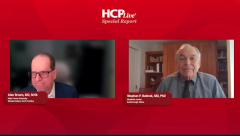
Patients with FCS frequently arrive at a lipid specialist's office already on phenofibrate, omega-3 fatty acids, a statin, and sometimes a PCSK9 inhibitor, a regimen assembled over years of unsuccessful management. Deciding which agents to continue requires a precise understanding of how each drug acts in the context of LPL deficiency.
Stephan P. Babirak, MD, PhD, approaches the question through a framework built over decades of work focused on lipoprotein lipase as the central therapeutic target. LPL is modifiable in patients with partial deficiency, an insight he demonstrated in 1974 showing that 45 to 60 minutes of exercise every other day measurably increases skeletal muscle LPL activity. Phenofibrate, from his own 1989 research, increases LPL expression by roughly 20 to 30%, making it worth maintaining for patients with residual enzyme activity. In patients with complete LPL knockout mutations, fibrates have no meaningful effect. Omega-3 fatty acids are largely unhelpful in this population: their primary mechanism, reducing hepatic VLDL synthesis, is largely irrelevant in patients who already have markedly suppressed VLDL production because they cannot absorb chylomicron remnants, the substrate for VLDL assembly. When he does prescribe omega-3 therapy, he specifies icosapentaenoic acid rather than over-the-counter formulations.
Alan Brown, MD, MHA, reinforces the pharmacologic logic: roughly 75% of VLDL building blocks derive from dietary chylomicron remnants, and without LPL to clear those remnants, VLDL and LDL production are inherently suppressed in true FCS. He is comfortable stopping omega-3 fatty acids in these patients, and tends to leave phenofibrate in place given the possibility of some residual lipase activity.
The segment closes on the question of cardiovascular risk. Babirak references FATS trial findings showing that LPL-deficient heterozygotes can develop atherosclerosis. Brown adds that data from centers with large clinical FCS registries suggest approximately 15% of patients with chylomicronemia phenotypes have detectable subclinical disease, and that secondary diabetes arising from recurrent pancreatitis adds further risk. He describes coronary calcium scoring as his tool of choice for assessing cardiovascular risk before deciding whether to initiate or continue LDL-lowering therapy.
────────────────────────────────────────
Our Panelists:
Alan Brown, MD, MHA, is a professor of cardiovascular medicine at Wake Forest University and a past president of the National Lipid Association.
Stephan P. Babirak, MD, PhD, is the founder and medical director of Metabolic Leader, a metabolic and endocrine care center in Scarborough, Maine, where he specializes in lipoprotein disorders.
────────────────────────────────────────
Disclosures for Brown include New Amsterdam, Merck, Novartis, Arrowhead, Amgen, Regeneron, and Ionis. Babirak has no relevant disclosures to report.
────────────────────────────────────────
References
1. Javed F, et al. Familial chylomicronemia syndrome: an expert clinical review from the National Lipid Association. J Clin Lipidol. 2025;19(3):382-403. doi:10.1016/j.jacl.2025.03.013
2. US Food and Drug Administration. FDA approves drug to reduce triglycerides in adults with familial chylomicronemia syndrome. FDA. November 18, 2025. Accessed June 12, 2026. https://www.fda.gov/drugs/news-events-human-drugs/fda-approves-drug-reduce-triglycerides-adults-familial-chylomicronemia-syndrome
3. US Food and Drug Administration. FDA approves drug to reduce triglycerides in adult patients with familial chylomicronemia syndrome. FDA. December 19, 2024. Accessed June 12, 2026. https://www.fda.gov/drugs/news-events-human-drugs/fda-approves-drug-reduce-triglycerides-adult-patients-familial-chylomicronemia-syndrome
Advertisement
Related to this article

Neal Bhatia, MD, weighs the newly approved Ameluz PDT regimen for sBCC against Mohs surgery, citing its 66% composite response rate.

The resubmission follows an FDA Complete Response Letter and cites human factors data showing pouch-opening time fell from 17 to 3 seconds.
The approval, backed by FINE-ONE data showing a 28% UACR reduction at 6 months, is the first new CKD treatment for this group in 3 decades.

In this Q&A, Armand explains why eczema visits spike during wildfire smoke events and how allergic patients can protect themselves.
In this Q&A, Leon Kircik, MD, discusses challenging watch-and-wait for molluscum contagiosum with berdazimer gel, 10.3%, at LEADderm 2026.

New ASH guidelines recommend higher ferritin thresholds to improve the diagnosis of iron deficiency across key populations.

In this Q&A, Alysse Wurcel, MD, translates qualitative barriers into 8 concrete tactics healthcare practices can use to expand penicillin allergy delabeling.

In this feature, several leaders in the dermatology space were asked how far we have come and where the field is headed in precision medicine.
Advertisement
Advertisement
Trending on HCPLive
1
FDA Approves Finerenone (Kerendia) for CKD and Type 1 Diabetes
2
Vicadrostat EASi-KIDNEY Trial Discontinued for Lack of Benefit in CKD
3
ASH Issues New Ferritin Thresholds for Iron Deficiency Diagnosis
4
Understanding the Pathophysiology of Achondroplasia
5