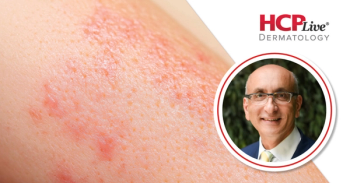
This year's wildfire season pushed air quality to hazardous extremes across large parts of the US, with several Midwest and East Coast metro areas registering among the worst readings on record.¹ Clinicians have largely focused on the resulting respiratory and cardiovascular fallout, but a parallel trend has drawn less attention: rising rates of allergic skin flares linked to the smoke itself.
One hospital dermatology practice documented a rise in eczema-related visits during a single wildfire month, consistent with several years of comparison data showing visit volume rising and falling alongside pollution levels.2 In an interview with HCPLive, Wynne Armand, MD, primary care physician at Massachusetts General Hospital, said that atopic dermatitis flares tend to appear within the same week of smoke exposure, while psoriasis flares can take several weeks to surface.
Whether wildfire pollutants simply reactivate existing allergic disease or help create it in the first place remains an open question, and Armand says clinicians are still leaning on judgment rather than a validated test to tell the difference. In the following Q&A, she walks through how she separates smoke-related irritation from a true allergic reaction and what she advises patients to do before, during, and after exposure.
RELATED CONTENT
For more on wildfire smoke's effects on skin and allergic disease, see the accompanying feature and video:
Q&A: What Wildfire Smoke Does to Allergic Skin Disease, With Wynne Armand, MD
HCPLive: Your article noted a sharp spike in eczema visits at Massachusetts General Hospital during wildfire season. What did that look like, and what pointed to wildfire smoke as the cause?
Armand: Dr. Koosh, my colleague…was noticing that there was a dramatic spike in the number of patients presenting with flares of their atopic dermatitis or a form of their eczema, and it was really striking.
This led her to look at the records for her patients, comparing prior years, and really seeing a strong association with times when there were increased wildfires and air pollutants that seem to trigger or be associated with an uptick in the acute visits for these patients. This has been seen in many other studies and documented; it's not a unique finding.
HCPLive: You describe an oxidative stress pathway damaging the skin barrier. Does the same mechanism drive nasal, eye, and respiratory allergy symptoms during smoke events, or is it separate?
Armand: What you described there is the initial irritant of just getting these particulate matter inside the airway and the eyes, and that causes an irritation. Anybody can experience that, not just people with atopic dermatitis. When we are referring to atopic dermatitis, [patients’] skin barrier is a little weakened, so it's easier for things to get through, and it triggers a stronger immune response.
Inflammation is a very broad, [a] general term that we see in a lot of diseases, and it can be triggered by different things. We see inflammation in both instances, but when you look a little bit closer, they differ in some of how that is happening and why.
HCPLive: Are patients with skin reactions also reporting worsening seasonal allergies, sinus symptoms, or watery eyes during smoke events?
Armand: With wildfire smoke, there's a lot of direct irritation to the eyes, the nose, the airway, and if somebody already has underlying conditions—and that includes allergic type of conditions like allergic rhinitis or asthma that is often triggered by allergens—they can then also see worsening of their disease.
Armand: In the literature, much of the atopic dermatitis that we're talking about tends to be fairly immediate in terms of the exacerbations…generally the same week. [With psoriasis], [the] flare seems to be documented more several weeks later, and that may be because that is more of a systemic inflammatory response as to more of a quick skin inflammatory response.
HCPLive: How do you distinguish a patient's smoke-related irritation from a true allergic reaction?
Armand: Sometimes it's hard to understand if that's inflammation just from the acute exposure to a toxin versus an underlying condition that has an inflammatory, immune-related pathophysiology of why it's happening. A lot of it is the timing, a lot of it is the severity, a lot of it is the history. What we know about a patient-specific background [and] how they respond to different types of treatments will be all clues.
Ultimately, sometimes, though we don't often end up needing to. There are times when you actually need to look under a microscope to try to figure some of these answers out.
HCPLive: How confident are you in the current research connecting wildfire smoke to allergic disease?
Armand: There is an enormous amount of literature to know that pollution triggers allergy symptoms. Wildfire pollution is a little bit newer in terms of the data and the science of how long we've been studying it, but there's a lot of overlap in terms of the toxins and pollutants that we see in normal urban pollution and wildfire pollution.
HCPLive: What's the one thing you wish more clinicians understood about treating patients with allergies during wildfire season?
Armand: Talking more to patients about how to prevent them from getting sick is really important. We spend a lot of time after the fact, when people are acutely ill, and while that is of course without question extremely important, there's so much disease that we can prevent if we educate patients ahead of time [about] what types of things they can do to keep themselves healthy and prevent them from getting sick.
HCPLive: What advice would you give patients with existing allergies on protecting themselves during or after a wildfire smoke event?
Armand: One is really trying to minimize exposure. Depending on what condition, what the person's background is in terms of their health, how vulnerable they are, [and] what they're able to tolerate, the level of rigidity in how you want to minimize that exposure is going to be different.
But in general, being aware of your surroundings. That means following the air quality. It means following the local public health officials on what they're advising in terms of the risk of being outdoors during these events.
[It] may mean not going outside, [or] when you're going outside, minimizing what you do. It may mean when you go outside…avoiding things like exercise if you have asthma, for example, or wearing barriers… [such as an] N95 respirator.
Also, wearing clothing to protect the skin if you have some of these skin conditions… [or] using a mineral sunscreen. A zinc or titanium-containing sunscreen barrier can maybe make a little bit more of a difference. Rinsing off the skin when you can from these irritants and pollutants and allergens when you're indoors.
That means closing the windows, making sure you're circulating the air from inside and not from outside. That you have good filters and you're changing the filters. Not creating more indoor air pollution; [avoiding] burning a fire [or] cooking with a gas stove. All these things [can] make sure that you're in an environment with healthy, clean air.
HCPLive: What specifically do you want to see researched regarding allergies and wildfires?
Armand: Understanding exactly the contribution of wildfire to the development of the diseases will be a very critical piece of it.
References
Miller B. Wildfire smoke is driving terrible air quality in major cities, but relief is coming. CNN. Published July 17, 2026. Accessed September 14, 2026. https://www.cnn.com/2026/07/17/weather/smoke-forecast-northeast-midwest