

Lower CD4+ cell counts, HCV genotype 4, and recent injection drug use were linked to unsuccessful DAA treatment in people with HCV and HIV.

Abigail Brooks is a strategic content lead overseeing HCPLive, RheumatologyLive, and Patient Care Online. She joined MJH Life Sciences in August 2023 shortly after graduating from Monmouth University where she earned her BA in Communication with a concentration in Public Relations/Journalism and later an MA in Interactive Digital Media. She enjoys traveling, running, and reading books. She can be reached at [email protected].
Lower CD4+ cell counts, HCV genotype 4, and recent injection drug use were linked to unsuccessful DAA treatment in people with HCV and HIV.

Despite having a lower risk of hospitalization, cardiovascular events, and mortality, patients with IgAN and FSGS had a higher risk of CKD progression.

The FDA awarded Breakthrough Therapy Designation to Vir Biotechnology’s tobevibart and elebsiran for the treatment of chronic hepatitis delta.
An FDA review of postmarket clinical trial data revealed an increased risk of liver injury with obeticholic acid in patients with PBC without cirrhosis.

Patients with IBS had different dietary patterns than matched general population controls, with poor diet diversity and quality linked to symptom severity.

Patients taking immunosuppressive and hepatitis B antiviral drugs after living donor liver transplant had lower antibody response to COVID-19 vaccination.
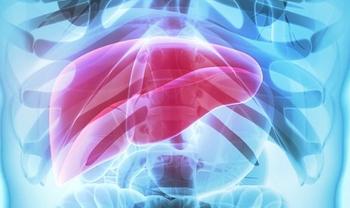
The inflammation-based scoring system provides the first tool for predicting long-term mortality in hepatitis B-related acute on chronic liver failure.

Hypovolaemic phlebotomy reduced perioperative blood transfusion and improved operative conditions versus usual care in patients undergoing liver resection.

Mayo explains current shortcomings of pruritus care in PBC and what the additions of elafibranor, seladelpar, and other agents in development may offer.

HepB-CpG achieved superior seroprotection response versus conventional HepB-alum in patients with HIV and nonresponse to prior hepatitis B vaccination.

Study findings highlight systemic and local autonomic imbalance in patients with IBS-C, pointing to the value of autonomic modulation in this population.

Schattenberg reviews results from a posthoc analysis of the ENLIVEN study suggesting pegozafermin’s impact on preventing progression to cirrhosis.
Schattenberg explains pegozafermin’s mechanism of action and describes the importance of preventing progression to cirrhotic MASH.
This month in review spotlights GI pipeline updates and news from the 2024 NASPGHAN and ACG annual meetings.

The phase 2 study of a bemnifosbuvir and ruzasvir regimen for the treatment of HCV met both primary endpoints for safety and SVR 12 weeks post-treatment.
This month in review spotlights FDA news, new clinical trial data, and HCPLive’s coverage of the NASPGHAN 2024 annual meeting and AASLD The Liver Meeting.
Previous ASA guidance recommended holding GLP-1 RAs in the perioperative period, but new 2024 multisociety guidance suggests a risk-based approach.

Fromme describes the importance of risk stratification in AATD and explains the potential utility of noninvasive fibrosis measures for predicting outcomes.

Strnad reviews findings from a proteomic analysis about AATD-associated liver disease and how they may aid future disease monitoring and drug development.

Hirschfield describes the need for therapies that address itch in PBC and explains what linerixibat, an IBAT inhibitor, may offer for pruritus.

Kavish Patidar, DO, explains how socioeconomic status and healthcare delivery impact outcomes in patients with acute kidney injury and cirrhosis.

Kugelmas reviews findings from a secondary analysis of the phase 3 ELATIVE trial suggesting elafibranor is associated with stable kidney function.

The supplemental Biologics License Application is supported by the phase 3 ASTRO study of guselkumab SC induction therapy in ulcerative colitis.
Lawitz explains issues with traditional FXR agonists for MASH treatment and how FXR314 differs, potentially offering a more safe and efficacious option.

Loomba reviews safety and efficacy data for the thyroid hormone receptor beta agonist from a phase 2a trial presented at AASLD The Liver Meeting 2024.

Barritt reviews real-world data about the use and benefits of GLP-1 RAs in patients with MASLD.

Kowdley reviews open-label extension data for biochemical response, ALP normalization, and pruritus improvement from the phase 3 ELATIVE study.
Findings from the open-label extension of the ELATIVE study suggest sustained safety and efficacy for up to 3 years, with improvements in itch and sleep.
Diabetes was associated with an increased risk of liver transplant or death and with liver-specific events in patients with PBC.

Zhang explains the safety of different FDA-approved alcohol use disorder drugs in patients with alcohol-associated liver disease.