Andrew S. Bomback, MD, MPH
Articles by Andrew S. Bomback, MD, MPH
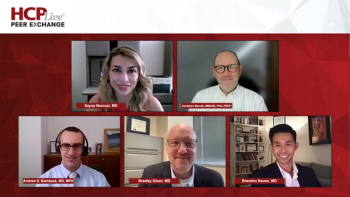
Treating the Whole Patient: Addressing the Broader Unmet Needs in C3G Management
BySayna Norouzi, MD,Jonathan Barratt, MBChB, PhD, FRCP,Andrew S. Bomback, MD, MPH,Bradley Dixon, MD,Brendon Neuen, MD Panelists discuss how the complexity of diagnosing C3 glomerulopathy (C3G), the need for long-term treatment options, and the importance of addressing unmet needs, including the psychological impact on patients and families, highlights the challenges and future directions in improving care for these individuals.
Balancing Complement Inhibition and Infection Risk in C3G Treatment
BySayna Norouzi, MD,Jonathan Barratt, MBChB, PhD, FRCP,Andrew S. Bomback, MD, MPH,Bradley Dixon, MD,Brendon Neuen, MD Panelists discuss how patient history, vaccination status, and risk of infection influence the decision to administer complement inhibitors, with some expressing caution in high-risk cases, particularly in pediatric populations with prior infections or low immunoglobulin levels.
The Future of Clinical Trials on C3G: Lessons From the VALIANT and APPEAR Trials
BySayna Norouzi, MD,Jonathan Barratt, MBChB, PhD, FRCP,Andrew S. Bomback, MD, MPH,Bradley Dixon, MD,Brendon Neuen, MD Panelists discuss how future clinical trials for C3 glomerulopathy (C3G) and other rare kidney diseases must evolve to accommodate emerging therapies targeting the complement system, improve inclusivity across patient populations, utilize molecular and genetic data, and reassess end point criteria to overcome challenges in patient recruitment and demonstrate treatment efficacy.
Managing Recurrent C3G for Patients Post Kidney Transplant
BySayna Norouzi, MD,Jonathan Barratt, MBChB, PhD, FRCP,Andrew S. Bomback, MD, MPH,Bradley Dixon, MD,Brendon Neuen, MD Panelists discuss how early protocol biopsies and proactive monitoring post-transplant can reveal subclinical recurrence of C3 glomerulopathy (C3G), prompting consideration of timely initiation of complement-targeting therapies to preserve graft function.
The Current Uncertainty in C3G Medication Treatment Discontinuation
BySayna Norouzi, MD,Jonathan Barratt, MBChB, PhD, FRCP,Andrew S. Bomback, MD, MPH,Bradley Dixon, MD,Brendon Neuen, MD Panelists discuss how the long-term use and potential discontinuation of new complement inhibitors in C3 glomerulopathy (C3G), remain uncertain, emphasizing the need for individualized approaches, careful monitoring, and future data to guide decisions.
Topline Results for the APPEAR C3G Trial: Repeat Biopsy Results
BySayna Norouzi, MD,Jonathan Barratt, MBChB, PhD, FRCP,Andrew S. Bomback, MD, MPH,Bradley Dixon, MD,Brendon Neuen, MD Panelists discuss how the APPEAR-C3G trial demonstrated that iptacopan significantly reduced proteinuria by 35% at 6 months, was well tolerated with no new safety signals over 12 months, slowed glomerular filtration rate (GFR) decline, and showed a statistically significant reduction in glomerular C3 deposit scores, though detailed biopsy clearance rates were not reported.
APPEAR C3G Trial: Trial Design, Results, and the Importance of Patient-Led Treatment Progress
BySayna Norouzi, MD,Jonathan Barratt, MBChB, PhD, FRCP,Andrew S. Bomback, MD, MPH,Bradley Dixon, MD,Brendon Neuen, MD Panelists discuss how Jonathan Barratt, MBChB, PhD, FRCP, outlined the APPEAR-C3G study design, which featured a 6-month randomized period followed by an open-label extension, with primary end points including changes in proteinuria, glomerular filtration rate (GFR), and kidney biopsy features, emphasizing the study’s alignment with FDA guidance for ultrarare diseases.
Expert Perspectives on VALIANT: Trial Design and Key Results
BySayna Norouzi, MD,Jonathan Barratt, MBChB, PhD, FRCP,Andrew S. Bomback, MD, MPH,Bradley Dixon, MD,Brendon Neuen, MD Panelists discuss how Andrew S. Bomback, MD, MPH, having been closely involved in the VALIANT trial, outlines the study’s design—a 6-month placebo-controlled period followed by open-label treatment—and highlights its significant outcomes, including over 65% proteinuria reduction, statistically significant glomerular filtration rate (GFR) improvements, and remarkable C3 clearance on kidney biopsies.
Complement Pathway Targeting Therapies in C3G: An Overview of Clinical Trials
BySayna Norouzi, MD,Jonathan Barratt, MBChB, PhD, FRCP,Andrew S. Bomback, MD, MPH,Bradley Dixon, MD,Brendon Neuen, MD Panelists discuss how the recent FDA approval of iptacopan marks a turning point in C3 glomerulopathy (C3G) treatment, with experts anticipating pegcetacoplan as the next likely candidate for approval due to promising phase 3 trial results and its transformative potential in patient outcomes.
The Importance of Patient Participation in C3G Clinical Trials
BySayna Norouzi, MD,Jonathan Barratt, MBChB, PhD, FRCP,Andrew S. Bomback, MD, MPH,Bradley Dixon, MD,Brendon Neuen, MD Panelists discuss how the evolving availability of FDA-approved medications for C3 glomerulopathy (C3G) is reshaping clinical trial design, patient enrollment, and global access, highlighting both ethical challenges and opportunities for continued research.
When Is It Time to Escalate? Navigating C3G Treatment Decisions
BySayna Norouzi, MD,Jonathan Barratt, MBChB, PhD, FRCP,Andrew S. Bomback, MD, MPH,Bradley Dixon, MD,Brendon Neuen, MD Panelists discuss how physicians determine when to escalate from conservative management to complement inhibitor therapy in patients with C3 glomerulopathy (C3G), considering factors like proteinuria levels, hematuria persistence, biopsy activity scores, and the critical need for improved diagnostic capabilities to guide targeted treatment selection.
Ongoing Clinical Trials in C3G: Safety, Efficacy, and Future Directions
BySayna Norouzi, MD,Jonathan Barratt, MBChB, PhD, FRCP,Andrew S. Bomback, MD, MPH,Bradley Dixon, MD,Brendon Neuen, MD Panelists discuss how improved understanding of C3 glomerulopathy (C3G) pathobiology has led to multiple clinical trials targeting complement pathways, with considerations for efficacy measurement through proteinuria reduction and kidney biopsies, while emphasizing the importance of vaccination and patient education to manage safety concerns associated with complement inhibitors.
Strength in Numbers: Raising Awareness of C3G and Other Rare Diseases
BySayna Norouzi, MD,Jonathan Barratt, MBChB, PhD, FRCP,Andrew S. Bomback, MD, MPH,Bradley Dixon, MD,Brendon Neuen, MD Panelists discuss how educating physicians and patients about C3 glomerulopathy (C3G) presents unique challenges due to its rarity, complexity, and the critical role of renal pathologists in diagnosis while emphasizing the growing importance of understanding the complement system as new targeted therapies emerge.
Managing C3G: Comparing Conservative and Emerging Targeted Treatment Strategies
BySayna Norouzi, MD,Jonathan Barratt, MBChB, PhD, FRCP,Andrew S. Bomback, MD, MPH,Bradley Dixon, MD,Brendon Neuen, MD Panelists discuss how eculizumab initially provides short-term benefits for patients with C3 glomerulopathy (C3G) through C5a inhibition and anti-inflammatory effects but often loses efficacy over time as the disease progresses due to inadequate control at the C3 convertase level, suggesting newer complement-targeting therapies may offer better long-term management than C5 blockade.
Personalizing C3G Treatment: Insights From Experienced Clinicians
BySayna Norouzi, MD,Jonathan Barratt, MBChB, PhD, FRCP,Andrew S. Bomback, MD, MPH,Bradley Dixon, MD,Brendon Neuen, MD Panelists discuss how treatment approaches for C3 glomerulopathy (C3G) have evolved from nonspecific immunosuppression to targeted complement inhibition, with the recent FDA approval of iptacopan marking a significant advancement in disease management.
The Cost of Diagnostic Delay of C3G Across Age Groups
BySayna Norouzi, MD,Jonathan Barratt, MBChB, PhD, FRCP,Andrew S. Bomback, MD, MPH,Bradley Dixon, MD,Brendon Neuen, MD Panelists discuss how C3 glomerulopathy (C3G) is triggered by factors like infections or pregnancy that activate the alternative pathway in genetically predisposed individuals, presenting with diverse clinical manifestations that often overlap with other glomerular diseases, making diagnosis challenging without kidney biopsy.
C3G Diagnosis: Overlapping Symptoms, Triggers, and Evolving Challenges
BySayna Norouzi, MD,Jonathan Barratt, MBChB, PhD, FRCP,Andrew S. Bomback, MD, MPH,Bradley Dixon, MD,Brendon Neuen, MD Panelists discuss how C3 glomerulopathy (C3G) is triggered by factors like infections or pregnancy that activate the alternative pathway in genetically predisposed individuals, presenting with diverse clinical manifestations that often overlap with other glomerular diseases, making diagnosis challenging without kidney biopsy.
Understanding C3G: Pathophysiology and Genetic Factors
BySayna Norouzi, MD,Jonathan Barratt, MBChB, PhD, FRCP,Andrew S. Bomback, MD, MPH,Bradley Dixon, MD,Brendon Neuen, MD Panelists discuss how C3 glomerulopathy is an ultrarare glomerular disease characterized by alternative pathway complement dysregulation, which can be caused by either genetic defects or acquired abnormalities like antibodies against regulatory proteins.
