

Opinion|Videos|April 22, 2025
Personalizing C3G Treatment: Insights From Experienced Clinicians
Panelists discuss how treatment approaches for C3 glomerulopathy (C3G) have evolved from nonspecific immunosuppression to targeted complement inhibition, with the recent FDA approval of iptacopan marking a significant advancement in disease management.
Advertisement
Video content above is prompted by the following:
C3G Management Discussion
Background Therapy
- All C3G patients require nonimmunosuppressive background therapy:
- Renin-angiotensin-aldosterone system blockers (essential)
- SGLT2 inhibitors (recommended)
- Potential additions: glucagon-like peptide-1 agonists and mineralocorticoid receptor antagonists
Disease Progression
- Most C3G patients will progress despite conservative background therapy
- Management approaches have evolved significantly over the past 15 years
Traditional Immunosuppressive Approaches
- Various nonspecific immunosuppressive regimens have been tried
- Mycophenolate-based regimens with steroids (similar to lupus nephritis treatment) showed the most consistent benefit
- Most effective in patients with nephritic factors (60%-70% chance of significant proteinuria reduction)
- Limitation: Re-biopsies show continued accumulation of chronicity despite treatment
Limitations of B-Cell–Directed Therapies
- Despite C3G having autoimmune characteristics, B-cell–targeting agents have proven ineffective
- Possible explanations:
- Nephritic factors may not always be pathogenic
- Nephritic factors might only initiate the disease process, with complement dysregulation continuing independently afterward
New Era of Complement-Targeting Therapies
- First complement-targeting drug (Iptacopan) received FDA approval for C3G
- At least 1 other similar agent is expected to receive approval soon
- These targeted therapies address the underlying disease mechanism rather than just symptoms
- Even in patients with nephritic factors, complement-targeting therapy is now preferred over antibody-depleting approaches
Clinical Implications
- Treatment paradigm has shifted from nonspecific immunosuppression to targeted complement inhibition
Physicians should consider these newer options as they become available for C3G management
Advertisement
Related to this article
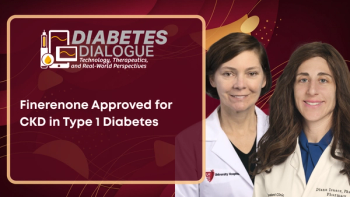
Diana Isaacs, PharmD, and Natalie Bellini, DNP, discuss the FDA's recent approval of Bayer's finerenone in concomitant CKD and T1D.

The FDA has granted Priority Review to dersimelagon for EPP and XLP, setting a PDUFA date for late February 2027 as LEO Pharma completes its acquisition from Tanabe Pharma.

What lonvo-z is, how it works, and what a Priority Review designation means for the HAE gene-editing therapy.

Neal Bhatia, MD, weighs the newly approved Ameluz PDT regimen for sBCC against Mohs surgery, citing its 66% composite response rate.

The resubmission follows an FDA Complete Response Letter and cites human factors data showing pouch-opening time fell from 17 to 3 seconds.

The approval, backed by FINE-ONE data showing a 28% UACR reduction at 6 months, is the first new CKD treatment for this group in 3 decades.

In this Q&A, Armand explains why eczema visits spike during wildfire smoke events and how allergic patients can protect themselves.

In this Q&A, Leon Kircik, MD, discusses challenging watch-and-wait for molluscum contagiosum with berdazimer gel, 10.3%, at LEADderm 2026.
Advertisement
Advertisement
Trending on HCPLive
1
ASH Issues New Ferritin Thresholds for Iron Deficiency Diagnosis
2
Mavacamten’s Improvements in oHCM Symptoms Sustained in Long-Term Extension
3
Diabetes Dialogue: Finerenone Approved for CKD in Type 1 Diabetes
4
Dersimelagon Gains FDA Priority Review for EPP, XLP
5