
Opinion|Videos|June 4, 2025
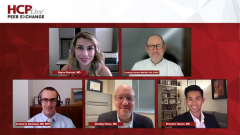
Managing Recurrent C3G for Patients Post Kidney Transplant
Panelists discuss how early protocol biopsies and proactive monitoring post-transplant can reveal subclinical recurrence of C3 glomerulopathy (C3G), prompting consideration of timely initiation of complement-targeting therapies to preserve graft function.
Advertisement
Video content above is prompted by the following:
Posttransplant Management of C3G
Key Discussion Points:
- High Risk of Recurrence:
C3G is associated with a high rate of recurrence post-transplant, even in patients who exhibit stable clinical parameters (normal glomerular filtration rate, no proteinuria or hematuria). Histologic recurrence may be detectable early via immunofluorescence and EM, often preceding changes on light microscopy. - Importance of Protocol Biopsies:
Data from Andrew S. Bomback, MD, MPH, and group suggest that performing protocol biopsies at 6-, 1-, and 24-months post-transplant reveals subclinical recurrence in most patients. These findings emphasize the progressive nature of C3G despite a lack of overt clinical signs. - Early Therapeutic Intervention:
The panel agrees that early treatment with complement inhibitors, such as iptacopan, may be beneficial—even in the absence of proteinuria or hematuria. The FDA label for iptacopan allows treatment initiation based solely on histologic diagnosis of C3G, independent of proteinuria thresholds. - Guidance on Treatment Timing:
In the absence of data from randomized controlled trials, clinicians are encouraged to consider:- Initiating complement inhibitors preemptively at or before transplant (analogous to atypical = hemolytic uremic syndrome management), or
- Using the first protocol biopsy (typically at 6 months) to guide the start of therapy if histologic recurrence is present
- Collaboration Between General Neurology and Transplant Teams:
As C3G and other glomerular diseases present complex post-transplant challenges, there is a growing need for closer collaboration between glomerular disease specialists and transplant nephrologists. This includes:- Shared decision-making for high-risk patients
- Joint planning for surveillance and treatment strategies
- Raising awareness about the significance of subtle clinical signs and the utility of early biopsy
Looking Ahead:
The field is evolving, and more studies comparing early vs delayed initiation of complement inhibitors are needed. Until then, clinicians are urged to adopt a proactive, not reactive, approach to surveillance and management of recurrent C3G in transplant recipients.
Advertisement
Related to this article
Nephrology in September 2026: FDA approves finerenone for CKD in T1D and obinutuzumab for nephrotic syndrome, plus ORIGIN 3 IgAN data.
Nephrology in Q3 2026: FDA approvals for atacicept, iptacopan, finerenone, and obinutuzumab, plus 2-year IgAN data and CKD screening.
Q3 2026 dermatology recap: FDA approvals in dermatomyositis, adolescent alopecia areata, and sBCC, plus new psoriasis and vitiligo findings.
Approved US PFIC drugs treat pruritus. The researcher behind a therapy targeting BSEP on diagnosis, data, and what comes next.

Florence Schleich, MD, PhD, explains how exacerbation phenotypes and useful biomarkers shift across anti-IL-5, anti-IL-5R, and anti-TSLP therapies.
Hematology in September 2026: ASH raises ferritin thresholds for iron deficiency, plus marstacimab in hemophilia and curative SCD care.
Strong recommendations cover carvedilol or banding for varices, semiannual HCC surveillance, vaccines, and smoking cessation.

April Armstrong, MD, MPH, discusses 1-year RELIEVE-AD-PEDs data on rapid, sustained dupilumab disease control in adolescents with atopic dermatitis.
Advertisement
Advertisement
Trending on HCPLive
1
RELIEVE-AD-PEDs: Dupilumab Sustains Adolescent Atopic Dermatitis Control at 1 Year
2
Conservative Therapy in Fibrillary GN: A Four-Drug Kidney-Protective Approach
3
The Benefits and Limits of Enlicitide, With Ninel Hovnanians, MD
4
Top Reason for Leaving HAE Attacks Untreated, Survey Finds
5