
David T. Rubin, MD, on the screening tools, direct questions, and therapy choices behind IBD's three tiers of remission.

David T. Rubin, MD is a professor of medicine at the University of Chicago, director of the Inflammatory Bowel Disease Center, and chair of the International Organization for the Study of IBD (IOIBD).
David T. Rubin, MD, on the screening tools, direct questions, and therapy choices behind IBD's three tiers of remission.
David T. Rubin, MD, on the questions, screening tools, and system barriers standing between IBD care and the whole patient.
A gastroenterologist explains why treating bowel inflammation alone isn't enough to call inflammatory bowel disease "controlled."
Despite a growing armamentarium of approved IBD therapies, outcomes remain suboptimal. Rubin explains how earlier treatment and smarter optimization can close the gap.
Rubin reflects on the FDA approval of a SC induction regimen for guselkumab (Tremfya) in UC and explains the significance of having both IV and SC induction options in IBD.

Experts in gastroenterology discuss treatment selection in special situations of CD, such as age, women considering pregnancy, and extra-intestinal manifestations.
Remo Panaccione, MD, FRCPC, provides an overview of the newest oral therapy approved for CD, upadacitinib.
David Rubin, MD, leads the panel discussion on a head-to-head sequence study of rizankizumab vs ustekinumab in the treatment of CD, as well as approaches to choosing first-line treatment.
David Rubin, MD, reviews the use of IL-12 and IL-23 inhibitors in the treatment of CD, highlighting ustekinumab and risankizumab for first-line therapy and beyond.
Experts in gastroenterology provide an overview of anti-TNF (tumor necrosis factor) and anti-integrin therapies in treatment of CD.
Sara Horst, MD, MPH, and Miguel Regueiro, MD, comment on the changing treatment landscape of CD, as well as share approaches to communicate with patients about starting biologic treatment early on in CD.
Experts in gastroenterology share approaches to engaging patients in achieving treatment targets beyond symptom control.
Experts continue the discussion on treat-to-target in CD, highlighting monitoring treatment response.
Miguel Regueiro, MD, and David Rubin, MD, review the treat-to-target strategy in relation to CD management, and how treat-to-target moves beyond symptom control.
Sara Horst, MD, MPH, comments on early introduction of biologics in the treatment of CD, highlighting her approach to initiating conversations with patients about advanced therapy.
Experts discuss the idea that, while symptoms of Crohn’s disease (CD) contribute to a patient’s quality of life, symptom control alone is not sufficient and the focus should be modifying the disease process.
Dr Sara Horst leads the discussion on the commonly followed treatment approach in the community for moderate to severe Crohn's Disease (CD) and highlights the factors that should guide treatment choices.
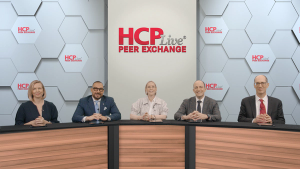
January 22nd 2024
January 29th 2024
February 5th 2024
February 5th 2024
January 22nd 2024
