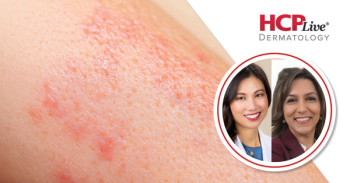
Jennifer Soung, MD, and Mona Shahriari, MD, discuss diagnosing psoriasis in diverse skin tones and why severity scores overlook dyspigmentation.
Jennifer Soung, MD, and Mona Shahriari, MD, discuss diagnosing psoriasis in diverse skin tones and why severity scores overlook dyspigmentation.
Jennifer Soung, MD, and Mona Shahriari, MD, discuss diagnosing psoriasis in diverse skin tones and building patient trust and adherence.


Soung discussed how new 52-week data support icotrokinra's recent FDA approval, marketed as Icotyde.

Final reflections from physicians Stein Gold, Soung, and Cotter, emphasizing multidisciplinary, patient-focused advances in psoriasis and PsA care.
Highlights from Fall Clinical 2025, including emerging IL-23 and real-world data shaping the next phase of psoriasis research.
Comparison of APEX findings to prior IL-23 trials such as KEEPSAKE-1 and their implications for clinical practice.
Summary of the phase 3b APEX study showing guselkumab’s efficacy and inhibition of structural joint damage.
The panel discusses the prevalence and risk factors for psoriasis progression to psoriatic arthritis.
Debate on whether early IL-23–targeted therapy like ICO could delay or prevent PsA onset.
Examination of unique challenges and the importance of early, effective therapy in younger patients.
Review of new week 52 results showing durable responses and strong efficacy in both adults and adolescents.
Discussion of nasopharyngitis and URTI as the most common AEs and how the safety profile compares to other oral agents.
Overview of the ADVANCE trials showing ICO’s superior efficacy to deucravacitinib and consistent safety across 24 weeks.
Jennifer Soung, MD, outlines ICO’s mechanism as an IL-23 receptor antagonist and its significance in oral systemic therapy.
The panel explores patient attitudes toward oral vs injectable treatments and practical limitations of current oral agents.
Review of the updated IPC framework defining topical failure, reducing “topical churn,” and guiding earlier systemic escalation.
The experts analyze new patient and clinician survey data, revealing gaps between treatment satisfaction and practice realities.
Discussion on how patient goals, treatment experiences, and preference for oral agents shape individualized therapy plans.
Dr. Stein Gold introduces the panel and outlines the discussion’s focus on emerging therapies and evolving clinical approaches in psoriasis and PsA management.
Linda Stein Gold, MD, introduces the panel and outlines the discussion’s focus on emerging therapies and evolving clinical approaches in psoriasis and PsA management.

Discover how the LEADDerm meeting transforms dermatology through leadership, collaboration, and personal development.

Discover innovative treatments for plaque psoriasis that cater to diverse skin tones, offering effective relief without the risk of discoloration.

This interview with Jennifer Soung, MD, highlights the implications of recent phase 3 findings on roflumilast foam 0.3% (Zoryve) for psoriasis of the scalp and body.

Jennifer Soung, MD, joins The Medical Sisterhood to discuss her journey to launching LEADderm and how owning the podium has changed her career.

Panelists discuss whether a treatment switch would be considered for a patient with 75% improvement in atopic dermatitis, weighing the benefits of continued treatment versus the potential for further improvement with a different therapy.
Panelists discuss how they define treatment non-responders in atopic dermatitis (AD), focusing on factors such as lack of significant improvement in symptoms, inadequate response to therapy, or failure to achieve treatment goals despite proper adherence and adjustments.
Panelists discuss the limited data on atopic dermatitis (AD) treatments in patients with skin of color, highlighting findings from other studies and real-world data to better understand treatment efficacy and safety in this diverse patient population.
Panelists discuss switching from dupilumab to other IL-13 inhibitors in atopic dermatitis (AD), reviewing real-world data (RWD) on the effectiveness, safety, and patient outcomes associated with these treatments.
Panelists discuss the frequency of combination therapy use in managing atopic dermatitis, highlighting its role in enhancing treatment efficacy and addressing multifactorial aspects of the disease in their patient population.

February 4th 2025
February 11th 2025
January 21st 2025
December 24th 2024