Articles by Jennifer Soung, MD

Panelists discuss when to consider switching to another biologic or exploring a different mechanism of action in atopic dermatitis treatment, focusing on factors like inadequate response, adverse effects, or the need for more targeted therapy to optimize patient outcomes.
Panelists discuss the maintenance of treatment efficacy in the lebrikizumab clinical trial, highlighting data on sustained improvement in atopic dermatitis symptoms over time and the long-term effectiveness of the treatment.
Panelists provide an overview of the latest efficacy and safety data for IL-13–targeting therapies in atopic dermatitis (AD), including recently presented data on dupilumab, lebrikizumab, and tralokinumab, focusing on their effectiveness in symptom reduction and safety profiles across patient populations.
Panelists discuss the differences between the 3 FDA-approved IL-13–targeting agents for atopic dermatitis (AD)—dupilumab, tralokinumab, and lebrikizumab—and how these differences in their mechanisms of action might impact their effectiveness in targeting the disease and addressing various patient needs.
Panelists discuss recent guideline changes regarding advanced systemic therapy in atopic dermatitis (AD), focusing on when to transition a patient to systemic agents and when biologics should be considered for the treatment of moderate to severe AD.
Panelists discuss how treatments for atopic dermatitis impact patients' quality of life, focusing on improvements in symptoms, daily functioning, and emotional well-being with different therapeutic options.
Panelists discuss how the standard of care in atopic dermatitis (AD) has evolved with recent advances in treatment, highlighting the use of assessment tools and scoring systems in clinical practice, and compare real-world outcomes with those seen in clinical trials for AD treatments.
Panelists discuss how recent treatment approvals for atopic dermatitis (AD), including new biologics and systemic therapies, are reshaping management, and emphasize how patient factors, such as severity, comorbidities, and treatment history, guide treatment selection in AD.
Panelists discuss how to confirm the diagnosis of atopic dermatitis (AD) when in doubt, emphasizing the importance of clinical evaluation, family history, and skin testing, and share strategies for approaching adult patients with new-onset AD, including thorough patient history and targeted management.
Panelists discuss how the clinical heterogeneity of Atopic Dermatitis (AD) presents diagnostic challenges, with varying criteria for pediatric and adult-onset AD, highlighting the need for age-specific approaches to accurately diagnose and treat the condition.
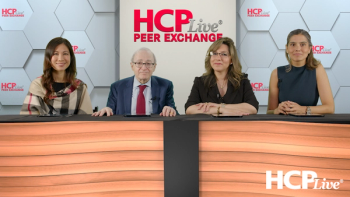
Experts conclude the series discussing how to approach switching psoriasis treatments.
Experts discuss package warnings associated with bimekizumab and how they inform patients of them.
Experts discuss bimekizumab for the treatment of psoriasis highlighting is efficacy over other treatments.
Experts discuss the warnings regarding IL-17 blockers and inflammatory bowel disease.
Experts emphasize the importance of collaboration with infectious disease specialists for patients with tuberculosis, while highlighting the low reactivation rates in newer agents.
Experts highlight how a history of cancer may impact psoriasis treatment decisions while touching on the safety profiles of newer IL agents.
Experts discuss common comorbidities for patients with plaque psoriasis and how they can impact treatment decisions.
Experts discuss the landscape of IL therapies for the treatment of psoriasis, highlighting their improved safety and efficacy over prior agents.
Experts discuss the use of TNF blockers in treating plaque psoriasis and their limited but important uses today.
Experts discuss the plethora of treatment options for psoriasis, including topicals, oral therapies, phototherapy, and biologics.
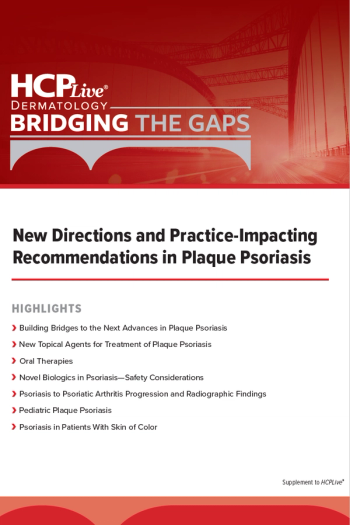
This publication was developed independently by MJH Life Sciences Global Medical Affairs. Support for the thought leaders meeting and the publication was provided by Arcutis Biotherapeutics, Inc; The Bristol Myers Squibb Company; Janssen Global Services, LLC; and UCB, Inc.

Expert dermatologists highlight the future of plaque psoriasis treatment, commenting on advances in therapy as well as increasing access to treatment.
Benjamin Lockshin, MD, FAAD; and Jennifer Soung, MD, share their experience with IL-23 inhibitors for the treatment of plaque psoriasis in clinical practice.
Benjamin Lockshin, MD, FAAD, comments on the higher efficacy and reliability of recent IL-17 and IL-23 inhibitors and how these factors into treatment selection for patients with plaque psoriasis.
Expert dermatologists discuss the paradigm shift occurring in the management of plaque psoriasis as a result of the expanded array of treatment options.
Expert dermatologists highlight the benefits of head-to-head trials for various agents for the management of plaque psoriasis and review the top-line results of a study comparing risankizumab and apremilast.
Expert dermatologist comments on initiating conversations about the safety of IL-23 inhibitors with patients with plaque psoriasis, highlighting biologic-naive patients.
Expert dermatologists review the efficacy of IL-23 inhibitors for plaque psoriasis in the real world, highlighting the opportunity to individualize treatment.
Expert dermatologists share how the understanding of the pathophysiology of plaque psoriasis guides approaches to therapy.
Drs Bruce Strober, Benjamin Lockshin, and Jennifer Soung discuss how plaque psoriasis impacts a patient’s quality of life, focusing on patient-reported outcome measurements as well as special areas affected by plaque psoriasis.
