

Results of a new analysis underscore the significance of sleep health in mitigating type 2 diabetes risk, revealing that even an optimal diet may not fully offset the negative impact of inadequate sleep.
Patrick Campbell is the editorial director of HCPLive. Patrick has spent years spearheading coverage surrounding cardiometabolic health and rheumatic disease for MJH Life Sciences. Before joining MJH Life Sciences in 2019, he spent time as a beat reporter and/or multimedia specialist with the Pocono Record, Star News Group, and NJ Advance Media. He is the executive producer for multiple HCPLive podcasts, including Diabetes Dialogue, Don't Miss a Beat, Kidney Compass, Medical Ethics Unpacked, The Medical Sisterhood, and Skin of Color Savvy.
Follow him on Twitter @RealPatCampbell or reach him via email at [email protected].
Results of a new analysis underscore the significance of sleep health in mitigating type 2 diabetes risk, revealing that even an optimal diet may not fully offset the negative impact of inadequate sleep.
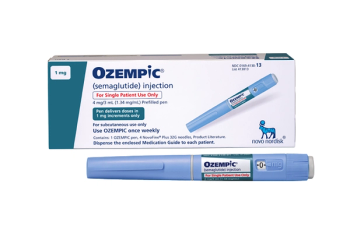
Novo Nordisk announced topline data from the FLOW trial indicate semaglutide 1.0 mg (Ozempic) was associated with a 24% reduction in risk of kidney disease-related events among individuals with type 2 diabetes and CKD compared to placebo therapy.

The latest analysis of the Mass General Brigham Lp(a) Registry highlights Lp(a)'s independent association with cardiovascular events, with these associations apparent in patients regardless of baseline cardiovascular history.

Our February 2024 cardiology month in review, recaps FDA news, top data from International Stroke Conference and major journals, and perspectives form a bevy of key opinion leaders in the field on hot topics and news from across the spectrum of cardiovascular medicine.

The approval of the AGENT Drug-Coated Balloon is based on the AGENT IDE trial and was announced by Boston Scientific on March 01, 2024.

Viking Therapeutics' dual GLP-1/GIP receptor agonist VK2735 showed promising weight reduction in the phase 2 VENTURE trial, with the 15 mg dose contributing to a 14% reduction in body weight from baseline to week 13.

Deepak Bhatt, MD, MPH, looks ahead to discuss what he is most excited about from the upcoming late-breaking clinical trials sessions at the American College of Cardiology 2024 annual meeting

Viaskin milk patch shows promise in cow’s milk allergy, particularly in children aged 2-11 with 300 μg dose, though the other doses examined failed to prove significant benefit.

Survodutide, a dual agonist from Boehringer Ingelheim and Zealand Pharma, was associated with MASH resolution without worsening fibrosis among 83% of participants in a phase 2 trial.

Robert Wood, MD, principal investigator of the OUtMATCH trial, offers insight into the trial and its results beyond the primary outcome, with a focus on what it means for patients and providers.

Omalizumab, the only FDA-approved treatment for multiple food allergies, demonstrated significant efficacy in the OUtMATCH trial, with 67% achieving the primary outcome compared to 7% in the placebo group.

Rilzabrutinib, an oral BTK inhibitor, demonstrates efficacy in reducing itch and disease activity among patients with chronic spontaneous urticaria in phase 2 dose-ranging trial at AAAAI 2024.

The MANDARA trial results, published in NEJM, show benralizumab's noninferiority to mepolizumab in eosinophilic granulomatosis with polyangiitis, with potential for oral glucocorticoid discontinuation.
Robert Wood, MD, discusses how the FDA approval of omalizumab (Xolair) changes the management of pediatric food allergy and what type of hurdles to optimal uptake the community may encounter.

This American Heart Month 2024 feature paints a picture describing the current state of cardiology by asking what the most prevalent and important issues facing the specialty are today from the perspective of 9 leading experts.

Ahmad Masri, MD, MS, provides an update on the the development of the cardiac myosin inhibitor class and offers perspective on what the future might hold for the class beyond cardiomyopathy.

Tom Nguyen, MD, discusses a recent study he led comparing outcomes of TAVR explantation based on transcatheter heart valve type.
FDA advisory committee votes 13-1 that the benefits outweigh the risk of use for Abbott's TriClip for tricuspid regurgitation, pending FDA decision expected in 2024.

Michelle Kittleson, MD, PhD, provides insight into the potential impact of a new risk score for heart transplant allocation as well as the need for more equitable cardiovascular care in the US.

A novel risk score developed by University of Chicago investigators outperformed conventional models in predicting death in heart transplant candidates, which could help bring the field closer to optimal and equitable allocation.

A trial comparing iron supplementation methods for postpartum maternal fatigue found similar fatigue reduction regardless of treatment type.

A recent survey indicates many US adults are unaware of their vital health metrics, highlighting the need for increased education on heart disease prevention.
Deepak Bhatt, MD, MPH, discusses the need to improve in-hospital initiation and uptitration of guideline-directed medical therapy in heart failure.

According to a new systematic review and meta-analysis, roxadustat's efficacy remains consistent across varying inflammation levels in patients with chronic kidney disease.

This recap of top cardiology news from January 2024 spotlights pipeline updates, new guidance on peripheral interventions, and a celebration of what may be the single most impactful public health address in the history of the United States.
The FDA's acceptance of the NDA for acoramidis in ATTR-CM was announced on February 05, 2024 and assigns a November 2024 PDUFA for the agent.

Tirzepatide, a dual GLP-1/GIP agonist approved for diabetes and obesity, was associated with significant blood pressure reductions in an analysis of the SURMOUNT-1 trial.
The FDA approval of Edwards Lifesciences EVOQUE tricuspid valve replacement system for treatment of symptomatic severe tricuspid regurgitation is the first of its kind for a transcatheter therapy.
Study presented at ISC 2024 suggests Black women with hypertension before age 35 face a 3-fold increase in risk of stroke while hypertension before 45 linked to doubling in stroke risk.

In the wake of Vera Therapeutics announcing positive 72-week data from the phase 2b ORIGIN trial, we sat down with lead investigator Richard Lafayette, MD, to learn more about how he interprets the latest data from the atacicept program in IgA nephropathy.