

Asthma
Latest News
Advertisement
Latest Videos








CME Content




























































Advertisement
More News
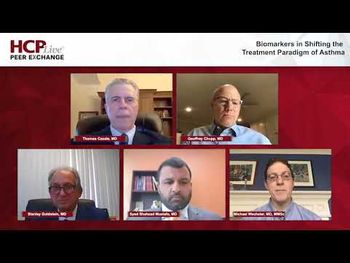

Treatment drug results in a significant reduction in severe exacerbations for patients with eosinophil ≥150 cells/µL.

A 52-week assessment shows patients of varying interleukin serum levels equally benefitted from the TSLP inhibitor.

New trial testing vitamin D supplementation in pediatric asthma patients was stopped early because of ineffective data.

New ATS findings show the IL-5 inhibitor has sustained and oftentimes improved benefit in patients from 6 months to 12.
Dr. Ian Pavord discusses new meta-analyses of dupilumab planned for ATS 2020 on the DocTalk podcast.

Patients with the splice variant were significantly less likely to have raised blood eosinophil counts.

A new study shows consistent confidence and anxiety of self-care with the injectable biologic in patients with asthma.

In a pair of Canadian cohorts, investigators discover asthmatic children are older on the epigenetic clock.

An assessment of a combined pharmacologic and cognitive behavioral therapy program shows patients improve FEV1, FVC, and other metrics.

Investigators find individuals with asthma who slept less than 5 hours per night had increased asthma attacks and overnight hospitalizations.
California is home of the cities with the most unhealthy pollution levels, according to the newest annual report from the ALA.

Investigators assessing the link from CO to pneumonia risk—and the benefit of biomass-fueled cookstoves in reducing them—find it is not very distinct.

ALA chief medical officer Al Rizzo, MD, discusses plans to kickstart vaccine research and public health preventive measures.
Clinical investigator and allergist Jonathan Corren, MD, shares insight on the TSLP inhibitor.
The Proventil HFA generic approval comes at a time of greater inhaler therapy demand due to the respiratory burdens of the coronavirus.

COPD patients with unnoticed OSA are at a greater risk of hospital readmission and even all-cause mortality.
Al Rizzo, MD, of the American Lung Association, discusses some of the biggest challenges and questions raised on lung health during the coronavirus pandemic.
Advertisement
Advertisement
Trending on HCPLive
1
FDA Approves Obinutuzumab (Gazyva) for Idiopathic Nephrotic Syndrome
2
The Case for Routine Kidney Screening, With Pranav Garimella, MBBS, MPH
3
Hereditary Angioedema Triggers, Prodromes Mapped in US HAEA Registry
4
The HCPFive: Top News for Healthcare Providers from the Week of 09/20
5