





Asthma
Latest News
Advertisement
Latest Videos









CME Content




























































Advertisement
More News

CompEx combines deteriorations and frequency of asthma exacerbations that are recorded twice daily by patients. An algorithm is developed based off of patient deterioration below threshold limits.

Close to half of observed patients had severe asthma and uncontrolled even with high doses of ICS or LABA. Among them, more than half had the eosinophilic inflammatory phenotype.

A new test involving pediatric lung function shows that just 15% of patients will achieve strict remission in adulthood.

Approximately one-half of patients with chronic rhinosinusitis with nasal polyposis have asthma. The less-invasive FeNO test may help detect comorbid patients.

Research has shown that few children with asthma correctly use their inhalers, despite guidelines explicitly stating that each physician visit should include review of inhaler technique and use of devices.

The GSK triple-combination FF/UMEC/VI inhaler reported significant lung function improvement in patients with inadequately controlled asthma.
The injectable IL-5 inhibitor therapy is more commonly recommended for patients with greater eosinophil counts.

A 68,000-plus patient study could lead to new therapies, more complete and efficient ways to diagnose asthma, and help identify environmental factors that protect against it.
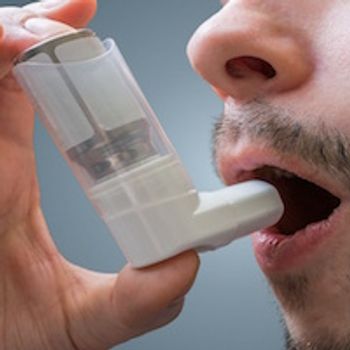
Six-month ACT, lung function, exacerbation rate scores showed no correlation between exacerbations and the standard for patient scoring.

Pregnant women who suffer from asthma reported a two-fold greater risk for PPD according to the results of a large-scale Quebec hospital cohort.

SHBG is present in about 9.7% of adult women who have asthma, and 5.4% of adult men with asthma.
Investigators believe this is the first study to show both the omega-3 protective effect and deleterious effect of omega-6 on indoor particular matter exposure and systemic inflammation.
Randomized, placebo-controlled trial found a 50% reduction in absolute eosinophil count in 90% of patients.

As recently as 2010, anywhere from 18% to 36% of pediatric asthma cases were driven by traffic-related air pollution.

The LAMA/LABA combination therapy was shown to reduce one-year exacerbation rates while not increasing patient risk of cardiovascular events.

Investigators found in animal models that pulmonary endothelial function was influenced by caloric intake rates.

The study will focus on a dozen-plus children with severe asthma over a period of 4 weeks.
The oral tablet generics approvals also come with 2 approved shared system REMS programs for ambrisentan.

Eosinophilic asthma is characterized by elevated levels of eosinophils, which are a direct cause of chronic inflammation in severe asthma.






Advertisement
Advertisement
Trending on HCPLive
1
FDA Approves Obinutuzumab (Gazyva) for Idiopathic Nephrotic Syndrome
2
The Case for Routine Kidney Screening, With Pranav Garimella, MBBS, MPH
3
Hereditary Angioedema Triggers, Prodromes Mapped in US HAEA Registry
4
The HCPFive: Top News for Healthcare Providers from the Week of 09/20
5