






Asthma
Latest News
Advertisement
Latest Videos









CME Content




























































Advertisement
More News

The biologic AR101 was previously shown to significantly desensitize peanut allergies in a pediatric and adolescent patient population.

The AR101 oral therapy—a biologic designed to desensitize peanut allergies, manufactured by Aimmune Therapeutics—is anticipated to be submitted for FDA approval in the next month.

Demystifying the oral food challenge starts with understanding its risks and benefits.

Study co-author Nicola Alexander Hanania, MD, explains what the new data means for practicing pulmonologists and allergists.

Busse explains the importance of having an additional treatment option and covers best practices for prescribing.

Researchers uncover the first report of cannabis allergy, suggesting that exposure to secondhand marijuana smoke may contribute to difficult-to-control asthma.
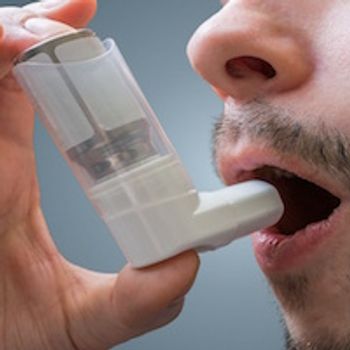
FF/VI met primary and secondary endpoints in increasing the mean proportion of days covered and time to index treatment discontinuation.

On the bright side: In-hospital education shown to be effective in helping bridge the gap.

Sterilizing or hand washing pacifiers doesn’t have the same allergy-suppressing benefits as sucking on them, according to new research.
The therapy saw similar safety and efficacy profiles across the BORA, SIROCCO and CALIMA studies for the treatment of asthma.

A descriptive review of 150-plus papers on drug-induced interstitial lung disease shows there is an absence of high-quality data on the disease.

Long-term lung inflammation associated with allergen exposure is linked to the development of anxiety later in adulthood, according to a new study.

Until recently, studies of systemic corticosteroids in pneumonia have yielded contradicting results, while studies in acute exacerbation of COPD have shown significant benefits.

The FDA has accepted Sanofi’s supplemental biologics license application (sBLA) for priority review of dupilumab (Dupixent) in patients aged 12 to 17 years with moderate-to-severe atopic dermatitis.

The most reliable practice for helping a patient quit is comprehensive, and catered to their medical, physical, and financial goals.

Patients with inappropriate medication use lived farther from their preferred pharmacy than those with appropriate use—a median distance difference of just more than 1 mile.
The interleukin pathway-targeting monoclonal antibody has been previously approved for adult atopic dermatitis, and is being considered for a handful more inflammatory or allergic conditions.







Advertisement
Advertisement
Trending on HCPLive
1
FDA Approves Obinutuzumab (Gazyva) for Idiopathic Nephrotic Syndrome
2
The Case for Routine Kidney Screening, With Pranav Garimella, MBBS, MPH
3
Hereditary Angioedema Triggers, Prodromes Mapped in US HAEA Registry
4
The HCPFive: Top News for Healthcare Providers from the Week of 09/20
5