






Atopic Dermatitis
Latest News
Advertisement
Latest Videos








CME Content























































Advertisement
More News

Panelists discuss how they assess atopic dermatitis across all age groups by evaluating clinical history, symptom severity, and physical examination. They consider factors like age-specific presentations, comorbid conditions, and response to treatment for individualized management.

Panelists discuss the prevalence of treatment-refractory moderate to severe atopic dermatitis, noting factors such as intolerance or inability to use high-potency topical agents as common reasons for treatment failure, and emphasize the importance of considering alternative agents or switching treatments when necessary, particularly in pediatric patients, with biologics and Janus kinase (JAK) inhibitors being key options as evidenced by studies such as Blauvelt 2023, Keow & Abu-Hilal 2024 , and JADE EXTEND.
Panelists discuss treatment expectations for newer systemic agents, highlighting data on efficacy onset and persistence, including rapid improvement in pruritus with dupilumab by week 2 (SOLO trials), early Investigator Global Assessment (IGA) and Eczema Area and Severity Index (EASI)-75 improvement with lebrikizumab by week 2 to 4 (ADvocate trials), and EASI-75 improvement with tralokinumab by week 4 (ECZTRA 6 trial), emphasizing the importance of setting realistic expectations with patients and caregivers regarding the onset of action and duration of treatment.

Infants who develop atopic dermatitis show early cheek skin barrier dysfunction with delayed FLG processing, low ceramides, and high IL-18. The study will be presented at AAAAI 2025.
Panelists discuss how adult atopic dermatitis diagnosis relies on clinical presentation of chronic, pruritic, and eczematous lesions with characteristic distribution patterns. Unlike children, adults show more lichenified plaques and predominant hand/foot involvement. Key diagnostic criteria include personal/family history of atopy and chronic/relapsing course. No definitive test exists.

Children with severe atopic dermatitis saw > 5 percentile height gains after 16 weeks of dupilumab, per a study to be presented at AAAAI 2025.

A study found the Skin Barrier Meter accurately measures skin barrier function in children with atopic dermatitis, offering a fast, non-invasive assessment within 5 seconds.
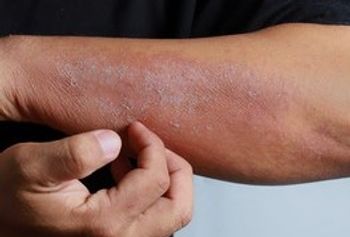
Fifteen of 16 patients with chronic ulcers in a small study had positive patch test to common wound care products.

A study found distinct DNA methylation patterns at birth linked to early-onset atopic dermatitis by age 2. Findings will be presented at AAAAI 2025.

These data point to inaccessibility, distance from providers, and insurance-related barriers as obstacles to mental health improvement among children with atopic dermatitis.

The drug given this designation, known as rezpegaldesleukin, is indicated for adult and pediatric patients aged 12 years and older with atopic dermatitis.
Panelists discuss managing comorbidities and mitigating atopic march in adolescent and adult patients, focusing on the importance of early intervention and coordinated care to prevent the progression of atopic diseases and improve long-term health outcomes.
Panelists discuss the role of newer agents, including biologics/monoclonal antibodies (dupilumab, tralokinumab, lebrikizumab) and Janus kinase (JAK) inhibitors (abrocitinib, baricitinib, upadacitinib), in the treatment of moderate to severe atopic dermatitis, emphasizing their effectiveness in improving outcomes for patients who do not have adequate control with conventional therapies.

Our top 5 headlines include a trial of gene-edited pig kidneys, a first-of-its-kind antibiotic approval, and new guidelines for migraine.

These data suggest that the Family Acceptance and Commitment Therapy-based Eczema Management Program, or FACT-EMP, may be helpful to children with atopic dermatitis.

These data suggest that dupilumab’s drug survival rate at 12 and 24 months is greater than that of upadacitinib and tralokinumab among patients with atopic dermatitis.

In this analysis, investigators concluded that dupilumab may be a viable treatment choice for pregnant or breastfeeding mothers with atopic dermatitis.

This segment of Hebert’s interview features a discussion regarding the safety profile of tapinarof 1% for patients aged 2 years and older with atopic dermatitis.
Adelaide Hebert, MD, discusses the impact of the recent approval for tapinarof cream in the management of atopic dermatitis.

These data suggest a wearable haptic feedback sensor powered by artificial intelligence may function as a supportive therapeutic device for those with atopic dermatitis.

These new data were announced by LEO Pharma following the phase 3 DELTA TEEN trial, assessing delgocitinib 20mg/g cream for chronic hand eczema (CHE).

This study highlights upadacitinib’s efficacy across clinical phenotypes for those with atopic dermatitis, noting any differences in response rates among patients.
Panelists discuss the 2023 American Academy of Allergy, Asthma & Immunology/ American College of Allergy, Asthma & Immunology (AAAAI/ACAAI) Joint Task Force guidelines, highlighting treatment options with strong recommendations and high certainty of evidence, including biologics/monoclonal antibodies (dupilumab, tralokinumab, lebrikizumab) and Janus kinase (JAK) inhibitors (abrocitinib, baricitinib, upadacitinib) for atopic dermatitis management.
Panelists discuss the goals of treating atopic dermatitis, focusing on symptom control and quality of life, with treatment differing for children and adults, and emphasize using assessment tools such as Eczema Area and Severity Index (EASI)-75/90, Investigator Global Assessment (IGA), and itch scores alongside patient-reported outcomes to guide decisions while also considering disease severity and the impact of atopic comorbidities in treatment approaches

These findings highlight dupilumab’s use as a potential treatment option for individuals with prurigo nodularis.
Advertisement
Advertisement
Trending on HCPLive
1
New Injectable Substantially Reduces Visceral Adipose Tissue in Obesity
2
Remibrutinib Receives FDA Approval for Symptomatic Dermographism
3
ZUPREME-2: Petrelintide Outperforms Placebo for Weight Loss in T2D and Obesity
4
Why "Normal" Ferritin Can Miss Iron Deficiency, With Jacquelyn Powers, MD, MS
5