




Atopic Dermatitis
Latest News
Advertisement
Latest Videos



CME Content























































Advertisement
More News

These late-breaking data highlight the real-world efficacy of upadacitinib for patients with atopic dermatitis who are either bio-naïve or bio-experienced.

This interview at RAD 2025 highlights several notes on dose flexibility in atopic dermatitis, with commentary by presenter Raj Chovatiya, MD, PhD.

These late-breaking data presented at RAD 2025 highlight dupilumab’s efficacy and safety in this often neglected patient population.
These phase 3b findings highlight lebrikizumab’s efficacy and safety in adult and adolescent patients with skin of color living with atopic dermatitis.

This interview features a discussion with Lio regarding pediatric atopic dermatitis and the connection between caregivers, patients, and providers.
This interview with Singh highlights her conference presentation on allergy and its connection to pediatric atopic dermatitis.

This interview highlights 3 new topical non-steroidal options for atopic dermatitis covered in Kircik’s RAD 2025 presentation on FDA approvals.

In this interview with Shahriari at RAD 2025, she highlights some of the most significant burdens that patients and caregivers face with atopic dermatitis.

In this Q&A interview, Silverberg highlighted takeaways from his talk at RAD 2025 on recent FDA approvals for atopic dermatitis.
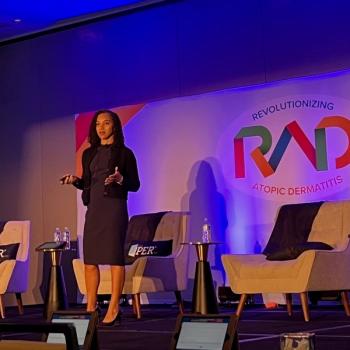
In this session at RAD 2025, Tiffany Mayo, MD, spoke to attendees about several examples of complex cases in atopic dermatitis and touched on hair loss concerns.
In this video segment, Kircik described the data highlighted in his JAK inhibitor-related presentation at RAD 2025.
This interview highlights the takeaways from Kircik’s talk at the 2025 RAD Conference regarding JAK inhibitor use and boxed warning concerns.
This video includes a discussion of different procedures designed to help treat patients with hidradenitis suppurativa (HS) and atopic dermatitis.
This summary features a variety of abstracts to be presented at the RAD meeting in June 2025, highlighting new data in atopic dermatitis and the dermatology space in general.

At 2025 New Wave Dermatology, Zirwas highlights the most useful dermatology studies from the past 2 years, covering AD misdiagnosis, alopecia, contact dermatitis, and more.
Zirwas shares top dermatology studies, highlights AD misdiagnosis, and reveals how pollution and fabrics may trigger adult-onset atopic dermatitis.
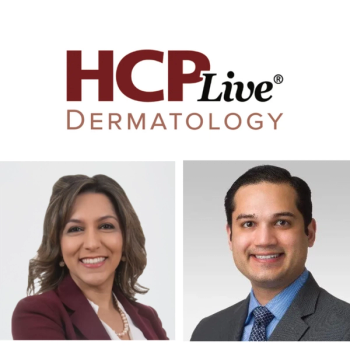
In this interview, Mona Shahriari, MD, and Raj Chovatiya, MD, PhD, touched on the evolving role of pharmacists and internal medicine doctors in atopic dermatitis.
In this interview, Raj Chovatiya, MD, PhD, describes roflumilast cream's success in addressing unmet needs for atopic dermatitis.

AI enhances prediction, diagnosis, and treatment of allergic diseases including asthma, atopic dermatitis, and food allergies, offering personalized, efficient care.

In this interview, Christopher Bunick, MD, PhD, speaks on the elements of the RAD 2025 conference that he is most anticipating.

These data point to the necessity of incorporating disease burden in patient interactions and decision making for those under the age of 18 years.
In this interview, Chovatiya and Shahriari highlight notable elements of the upcoming Revolutionizing Atopic Dermatitis (RAD) Conference.

This study highlights the different sex-related disparities as well as those among older adults with atopic dermatitis.

These real-world findings on upadacitinib for atopic dermatitis highlight the drug’s efficacy and survival data among Australian patients.
Revolutionizing Atopic Dermatitis 2025 Annual Meeting cochair Raj Chovatiya, MD, PhD, previews the upcoming meeting.
Advertisement
Advertisement
Trending on HCPLive
1
New Injectable Substantially Reduces Visceral Adipose Tissue in Obesity
2
Remibrutinib Receives FDA Approval for Symptomatic Dermographism
3
ZUPREME-2: Petrelintide Outperforms Placebo for Weight Loss in T2D and Obesity
4
Why "Normal" Ferritin Can Miss Iron Deficiency, With Jacquelyn Powers, MD, MS
5