

Opinion|Videos|March 17, 2025
LIBERTY AD Open-Label Extension Analysis: Takeaways and Considerations
Panelists discuss how The LIBERTY AD OLE study (Beck 2024) showed sustained efficacy of treatment in atopic dermatitis, with 96.9% achieving EASI-50; 88.9%, EASI-75; and 80.7%, EASI-90 over 260 weeks. Common adverse events (AEs) included nasopharyngitis, atopic dermatitis (AD) worsening, upper respiratory tract infections, herpes infections, and conjunctivitis. Treatment-emergent adverse event (TEAE)–related withdrawal was 3.8%.
Advertisement
Episodes in this series
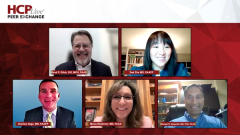
Video content above in prompted by the following:
- Can you discuss the notable findings from the LIBERTY AD OLE study (Beck 2024) and how they are relevant to you and your practice?
- Of the 326 subjects who remained in the trial for 260 weeks, 96.9% achieved EASI-50; 88.9%, EASI-75; and 80.7%, EASI-90.
- Most common AEs were nasopharyngitis, worsening AD, upper respiratory tract infection, herpes viral infections, and conjunctivitis
- 101/2677 (3.8%) of patients in the safety analysis set withdrew due to TEAEs.
Advertisement
Related to this article
In this Q&A, Armand explains why eczema visits spike during wildfire smoke events and how allergic patients can protect themselves.
Stay updated with the latest healthcare breakthroughs, including the FDA approval of insulin efsitora alfa-gobe (Onswik).
Approval is based on 36-week data from BRAVE-AA-PEDS, in which 42% of patients on the 4 mg dose achieved a SALT score of 20 or less, compared with 5% on placebo.
The FDA approved once-daily oral zilurgisertib for FOP in patients aged 12 years and older after the phase 2 PROGRESS trial showed reduced new heterotopic ossification vs placebo.
Approval covers patients aged ≥2 years with frequently relapsing or steroid dependent disease in complete remission.

As the FDA weighs its first psychedelic approval, Sarah Norman, MPP, says training, credentialing, and reimbursement are lagging while patients are already asking.

Pranav Garimella discusses what a potential USPSTF kidney screening recommendation could mean for high-risk adults and primary care.

Andrea Murina, MD, weighs whether she would recommend medicine to her own children amid AI, physician burnout, and evolving residency training standards.
Advertisement
Advertisement
Trending on HCPLive
1
The Case for Routine Kidney Screening, With Pranav Garimella, MBBS, MPH
2
FDA Approves Obinutuzumab (Gazyva) for Idiopathic Nephrotic Syndrome
3
Zilurgisertib Receives FDA Approval for FOP in Patients 12 and Older
4
FDA Approves Baricitinib for Adolescents With Severe Alopecia Areata
5