




Atopic Dermatitis
Latest News
Advertisement
Latest Videos


CME Content























































Advertisement
More News

An expert on atopic dermatitis provides insights on how the evolving treatment landscape has impacted clinician and patient expectations.
Shawn Kwatra, MD, discusses the effects of poorly controlled or severe atopic dermatitis on patients’ quality of life and how to measure patient-reported outcomes.

An academic dermatologist describes how JAK inhibitors compare with other systemic treatments for atopic dermatitis and provides clinical insights on when to use which treatments.
Ruth Ann Vleugels, MD, MPH, MBA, provides an overview of oral JAK inhibitors approved for the treatment of atopic dermatitis and describes what makes them an attractive therapeutic option.

In this interview, Chovatiya discussed the recent FDA approval of roflumilast cream 0.15% for patients with eczema aged 6 years and older.

This decision by FDA officials resulted from the INTEGUMENT study findings which determined that once-daily roflumilast led to rapid eczema clearance and significant disease reductions.

These findings also highlighted the necessity of identifying the clinically relevant comorbidities of asthma and allergic rhinitis in a proactive manner.
Arcutis Biotherapeutics announced the update and indicated the FDA was working to finalize the action letter on July 09, 2024, which was 2 days after the assigned PDUFA date of July 07, 2024.

These updated guidelines by the AAAAI and ACAAI Joint Task Force incorporate additional research regarding treatment options for eczema.
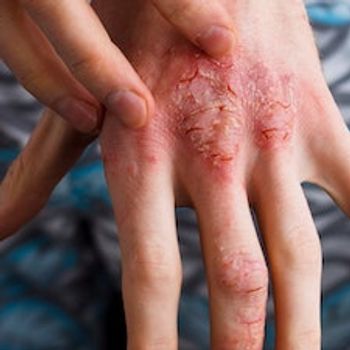
These findings confirm the ways in which patient responses in the head and neck areas contribute to modifications in life quality among those with eczema.

This retrospective study highlighted the results of Singaporean atopic dermatitis patients aged 18 years and below who had undergone phototherapy.

Raj Chovatiya, MD, PhD, MSCI, and Lawrence Eichenfield, MD, review a recent trial comparing upadacitinib to dupilumab for patients with atopic dermatitis.

This analysis from Spain assessed the short-term effectiveness and safety of abrocitinib within a real-world setting for those with moderate-to-severe eczema.
This analysis explores the burden level in pediatric and adolescent eczema patients within Japan, highlighting associated burden on caregivers/families and other factors.
Raj Chovatiya, MD, PhD, MSCI, and Lawrence Eichenfield, MD, discuss recent data assessing ruxolitinib cream for patients as young as 2 years old with atopic dermatitis.
These data, presented at RAD 2024, highlight the potential of delgocitinib cream for patients with chronic hand eczema in terms of patient and clinician reported outcomes.
These data highlighted which drug, in combination with topical corticosteroids, produced the best efficacy results for those with atopic dermatitis.

These data, presented at RAD 2024, highlight the potential benefits of upadacitinib for adults and adolescents observed in the Measure Up 1 and Measure Up 2 studies.
This approval by FDA officials allows patients an alternative option to pre-filled syringe, which had been the only choice for those with eczema prescribed tralokinumab.

Matthew Zirwas, MD, explains why he believes agents like ruxolitinib cream and upadacitinib have become the optimal treatments for atopic dermatitis, hidradenitis suppurativa, and more.

Sidbury covered the similarities and differences between the new guideline updates by the AAD on atopic dermatitis as well as differences with other organizations’ guidelines.

In new late-breaking data, alopecia patients’ real-world incidence of atopic dermatitis was highlighted by investigators.

These data presented at RAD 2024 highlight the differences among eczema patient preferences in terms of administration modes, risk levels, and more.

An analysis of survey data from more than 200 patients with atopic dermatitis details treatment satisfaction and provider trust based on racial/ethnic backgrounds of patients.

This late-breaking data featured at RAD 2024 highlights several improvements in patient reported outcomes observed among atopic dermatitis patients, including itch relief.
Advertisement
Advertisement
Trending on HCPLive
1
New Injectable Substantially Reduces Visceral Adipose Tissue in Obesity
2
Remibrutinib Receives FDA Approval for Symptomatic Dermographism
3
Why "Normal" Ferritin Can Miss Iron Deficiency, With Jacquelyn Powers, MD, MS
4
ZUPREME-2: Petrelintide Outperforms Placebo for Weight Loss in T2D and Obesity
5