





Atopic Dermatitis
Latest News
Advertisement
Latest Videos

CME Content























































Advertisement
More News

Linda Stein Gold, MD, discusses the notable transition in topical therapies for both psoriasis and atopic dermatitis, with the introduction of effective FDA-approved nonsteroidal treatments.

In this interview on the conference floor at Fall Clinical Dermatology, Dr. Lio discussed the important topic of treating patients with eczema that have skin of color.

This new data was presented at EADV in Berlin, with the findings of 3 studies expanding the range of effectiveness of this treatment to 140-weeks for patients with eczema.

In this interview, Dr. Simpson discussed the latest findings presented at EADV in Berlin on the use of tapinarof cream, 1% for adults and children as young as 2 years with eczema.
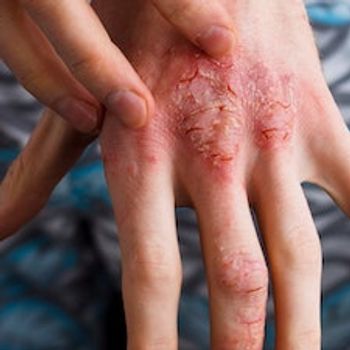
Positive Phase 3 Results Announced for Nemolizumab Treatment of Atopic Dermatitis, Prurigo Nodularis
The new results from 3 different phase 3 studies presented at EADV on nemolizumab for those with prurigo nodularis and eczema show promise for the treatment.

This news was announced following new findings by the FDA due to a recent inspection, though no concerns were listed regarding clinical data, labeling, or safety.
This new data resulted from the first study that found EIS could detect skin barrier dysfunction among children found to have developed atopic dermatitis early on in life.

‘Clearing Up Seb Derm’ Launched to Enhance Awareness of Seborrheic Dermatitis for Diverse Skin Types
The new educational initiative was launched to provide useful insights from dermatologists as well as personal accounts by patients with seborrheic dermatitis with many different backgrounds.
These new results from the pivotal INTEGUMENT-PED trial met both of the investigators' primary and secondary endpoints.

The sNDA was announced for roflumilast cream 0.15% to the FDA, and the formulation is said to not to be disruptive to the skin barrier or contain common irritants to patients’ skin.
This new data had both a consistent long-term safety and tolerability profile with the previous short-term results for the skin disease, and there were no new safety signals recorded.

A population-based cohort study highlighted an association between AD and IBD with risk varying by age, AD severity, and subtype of IBD.

These new results for tralokinumab could provide safer treatment options for older atopic dermatitis patients versus conventional therapies with greater risk of adverse events and drug-drug interactions.
In this latest research, the investigators noted that upadacitinib therapy may also be utilized as a treatment option for atopic dermatitis patients who experience a flare.

Older Adults Prescribed Oral Corticosteroids Sporadically Require Greater Fracture Preventative Care
This new data indicates opportunities which may have been missed for initiation of fracture prevention for elderly individuals treated with oral corticosteroids.
New late-breaking trial data from the ADhere, Adjoin, ADvocate1, and ADvocate2 trials showed solid results for lebrikizumab in treating moderate-to-severe atopic dermatitis.

In her presentation ‘Treatment of Eczema in Pediatric Patients Under 12 Years,’ Dr. Garza-Mayers spoke on considerations for atopic dermatitis management.

Zirwas touts topical ruxolitinib's rapid, effective treatment of atopic dermatitis, and reviews the safety outcomes associated with JAK inhibitors.

On the basis of discovery into what drives adult-onset eczema, the novel drug may provide a unique benefit for impacted patients.

A post hoc analysis shows the investigative drug significantly improved atopic dermatitis symptoms versus placebo as soon as the first week into a phase 2 trial.

The first trial observing the topical drug in children held promise for an extended indication.
The investigator explains why he believes the PDE4 inhibitor is "as close to a perfect drug as you can hope for in seborrheic dermatitis."
Andrew Blauvelt, MD, discusses switching therapies for atopic dermatitis (AD) treatment.

Andrew Blauvelt, MD, discusses upadacitinib for the treatment of atopic dermatitis (AD).

A dermatology expert discusses taking a nuanced approach to interpreting the boxed warnings for JAK inhibitor for atopic dermatitis (AD) treatment.
Advertisement
Advertisement
Trending on HCPLive
1
New Injectable Substantially Reduces Visceral Adipose Tissue in Obesity
2
Remibrutinib Receives FDA Approval for Symptomatic Dermographism
3
ZUPREME-2: Petrelintide Outperforms Placebo for Weight Loss in T2D and Obesity
4
Why "Normal" Ferritin Can Miss Iron Deficiency, With Jacquelyn Powers, MD, MS
5