




Endocrinology
Latest News
Advertisement
Latest Videos
Shorts
1:01
Mind-Blowing 29% Weight Loss: The New Triple Agonist Results
7 months ago
by
Diana Isaacs, PharmD, BCPS, BCACP, BC-ADM, CDCES(+1 more)
1:10
Big Change: Zepbound Now Available in Multi-Dose KwikPen
7 months ago
by
Diana Isaacs, PharmD, BCPS, BCACP, BC-ADM, CDCES(+1 more)

1:07
New High-Dose Semaglutide: The Future of Weight Loss?
8 months ago
by
Diana Isaacs, PharmD, BCPS, BCACP, BC-ADM, CDCES(+1 more)
1:10
A 1-Year Implantable CGM? The Future of Diabetes Tech is Here
8 months ago
by
Diana Isaacs, PharmD, BCPS, BCACP, BC-ADM, CDCES(+1 more)
1:01
The Challenge of Concentrated Insulin and Micro-Dosing
8 months ago
by
Diana Isaacs, PharmD, BCPS, BCACP, BC-ADM, CDCES(+1 more)

1:12
Oral Ozempic & Wegovy: The Future of Weight Loss Treatment
8 months ago
by
Diana Isaacs, PharmD, BCPS, BCACP, BC-ADM, CDCES(+1 more)

1:06
The Hidden Dangers of Compounded Oral Ozempic
8 months ago
by
Diana Isaacs, PharmD, BCPS, BCACP, BC-ADM, CDCES(+1 more)

1:13
Novo Nordisk Sues Over Unspecified Oral GLP-1 Formulation
8 months ago
by
Diana Isaacs, PharmD, BCPS, BCACP, BC-ADM, CDCES(+1 more)
1:01
A Major First in Diabetes Tech: Interoperable Algorithms
9 months ago
by
Diana Isaacs, PharmD, BCPS, BCACP, BC-ADM, CDCES(+1 more)

1:12
GLP-1s and the Heart: Wegovy's New Cardiovascular Indication
9 months ago
by
Diana Isaacs, PharmD, BCPS, BCACP, BC-ADM, CDCES(+1 more)
Podcasts

CME Content























































Advertisement
More News

DKA remains a growing challenge in diabetes care, with new data highlighting missed diagnoses, rising admissions, and higher costs.

A new substudy of VESALIUS-CV presented at ADA 2026 has confirmed that evolocumab’s cardioprotective effects extend to patients at risk from diabetes.

Across a trio of phase 3 trials, CagriSema delivered superior HbA1c reduction and weight loss versus semaglutide in adults with type 2 diabetes
Vivian Fonseca, MD, explains data showing nearly half of patients with T2D discontinued GLP-1 therapy within 1 year, reducing their likelihood of achieving weight loss and HbA1c goals.
Timothy Garvey, MD, discusses petrelintide’s efficacy in patients with overweight and obesity, as well as its comparably low incidence of gastrointestinal effects.

Orforglipron added to titrated insulin glargine reduced HbA1c by up to 2.05% and body weight by up to 6.1% versus placebo, without increasing hypoglycemia risk.
Carel le Roux, PhD, discusses the full results from SYNCHRONIZE-1, a trial investigating Boehringer Ingelheim’s dual GLP-1/glucagon agonist.
Shah explains proactive ketone monitoring, home DKA prevention strategies, and the future of continuous ketone monitoring.
Viral Shah, MD, outlines the case for earlier ketone detection across diabetes types, the limitations of urine testing, and what CKM technology may change in clinical practice.

Eugene Wright, Jr., MD, joins the show to discuss the current state of technological integration into diabetes care, from glucose monitors to insulin delivery and beyond.
Buse discusses phase VESPER results, berobenatide's weight loss potential, and expectations for the upcoming phase 3 program

Eli Lilly’s investigative GLP-1/GIP/glucagon triple agonist has demonstrated its efficacy in reducing several major factors of obesity versus placebo.

Eli Lilly’s investigative GLP-1/GIP/glucagon triple agonist has outperformed placebo in patients with poorly-controlled T2D.

The CONNECT trial found CGM improved A1C and time in range in adults with type 2 diabetes not on insulin.
VESPER-1 and VESPER-3 findings highlight the potential of berobenatide, an investigational ultra-long-acting GLP-1 RA, for overweight or obesity with or without type 2 diabetes.

A post-hoc analysis of the STEP UP trial found that semaglutide 7.2 mg and 2.4 mg were linked to eGFR increases in adults with obesity who did not have diabetes.

STEP UP T2D data suggest semaglutide 7.2 mg's superiority to the 2.4 mg dose and placebo for proposed BMI and waist-to-height ratio treatment targets.

An EHR-based machine learning model predicted 10-year type 2 diabetes risk with near-ideal calibration in over 3 million adult patients.
Alexis Marcotte-Chénard, PhD, discusses his presentation on “exercise snacks” and how they can lower blood pressure and improve HbA1c in sedentary patients.
Sood discusses emerging diabetes technologies, from automated insulin delivery to dual glucose-ketone monitoring, at ADA 2026.

Teplizumab, which has recently seen a substantial label expansion into pediatric patients, is matching its safety and efficacy data in the clinic.
Catch up on major trial results, key FDA decisions, and more.
View the top 6 trials to watch ahead of a star-studded ADA 2026.
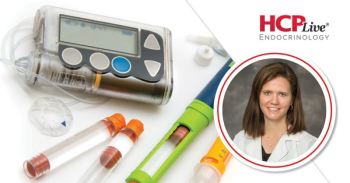
Jamie Wood, MD, discusses the impact of Afrezza’s recent FDA approval for pediatric patients with type 1 and type 2 diabetes.

Stay updated with the latest healthcare breakthroughs, including FDA approvals and phase 3 data.
Advertisement
Advertisement
Trending on HCPLive
1
Tilrekimig Meets EASI-75 Goal in Atopic Dermatitis, With Eric Simpson, MD
2
FDA Approves Once-Monthly Subcutaneous Olanzapine for Schizophrenia
3
Tips on Optimizing HS Biologics, Combinations, and Surgery
4
Why "Normal" Ferritin Can Miss Iron Deficiency, With Jacquelyn Powers, MD, MS
5