


Gastroenterology
Latest News

Advertisement
Latest Videos



CME Content




























































Advertisement
More News

Miguel Regueiro, MD and George Khoudari, MD, both of the Cleveland Clinic, discuss predictors of colectomies for IBD-patients.

William Sandborn, MD, chief of the division of gastroenterology at University of California, San Diego, shares updates from ACG 2019 in the field of gastroenterology.

Cash talks ACG 2019 highlights and shares the findings of a poster presentation on a new bowel preparation for colonoscopy.

During the ACG meeting, investigators tested a subcutaneous form of vedolizumab to treat ulcerative colitis.
Miguel Regueiro, MD, of the Cleveland Clinic, talks about some of the medications that treat ulcerative colitis and Crohn's disease at the annual ACG meeting.

With the recent FDA approval, ustekinumab could be the first choice to treat ulcerative colitis.
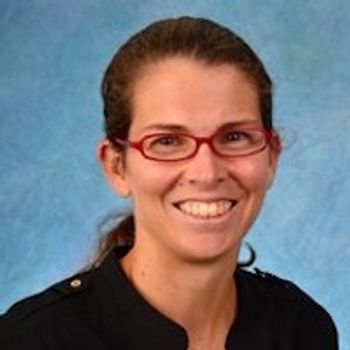
Millie Long, MD, MPH, FACG, associate professor of medicine at the University of North Carolina, Chapel Hill, shares takeaways from a poster presentation at ACG 2019 on the use of day care and infectious complications in children born to mothers with inflammatory bowel disease.

In a study presented at the ACG 2019 meeting, investigators discuss their groundbreaking work on inflammatory bowel disease.

In a pioneer study, investigators investigate if cannabis users had less incidence of pancreatic necrosis and/or pancreatic/peripancreatic fluid collections.
Investigators test a subcutaneous version of vedolizumab for different durations to treat ulcerative colitis.

At the annual ACG meeting, Carlos Romero-Marrero, MD and Mohammad Alomari, MD discuss what can be done to reduce the drug use rate for high risk patients.

Stephen B. Hanauer, MD, discusses areas of unmet need in gastroenterology and shares what news made a splash at ACG 2019.
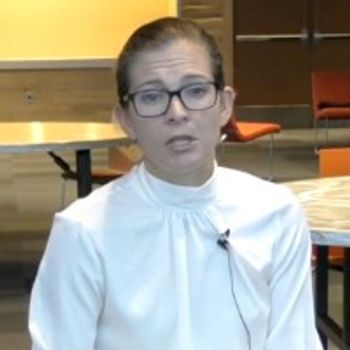
Millie Long, MD, MPH, FACG, shares initial updates from the ongoing TARGET-IBD study.
Brooks Cash, MD, delivers his take on areas of unmet need within the gastroenterology field.

Taha Qazi, MD, summarizes his research presented at ACG 2019 comparing objective sleep parameters in minority IBD patients compared to Caucasian IBD patients.

In a study presented at the annual ACG meeting, investigators find that 1L vedolizumab does not impact the effectiveness of subsequent anti-TNF treatment.

Philip Schoenfeld, MD, MSEd, MSc, discusses the benefits of quality indicators in colorectal cancer screening with colonoscopy.

In a poster presented at the annual ACG meeting, investigators estimate the prevalence of medication use by drug class for IBD-patients based on age.

FMT was highly successful for the treatment of recurrent C difficile, and the cure rate was similar between groups who did and did not receive loperamide prior to the procedure.
At the annual ACG meeting, Maria Abreu, MD, explains how drugs like ustekinumab can treat patients with Crohn's disease and patients with ulcerative colitis, while other medications do not work as well in both diseases.
After 44 weeks of maintenance therapy, endoscopic improvement was observed in 43.6% and 51.1% of patients treated with the study drug q12w and q8w, respectively.
Roberto Simons-Linares, MD, presents new data at the annual ACG meeting on the association between hepatitis viral infections and acute pancreatitis.
In 455 subjects, the eradication rate of RHB-105 was superior to that of the active comparator (83.8% vs 57.7%, p< 0.0001).

Among patients with UC, elderly individuals (age >65 years old), females, and Caucasians were more likely to be affected by psychiatric illness.

In a late breaking clinical trial at ACG 2019, investigators say AK002 shows promise in treating patients with EGID.
Advertisement
Advertisement
Trending on HCPLive
1
The Case for Routine Kidney Screening, With Pranav Garimella, MBBS, MPH
2
FDA Approves Obinutuzumab (Gazyva) for Idiopathic Nephrotic Syndrome
3
What The FDA Psychedelic Hearing Means for Psychiatrists
4
Zilurgisertib Receives FDA Approval for FOP in Patients 12 and Older
5