































































Researchers claim that restricting dietary intake of fermentable short-chain carbohydrates improves GI symptoms in patients with IBS.
Researchers claim that restricting dietary intake of fermentable short-chain carbohydrates improves GI symptoms in patients with IBS.

The US Food and Drug Administration (FDA) today approved Kcentra [prothrombin complex concentrate (human)] for the urgent reversal of anticoagulation induced by vitamin K antagonist (VKA) therapies such as warfarin in adult patients with acute major bleeding.

The stigma attached to chronic diseases such as IBS has been shown to negatively affect patients' self-image and sense of worth, leading to worse outcomes. Being aware of this and working to counteract the psychological effects of stigma can improve the patient-physician relationship and lead to better outcomes.

Declaring that the benefits of the original formulation of OxyContin no longer outweigh the risks of misuse and abuse, the FDA announced it would not approve any applications for non-tamper resistant formulations of the drug, a decision that could have far-reaching implications for all makers of opioid medications.
Approved by the FDA nearly four years ago, Otsuka Group's once-daily Samsca (tolvaptan tablets) is indicated to raise serum sodium levels in nonurgent patients with hyponatremia.

Data show that prevalence of concurrent IBS is actually higher in younger patients with OAB.

Researchers investigating the development of peptic ulcers in patients with liver cirrhosis reported that H. pylori is not the predominant etiology in this population.

Researchers in Taiwan report that type 2 diabetes is independently associated with increased risk of peptic ulcer bleeding.

Several studies recently have looked at the relationship between irritable bowel syndrome and increased pain sensitivity.

A retrospective review of records from a large medical database finds that patients with sleep apnea face a substantially higher risk of developing peptic ulcer.

Research into prognostic models that focus on serum sodium levels in an effort to identify patients awaiting liver transplant who may be at higher risk of poor outcomes have been inconclusive.

Use of blood volume analysis can help clinicians more accurately identify contributing factors to hyponatremia and avoid contraindicated interventions.

Linzess (linaclotide capsules) was approved in August 2012 by the FDA as a once-daily treatment for adult men and women suffering from irritable bowel syndrome with constipation (IBS-C) or chronic idiopathic constipation (CIC).

The American Diabetes Association revised Standards of Medical Care for patients with diabetes include several changes in recommendations regarding testing and treatment goals.
Brief summaries of research results and other articles on the clinical characteristics, evaluation, and management of patients with hyponatremia.
Use this online calculator to compute infusion rates for hypertonic and normal saline solutions, and estimated body water compartment volumes, for mild to severe hyponatremia.

Researchers report that efavirenz may produce a potent neurotoxic effect that may contribute to neurocognitive decline in HIV-infected patients who take the drug long-term.
Results from the RELAX-AHF show serelaxin reduces cardiovascular deaths and improves symptoms in patients with heart failure.
Results from a substudy of the PLATO trial show that patients with extensive CAD and high rates of recurrent cardiovascular events, death, and bleeding may benefit from treatment with ticagrelor.
Results from a sub-study of the Trial to Assess Chelation Therapy (TACT) that focused on quality of life issues in patients who had previously suffered a heart attack and were treated with chelation therapy reveal no improvements in these patients' quality of life.
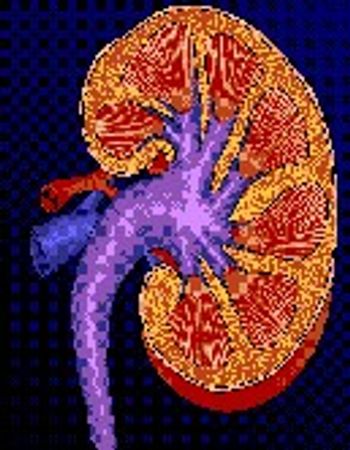
Results from the TEMPO trial presented at Kidney Week 2012 show that treatment with tolvaptan slowed the increase in total kidney volume and the decline in kidney function in patients with Autosomal Dominant Polycystic Kidney Disease (ADPKD).
Increasing numbers of people are on kidney transplant waiting lists. However, the number of potential living donors may shrink as more Americans qualify as pre-diabetic, making them less than ideal donor candidates.
Experts at Kidney Week 2012 discuss several treatment options for hyponatremia, including fluid restriction, loop diuretics, and the use of selective vasopressin V2-receptor antagonists.
A diet rich in highly alkaline fruits and vegetables helps reduce a marker of kidney injury and preserve kidney function in patients with chronic kidney disease.
Use of peritoneal dialysis in patients with end-stage renal disease is declining due to lack of physician training and awareness, financial disincentives, and other factors. However, with proper patient and provider education, it is possible to grow a successful peritoneal dialysis program.