


Nephrology
Latest News
Advertisement
Latest Videos
Shorts

0:43
Understanding the Patient Profile in VISIONARY Clinical Trial
3 months ago
by
Dana Rizk, MD

0:43
VISIONARY Trial: Sibeprenlimab Nearly Flattens eGFR Decline in IgA Nephropathy at 2 Years, With Dana Rizk, MD
3 months ago
by
Dana Rizk, MD(+2 more)

0:38
VISIONARY Trial: Sibeprenlimab Stabilizes eGFR Decline at 2 Years in IgA Nephropathy
3 months ago
by
Dana Rizk, MD(+2 more)

0:41
The Evolution of GLP-1 Drugs In Kidney and Heart Health
4 months ago
by
Pranav Garimella, MBBS, MPH

0:43
A New Era in Kidney Care: The Impact of Atacicept
4 months ago
by
Richard Lafayette, MD

0:32
Why Race is Being Removed from Kidney Function Equations
5 months ago
by
Andrew Bzowyckyj, PharmD, BCPS, CDCES
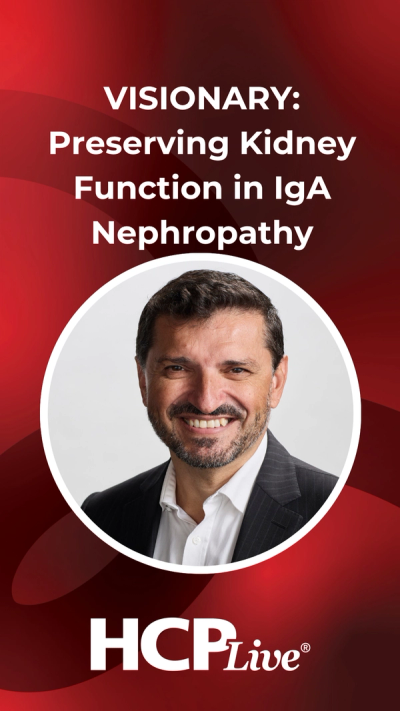
0:36
VISIONARY: Preserving Kidney Function in IgA Nephropathy
5 months ago
by
Vlado Perkovic, MBBS, PhD

0:43
Breakthrough Trial: 50% Reduction in Kidney Disease Relapse
6 months ago
by
Brendon Neuen, MBBS, PhD

0:49
Why Many Indigenous Patients Don't Trust the Healthcare System
7 months ago
by
Jagbir Gill, MD

0:53
Why Dialysis Causes Brain Fog & Long Recovery Times
7 months ago
by
Clara Bohm, MD
Podcasts




CME Content





































Advertisement
More News

Phase 2 BESTOW patient-reported outcomes show greater quality-of-life gains and fewer medication-related symptoms with tegoprubart vs tacrolimus at 1 year.

Katherine Tuttle, MD, joins Brendon Neuen, MBBS, PhD, and Shikha Wadhwani, MD, MS, to unpack new FIND-CKD finerenone analyses from ASN 2026.
Longer GLP-1 RA exposure was also associated with a lower hospitalization burden in a cohort of 5,897 patients with type 2 diabetes.
A Kidney Week 2026 survey examines why patients miss dialysis, when barriers arise, and how outreach relates to rescheduling.
Jessica Kendrick, MD, MPH, discusses phase 3 PATH data showing upacicalcet reduced iPTH in hemodialysis patients with secondary hyperparathyroidism.
Christopher Chan, MD, discusses why digital counseling was linked to higher home KRT uptake only among motivationally ready patients with CKD.
Early RENEW-HD data support moving the 13 kg Neokidney to autonomous use testing, with dialysate calcium adjustments planned.

Jicheng Lv, MD, joins Brendon Neuen, MBBS, PhD, and Shikha Wadhwani, MD, MS, to discuss 2-year TELIGAN data for telitacicept in IgAN.

A PROTECT biomarker analysis shows sparsentan reduced urinary sCD163, BAFF, C5b-9, and IL-6 vs irbesartan through 110 weeks in IgA nephropathy.

Hugh Gallagher, MBBS, PhD, discusses a 27% lower point estimate for cardiovascular events with aspirin that was not significant.

Real-world data in 1477 patients on dialysis show tenapanor reduced serum phosphate at 6 months with or without background phosphate binders.
In a randomized crossover trial, a liberalized produce diet raised urinary potassium excretion without changing serum potassium.

Interim IMAgINATION data show the once-monthly factor B antisense therapy sefaxersen reduced proteinuria by 43.1% vs placebo at week 37 in IgA nephropathy.
Rajiv Agarwal, MD, MS, explains why decades of pentoxifylline data in DKD remain inconclusive and how the VA PTXRx trial aims to settle the question.

Interim RAINIER data show povetacicept reduced proteinuria by 52.0% and resolved hematuria in 85% of patients at week 36, ahead of a November PDUFA date.
Interim I CAN data show ravulizumab reduced proteinuria by 43.4% vs placebo at week 34, supporting its FDA accelerated approval in IgA nephropathy.

Lorundrostat cut systolic BP by 9.6 mm Hg and UACR by 52.2% vs placebo in participants with CKD and uncontrolled hypertension in Launch-HTN.
Chance, biology, and shared genetics may explain more small for gestational age births after living kidney donation.
Future pregnancy plans don’t preclude living kidney donation, but candidates should be counseled on gestational hypertension risk.
A Canadian cohort found modestly greater preeclampsia risk after donation, though most pregnancies were uncomplicated.

Phoom Narongkiatikhun, MD, discusses sleeve gastrectomy reducing LV mass, kidney volume, and albuminuria and boosting medullary FSOC in youth-onset T2D.

Final TELIGAN data show telitacicept cut confirmed 30% eGFR decline by 89% and reduced proteinuria by 60.7% vs placebo over 2 years in IgA nephropathy.

In TRANSCEND-CKD, retatrutide reduced UACR by 49.2% vs placebo and lowered intraglomerular pressure and kidney fat without changing measured GFR at 24 weeks.

Ravulizumab cut proteinuria 43.4% vs placebo at week 34 in I CAN, making it the first C5 inhibitor approved for IgA nephropathy under accelerated approval.

An NHANES analysis finds 82.3% of 9.1 million US adults eligible for kidney-protective GLP-1 RA therapy are unaware of their CKD, with no improvement over a decade.
Advertisement
Advertisement
Trending on HCPLive
1
GI Symptoms Affect an Estimated 53% of GLP-1 RA Users Within 5 Years
2
Inclisiran Reduces Cardiovascular Events in ORION-4 Outcomes Trial
3
Managing GI Adverse Effects of GLP-1 RAs, With Michael Camilleri, MD
4
Clinic Develops Multidisciplinary Clinical Guideline for Care After Pediatric Cardiac Arrest
5