
























































Dimerix shares update on DMX-200, a combination therapy of propagermanium and irbesartan for the treatment of focal segmental sclerosis in addition to chronic kidney disease.
Dimerix shares update on DMX-200, a combination therapy of propagermanium and irbesartan for the treatment of focal segmental sclerosis in addition to chronic kidney disease.

Despite a considerable gap between the number of patients who require a transplant and the number of organs available those patients fortunate enough to receive the lifesaving organs are seeing greater success from the procedure.

There is no shortage of people in need of a kidney transplant but a considerable shortage in the number of organs available to these patients. Despite that health care professionals in nephrology are determined to provide their patients the highest quality of life possible in spite of these challenges.

In heart failure patients with diabetes and/or chronic kidney disease, a new, non-steroidal mineralocorticoid receptor antagonist called finerenone was no more effective than the currently approved MRA eplerenone in reducing the heart failure biomarker N-terminal pro-B-type natriuretic peptide. But it had other benefits.

Mortality in patients with type 1 diabetes mellitus (T1DM) is higher than in the general population, and whether mortality improves or alters with glycemic control is unknown.
Lack of sleep and chronic kidney disease (CKD) independently lead to hypertension, diabetes mellitus, lower quality of life, and shorter life expectancy. Severity of CKD and sleep disturbances may also worsen diabetes and hypertension synergistically.

The US Food and Drug Administration (FDA) issued a strong warning on a drug used to treat iron deficiency anemia in patients with chronic kidney disease. Intravenous injections of ferumoxytol (Feraheme/Amag Pharmaceuticals) can cause serious allergic reactions including death in patients who are sensitive to the drug, the FDA cautioned in a new boxed warning. The drug was approved in 2009.
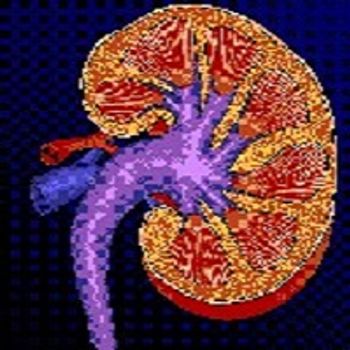
The National Institute of Diabetes and Digestive and Kidney Diseases (NIDDK) reported that one in 10 American adults had some level of chronic kidney disease (CKD), and that kidney disease is the 9th leading cause of death in the US.
Kidney donors may have lower 1,25-dihydroxyvitamin D and phosphate levels. Their parathyroid hormone levels may be elevated, but with minimal effect on calcium levels.

Despite these improvements in medical technology, diabetic nephropathy remains unpredictable and life-threatening. Identifying high-risk patients at an early stage could help clinicians take appropriate steps to reduce risk.
Patients who have chronic kidney disease (CKD) and end-stage renal disease (ESRD) require 20% less warfarin and more monitoring for bleeding than patients who have normal kidney function.
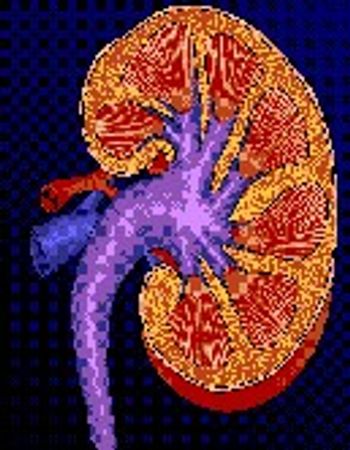
Results from the TEMPO trial presented at Kidney Week 2012 show that treatment with tolvaptan slowed the increase in total kidney volume and the decline in kidney function in patients with Autosomal Dominant Polycystic Kidney Disease (ADPKD).
Increasing numbers of people are on kidney transplant waiting lists. However, the number of potential living donors may shrink as more Americans qualify as pre-diabetic, making them less than ideal donor candidates.
Experts at Kidney Week 2012 discuss several treatment options for hyponatremia, including fluid restriction, loop diuretics, and the use of selective vasopressin V2-receptor antagonists.
A diet rich in highly alkaline fruits and vegetables helps reduce a marker of kidney injury and preserve kidney function in patients with chronic kidney disease.
Use of peritoneal dialysis in patients with end-stage renal disease is declining due to lack of physician training and awareness, financial disincentives, and other factors. However, with proper patient and provider education, it is possible to grow a successful peritoneal dialysis program.

Low-levels of the anti-aging hormone Klotho may presage the presence of kidney disease and its deadly cardiovascular complications.