






Ophthalmology
Latest News
Advertisement
Latest Videos



CME Content


























































Advertisement
More News

A combination of baseline factors, early BCVA, and morphologic responses at 3 months only moderately predicted long-term BCVA responses in eyes with nAMD.

Low vision rehabilitation was associated with statistically significant increases in the overall composite score of a vision-related quality of life scale.

Experts discuss their experience using the treat and extend strategy with aflibercept and their clinical advice when administering treatment.

Experts discuss the long-term efficacy and safety of aflibercept in the treatment of neovascular age-related macular degeneration (nAMD).

Based on objective assessments of visual function with habitual correction, both distance and near visual impairment, and contrast sensitivity impairment, were associated with a higher dementia prevalence.

The AI chatbot, ChatGPT-4, responded correctly to 84% of multiple-choice practice questions on the OphthoQuestions trial, compared to 58% in February 2023.

Real-world evidence suggests the rapid reduction of HbA1c is not associated with early worsening in subjects with T2D with mild or moderate nonproliferative DR.

Use of atropine, 0.01%, eye drops did not slow myopia progression or axial elongation better than placebo in children aged 5 - 12 years.

Experts discuss the comparison of age-related macular degeneration treatments trials (CATT) and how today’s retina specialists can apply the results in their daily practice.

Experts discuss how they define suboptimal responders to anti-vascular endothelial growth factor (Anti-VEGF) treatment and how they manage the care of those patients.

A systematic review and meta-analysis revealed that combination therapy was associated with superior anatomical outcomes in all but 1 included study.
The latest episode of New Insight with Veeral Sheth, MD features an insightful conversation with David Eichenbaum, MD on his goals in mentoring the next generation of retina specialists, sharing anecdotes about his own journey in ophthalmology.

Each month, our editorial staff compiles a recap of the top news in ophthalmology from the past month. Our June 2023 month-in-review features updates to the pipeline, diabetic eye disease news from ADA 2023, and promising data on the use of artificial intelligence.

Experts offer clinical advice on identifying and managing suboptimal responders on anti-vascular endothelial growth factor (Anti-VEGF) treatment.

Experts discuss the management of subretinal fluid (SRF) and intraretinal fluid (IRF) in patients with neovascular age-related macular degeneration (nAMD).

From a novel acne cream to a breakthrough depression drug, a half-dozen agent decisions are coming through in the coming 6 months.

However, the presence of diabetic retinopathy was observed to have no significant impact on physical health and quality of life compared to subjects without retinopathy.

After adjusting for potential confounding factors, patients with microvascular diseases, particularly diabetic retinopathy, and diabetic kidney disease, were found to have a greater possibility of left ventricular hypertrophy.
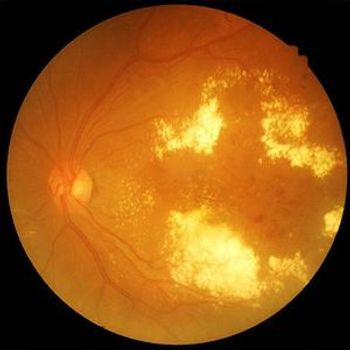
Diabetic retinopathy and microalbuminuria were associated with a significantly higher risk of hemodialysis induction in individuals with T2D.

An analysis of 3 academic health centers suggests youth with diabetic retinopathy had a longer duration of diabetes and higher hemoglobin A1c at the time of the diabetic eye exam.

A new analysis presented at ADA 2023 recommended effective diabetic retinopathy screening for patients with T2D and hypertension.

Veeral Sheth, MD, MBA, FASRS, FACS, offers clinical advice on marking disease progression in neovascular age-related macular degeneration (nAMD).

Experts offer their clinical experience and advice for applying a treat and extend strategy with anti-vascular endothelial growth factor (Anti-VEGF) injections.

A direct comparison of 3 independent AI systems showed differing prevalences of diabetic retinopathy, suggesting inconsistencies when applying these tools to those without preexisting diabetes.

The analysis, from ADA 2023, additionally indicated SGLT2 inhibition showed no effect on the risk of requiring intravitreal injection treatment for DME.
Advertisement
Advertisement
Trending on HCPLive
1
AIRCULES: Lunsekimig Benefit Scales With Severity, With Njira Lugogo, MD
2
What Baseline Disease Severity Hides in PsA Trial Data, With David Oberlin, MD
3
ESC 2026 Recap: 5 Practice-Changing Trials to Know
4
KT-621 Achieves Deep STAT6 Degradation, Initial Respiratory, Skin Gains
5