





Vitiligo
Latest News
Advertisement
Latest Videos




CME Content













































Advertisement
More News

Investigators believe the treatment strategy can go on to treat other “difficult-to-treat” areas of the body such as palms, elbows, and lips.

Investigators write that methods such as dermatoscopy can result in early recognition of unstable patches and lead to appropriate medical treatment for patients with vitiligo.

A new study showed about half of all vitiligo patients from a care system were burdened with the sleeping disorder.
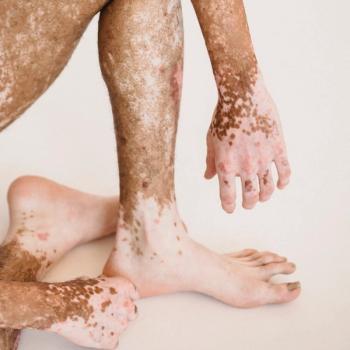
The COVID-19 pandemic had forced vitiligo patients to delay treatments; however, not much is known about the effects of delaying on disease course.

Patients treated with ruxolitnib cream show ≥75% improvement in facial vitiligo scoring index.

Seemal Desai, MD, gives an overview of the most promising research and therapies for patient of color populations.

A pair of AAD VMX studies show long-term repigmentization is possible with the JAK inhibitor. An expert explains why the drug could make history.

According to a systematic review and meta-analysis of 8776 unique patients, 52.69% achieved repigmentation of >90%.
Skin pigmentation disorders do not always have a cure or treatment, and they may cause social or emotional burdens for the patient.
In the inaugural episode of Derm Discussions, Seemal Desai, MD, joins Brad Glick, DO, for an update on dermatologic burdens in people of color.

Patients afflicted with vitiligo often have significant differences in Schirmer test results, lens, and fundus findings.

Patients with vitiligo have a choice of many treatment options, which run the gamut from applying make-up to depigmented areas, to light treatment, all the way up to surgery to move pigmented skin cells to affected areas. Yet, many patients elect not to treat the condition at all, despite the fact that the condition can be emotionally devastating and progressive.
Advertisement
Advertisement
Trending on HCPLive
1
Lp(a)HORIZON, Oral PCSK9s, and 2027 Lipid Trials, with Kausik Ray, MD, MBChB, MPhil
2
Single Dose of CIDEB siRNA Normalizes Liver Fat in MASLD Through 36 Weeks
3
ESSENCE: Semaglutide Improves Liver Markers in MASH Without Obesity
4
Elebsiran Plus Tobevibart Suppresses HDV RNA in Phase 3 ECLIPSE 1 Trial
5