
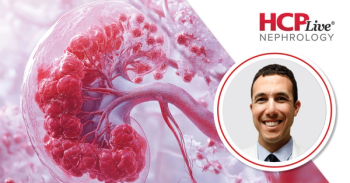
Marc Richards, MD, discusses how new therapies and combination treatment strategies are transforming evidence-based care for chronic kidney disease.
Marc Richards, MD, discusses how new therapies and combination treatment strategies are transforming evidence-based care for chronic kidney disease.
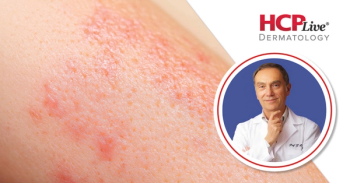
Erythema was less frequent with combination therapy than with phototherapy alone, according to Giovanni Leone, MD.

Ann Marie Navar, MD, PhD, discusses the groundbreaking approval of the first oral PCSK9 inhibitor and what it means for patients managing their LDL-C levels.
FDA accepted Camurus’ resubmitted CAM2029 application for acromegaly, with a target action date of December 18, 2026.
Michael Richards, MD, discusses aldosterone's role in CKD pathophysiology and why targeting this pathway may reshape kidney disease treatment.
The FDA granted traditional approval to Novartis’ iptacopan (Fabhalta) for adults with primary IgA nephropathy, supported by phase 3 APPLAUSE-IgAN data showing slowed kidney function decline and sustained proteinuria reductions.

New secondary endpoint analyses from Phase 3 LATITUDE PsO 3001 and 3002 reveal high rates of clearance on high-impact areas.

Boadie Dunlop, MD, discusses COMP360 dosing-day monitoring, treatment resistance, and where psilocybin may fit among existing TRD options.

A recent analysis of data from the Global Burden of Disease Study has indicated a relationship between risk of death from ACHD and socioeconomic factors.

Thanai Pongdee, MD, discusses 4-year PIONEER data showing avapritinib's quality of life, symptom, and safety benefits in indolent systemic mastocytosis remain durable.

NYU Langone’s Conor Donnelly, Allan Massie, and Michal Mankowski explain why follow-up after kidney transplant referral is critical to improving access.

A multidisciplinary clinical forum discussed diagnosis, referral thresholds, and the evolving APOC3-targeted treatment landscape for FCS.

Seth Martin, MD, MHS, discusses his recent study, which produced an AI-optimized equation that only requires 1 line of code.
New data support advancement of the Phase 3 PALM-PAH trial, a randomized, double-blind, placebo-controlled study now enrolling, with change in 6MWD as its primary endpoint.
Phase 3 FIND-CKD data show finerenone slows kidney decline and reduces CV events in adults with nondiabetic CKD, Rajiv Agarwal, MD, adds his perspective.

New 26-week COMP006 data show durable MADRS improvement after 2 COMP360 psilocybin doses in treatment-resistant depression, Dunlop explains.
FDA approved once-daily oral enlicitide to lower LDL-C in adults with hypercholesterolemia, including heterozygous familial hypercholesterolemia.
In this discussion during UV Safety Awareness Month, Suozzi highlights tips on reversing photodamage and sun protection misconceptions.

These modifiable factors, among others, directly contribute to 88.7% of all IHD deaths in 2023.
Massie, Donnelly, and Mankowski discuss how transplant center choice shapes kidney transplant evaluation and access.

Preliminary real-world data presented at EAACI 2026 found broad reductions in respiratory tract infections with OM-85, David Price, MD, said.

These positive topline findings highlight the investigational TYK2 inhibitor soficitinib (ICP-332) in patients with moderate-to-severe atopic dermatitis.

New data from the 45-patient Midpoint Cohort, despite not being powered for statistical significance, indicate a potentially substantial benefit.
FDA grants priority review to obinutuzumab, positioning it as the first potential approved therapy for primary membranous nephropathy.
5 dermatology takeaways from Maui Derm NP+PA Summer 2026, covering eczematous dermatitis, rosacea, blistering disease, hair loss, and pigmentation disorders.
Hosts discuss the latest data in psoriasis and the case for treating scalp, nail, and genital psoriasis as systemic-eligible disease.

Sripal Bangalore, MD, discusses his recent study proposing that early intervention can lead to better cardiovascular outcomes among these patients.
In this SDPA interview, Matthew Zirwas, MD, highlights key takeaways from his session 'Clinical Pearls for Optimizing Dermatologic Care.'

Beyond hemodynamics and treatment targets, McDevitt says the most important conversations APPs have with patients are often the ones that don't appear in guidelines.
Beyond hemodynamics and treatment targets, McDevitt says the most important conversations APPs have with patients are often the ones that don't appear in guidelines.