
The FDA has approved proprietary desmopressin oral solution formulation ET-600 for the treatment of central diabetes insipidus in children.
The FDA has approved proprietary desmopressin oral solution formulation ET-600 for the treatment of central diabetes insipidus in children.
Willingness to pursue living kidney donation is shaped by relationships, health, and a multidisciplinary approach, not just finances.

Creager discusses the accomplishments of the ACC and AHA’s joint PE clinical practice guideline while continuing to look to the future of the disease.
Hurtado-Lorenzo discusses trial data showing time-restricted feeding in Crohn’s disease results in weight loss, symptom improvement, and microbiome changes.

Vanda Pharmaceuticals announced the FDA's acceptance of imsidolimab's Biologics License Application for the treatment of GPP.

Jolley discusses the team’s combination of volume rendering and cardiac MRI-based valve evaluation to provide 4D models of the heart and blood flow.
Systematic review identifies patient and clinician barriers to obesity management before kidney transplantation, with Adrian Brown, PhD.

Updated HAE guidelines support early self-treatment; Cancian discuss transitioning patients from injectable on-demand therapy to oral sebetralstat after KONFIDENT data.
Rare kidney diseases are hard to detect early, but precision therapies and updated guidelines offer new ways to improve patient outcomes.
Diabetes Dialogue cohosts Diana Isaacs, PharmD, and Natalie Bellini, DNP, cover the recent approval and what it means for Wegovy 7.2 mg in the US.

This new February episode of the Skin of Color Savvy podcast highlights why 2026 may be the year of skin health equity in the dermatology field.

PhIP-Seq analysis in the Boston Birth Cohort found distinct early-childhood IgG patterns in food allergy, but investigators caution against diagnostic use of IgG testing.
Diabetes Dialogue cohosts Diana Isaacs, PharmD, and Natalie Bellini, DNP, discuss Lilly’s groundbreaking new Zepbound administration option.
FDA approves dupilumab for allergic fungal rhinosinusitis, supported by phase 3 LIBERTY-AFRS-AIMS data showing reduced symptoms and corticosteroid or surgery use.
HCPLive speaks with Mark Lebwohl, MD, about recent data on those with psoriasis and obesity or overweight treated with ixekizumab (Taltz) and tirzepatide (Zepbound).
The list price of all 3 semaglutide drugs will be lowered to $675, marking a reduction of roughly 50% and 35% for Wegovy and Ozempic, respectively.

In a phase 2 trial in Chinese people with overweight or obesity, UBT251 led to mean weight loss of up to 19.7% (-17.5 kg) after 24 weeks.
Diabetes Dialogue cohosts Diana Isaacs, PharmD, and Natalie Bellini, DNP, discuss the Portal Pump's recent Breakthrough Designation from the FDA.
KONFIDENT investigator Cancian discusses oral sebetralstat’s role in the updated HAE treatment guidelines.
An audio recap of the top 5 stories in healthcare news from the week of 02/15-02/21.
Survey of 600 US relatives finds donor–recipient closeness and expected life extension drive living kidney donation more than financial concerns.
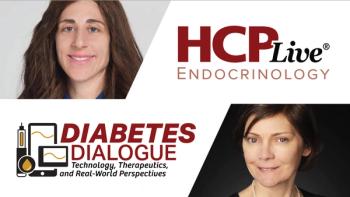
Diabetes Dialogue cohosts Diana Isaacs, PharmD, and Natalie Bellini, DNP, discuss the recent release of the Eversense 365 by Sequel Medtech and Senseonics, paired with the Twiist insulin pump.
Seralutinib did improve 6-minute walk times and biomarkers, especially in patients with higher-risk disease.
Luspatercept met primary endpoints in transfusion-dependent and non–transfusion-dependent alpha-thalassemia.
This approval of the Allurion Gastric Balloon System, incorporating the Allurion Smart Capsule, is indicated for weight loss management for those with obesity.
The phase 3 REDEFINE 4 trial saw CagriSema achieve 23% weight loss, but fail to demonstrate noninferiority to tirzepatide in patients with overweight or obesity.
The FDA has granted both designations to TSRA-196, an in vivo gene editing program from Tessera Therapeutics, for the treatment of PiZZ alpha-1 antitrypsin deficiency.
FDA clears iloperidone metabolite, milsaperidone, for acute bipolar I disorder and schizophrenia, expanding treatment options.
Cohosts Diana Isaacs, PharmD, and Natalie Bellini, DNP, discuss the recent release of Eli Lilly's Zepbound as an injectable with the KwikPen.

The CUPID-C randomized clinical trial confirmed CUPID-A results, with dupilumab significantly reducing urticaria in anti-IgE–naive individuals with CSU.