

Counting down the most impactful news at major medical meetings, it’s the HCPLive Five! This episode focuses on 5 key dermatology updates from EADV.
Counting down the most impactful news at major medical meetings, it’s the HCPLive Five! This episode focuses on 5 key dermatology updates from EADV.
During this EADV interview, Lebwohl speaks to some of the most recent developments in the psoriasis research space.

In this set of interviews, 6 leaders in the field of dermatology highlight their experiences at the 2025 EADV Congress.
In this Q&A, Malhotra discusses how tirzepatide impacts obstructive sleep apnea treatment.

FDA approval of tirzepatide for OSA sparks a surge in referrals as experts highlight weight loss benefits, symptom relief, and patient selection.

In this interview at EADV, Pasumarthi highlights her team’s late-breaking data on ritlecitinib’s use among patients with cicatricial alopecias.
The panelists stress the significance of a comprehensive approach to patient care, acknowledging the interconnected nature of cardiovascular, kidney, endocrine, and obesity-related benefits, and highlighting that addressing secondary diseases can minimize overall disease risk in patients.
Michael Koren, MD addresses the challenges posed by prior authorization and the diminished role of pharmaceutical sales representatives in informing providers about medication advancements, leading to a disconnect in the provider's treatment arsenal.
The panel explores issues surrounding medication adherence and the potential for improved patient engagement. They emphasize that poor medication adherence increases the risk of cardiovascular events and discuss factors such as drug cost, timing of administration, and the importance of adopting a patient-centric approach to optimize treatment success.
Michael Blaha, MD, highlights the potential of GLP-1 agonists in lowering LDL cholesterol, triglycerides, and body weight in patients with diabetes, presenting them as an additional option for reducing cardiovascular risk in this patient population.
The panel of medical experts addresses the challenges in raising awareness among healthcare providers about various medications and the need for increased awareness of the REDUCE-IT trial outcomes.
Erin Michos, MD, highlights several notable emerging lipid-lowering treatments, including bempedoic acid, the ANGPTL3 inhibitor evinacumab, the MTP inhibitor lomitapide, the ApoB-100 inhibitor mipomersen, and the ApoC-III degradation molecules volanesorsen and olezarsen.
Michael Koren, MD, discusses the recently released results from the VICTORIAN-INITIATE (V-INITIATE) trial, which were presented at the 2024 American College of Cardiology (ACC) Annual Scientific Session in Atlanta.
Deepak Bhatt, MD, MPH, MBA, reviews the efficacy and safety data of inclisiran, highlighting its long-term effects and noting that injection site reactions are among the most prominent adverse reactions associated with this medication.
Michael Blaha, MD, discusses the efficacy and safety of novel targeted therapies for lowering LDL cholesterol and emphasizes the importance of long-term data in building patient confidence in this new treatment option.
Leading experts highlight the established role of PCSK9 inhibitors, such as evolocumab and alirocumab, and introduce the promising second-generation PCSK9 inhibitors, known as small interfering RNA (siRNA), which represent an innovative therapeutic approach that selectively reduces the production of specific proteins through RNA interference.
Panelists discuss ongoing clinical trials aimed at lowering Lipoprotein(a) levels, emphasizing the importance of proactive patient testing, and referring to new guidelines recommending that everyone be tested once in their lifetime.
Key opinion leaders in cardiology share insights on reducing LDL cholesterol to manage cardiovascular disease risk, educating patients not reaching goals, and implementing real-world clinical strategies for maintaining lower LDL levels.
Erin Michos, MD, delivers a comprehensive review of lipid management and its influence on cardiovascular disease, emphasizing recent studies that underscore the need for improved treatment strategies for high-risk patients.

Acute severe ulcerative colitis and a greater number of biologics precoloectomy were linked to an increased probability of acute pouchitis, while older age at colectomy was associated with a decreased probability of acute pouchitis.
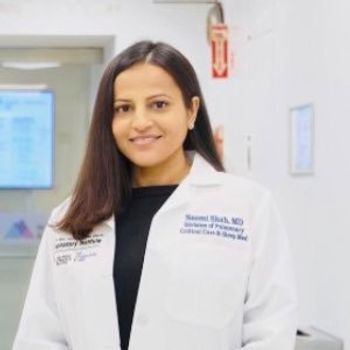
Dr. Neomi Shah explains why improving access to behavioral care for insomnia needs to be prioritized.

In the QUSAR study, 80% of patients treated with guselkumab achieved a clinical response.

New evidence from a Mount Sinai study suggested that consistent lack of sleep has negative effects on immune stem cells and increases the risk of inflammatory disorders and heart disease.

The Icahn investigator discusses her team's new EADV 2022 data on the JAK inhibitor.