
Opinion|Videos|October 28, 2026
Escalating PAH Therapy: Setting Expectations and Choosing the Next Step
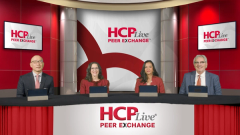
Patients who feel well may still need more therapy. The panel discusses setting expectations at diagnosis, weighing a switch against adding a third pathway, and framing treatment around long-term survival.
Advertisement
Episodes in this series
In "Escalating PAH Therapy: Setting Expectations and Choosing the Next Step," the discussion moves to the conversation about adding or changing therapy.
Dr. McLaughlin asks Dr. Channick how he combines the risk score, echo, and hemodynamics when reassessing a patient after initial treatment. He generally leans toward aggressiveness, even in patients who are doing well, because anyone other than low risk can worsen even with a normal echo and the goal is to prevent that. The harder conversation comes when a patient feels fine, is working, and asks why another medication is needed, so he frames the goal as sitting across from the patient in five and ten years. When the patient is not doing well, the discussion is easier because the question becomes which drug to add or switch.
Dr. Vaidya agrees that success with add-on therapy begins at the initial diagnostic encounter, and she recommends spending time up front explaining the journey and the goals ahead. Medications work, so patients feel better on combination therapy, and at three or four months it is difficult to celebrate that improvement while also saying they need more if that expectation was never set.
She reminds herself that risk tools predict survival at one year, whereas many patients are young and clinicians aim for five, ten, or twenty years. When patients improve but fall short of goals, treatment becomes individualized. One option is switching the PDE5 inhibitor to riociguat, supported by the REPLACE trial, which showed improved clinical outcomes in patients who had not met treatment goals. Riociguat could also be part of initial combination therapy with an endothelin receptor antagonist. Most clinicians, including Dr. Vaidya, now favor escalating by adding a third pathway and sometimes a fourth, depending on how far the patient is from goals and what the patient can manage next.
The next episode in this series, "The Fourth PAH Pathway: Activin Signaling Inhibitors and Parenteral Therapy," features the panel on the fourth pathway and the continuing need for parenteral therapy.
Advertisement
Related to this article
ORKA-001, a half-life extended IL-23p19 antibody, achieved PASI 100 in 61% of high-dose patients at week 16 in the phase 2b EVERLAST-B psoriasis trial.

In PHINDER, IPF had the highest PVD-B65 mortality risk scores. Rali discusses why PH in ILD is missed and when to refer for right heart catheterization.
Parth Rali, MD, explains how the AHA/ACC A-through-E categories compare with ESC risk tiers and how hospitals can meet the class 1 PERT recommendation.

Colin Church, MBBS, PhD, discusses durable 6MWD and NT-proBNP signals in a TPIP open-label extension and what phase 3 needs to show next.
Colin Church, MBBS, PhD, discusses 24-month open-label extension data showing TPIP remains tolerable in patients with PH-ILD, with no new safety signals.

Vanda’s oral NK-1 receptor antagonist cut any vomiting by 27% vs placebo after a single 1 mg semaglutide dose, and the company plans an sNDA submission.

This segment of Nguyen's 2026 Fall Clinical Dermatology interview highlights key insights on early dermatology career strategies and other information.

Brynn Marks, MD, MSHPEd, joins Diana Isaacs, PharmD, and Natalie Bellini, DNP, to discuss a new framework defining fully closed loop insulin delivery.
Advertisement
Advertisement
Trending on HCPLive
1
eGFR Underestimates CKD in Patients with Cancer, Study Finds
2
Tradipitant Cuts Semaglutide-Induced Vomiting in Phase 3 Trial
3
Respiratory Monitoring After Spinal Muscular Atrophy Gene Therapy
4
Inside The New AHA/ACC Acute Pulmonary Embolism Categories
5