

Opinion|Videos|October 28, 2026
PAH Practice Pearls: Risk Assessment, Right Heart Focus, and Optimism
The panel closes with practical changes clinicians can adopt immediately, including routine risk assessment, attention to the right heart, collaboration with expert centers, and an optimistic message for patients.
Advertisement
Episodes in this series
To close, "PAH Practice Pearls: Risk Assessment, Right Heart Focus, and Optimism" asks each panelist for one change that clinicians can make tomorrow.
Dr. McLaughlin asks each panelist for one shift in treatment that clinicians, whether at a specialty center or in the community, could start tomorrow. Dr. Kim chooses risk assessment, which he compares to a vital sign. He says clinicians should pick any validated tool, since they overlap, and apply it at every visit, because follow-up assessment may be even more powerful than the initial one.
A colleague adds that this is easy because the data are already collected in clinic, including functional class, walk distance, vital signs, labs, NT-proBNP, and kidney function. One program uses an electronic record flowsheet that calculates serial scores at the bottom of the clinic note.
Dr. Vaidya emphasizes that when in doubt, clinicians should look at the right side of the heart, which helps guide direction for each patient. She adds that PAH has grown complicated on both the diagnostic and therapeutic sides and is a disease of commitment and partnership. She urges clinicians not to merely dabble, welcomes growing awareness, and describes very little ego in the field, with experts partnering with community clinicians so patients everywhere have access to care. Dr. McLaughlin joins her point with Dr. Kim's, noting that risk assessment is critical but is one part of the puzzle, complemented by echo and hemodynamics.
Dr. Channick offers a different message, a positive attitude. Patients often arrive having been told that the disease will eventually kill them. He disagrees and tells patients his goal is that they will not die of pulmonary hypertension but with it, and he describes the relief visible on their faces. He does not know how the disease will be treated in five years and tells patients to expect five more therapies by then, so they should not dwell on prognosis. Dr. McLaughlin thanks the panelists and viewers.
Thank you for watching this HCPLive Peer Exchange series on pulmonary arterial hypertension. Please subscribe to our eNewsletter for information on upcoming video series.
Advertisement
Related to this article
ORKA-001, a half-life extended IL-23p19 antibody, achieved PASI 100 in 61% of high-dose patients at week 16 in the phase 2b EVERLAST-B psoriasis trial.

In PHINDER, IPF had the highest PVD-B65 mortality risk scores. Rali discusses why PH in ILD is missed and when to refer for right heart catheterization.
Parth Rali, MD, explains how the AHA/ACC A-through-E categories compare with ESC risk tiers and how hospitals can meet the class 1 PERT recommendation.

Colin Church, MBBS, PhD, discusses durable 6MWD and NT-proBNP signals in a TPIP open-label extension and what phase 3 needs to show next.
Colin Church, MBBS, PhD, discusses 24-month open-label extension data showing TPIP remains tolerable in patients with PH-ILD, with no new safety signals.

Vanda’s oral NK-1 receptor antagonist cut any vomiting by 27% vs placebo after a single 1 mg semaglutide dose, and the company plans an sNDA submission.

This segment of Nguyen's 2026 Fall Clinical Dermatology interview highlights key insights on early dermatology career strategies and other information.
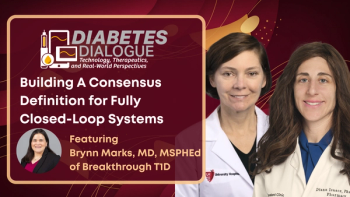
Brynn Marks, MD, MSHPEd, joins Diana Isaacs, PharmD, and Natalie Bellini, DNP, to discuss a new framework defining fully closed loop insulin delivery.
Advertisement
Advertisement
Trending on HCPLive
1
eGFR Underestimates CKD in Patients with Cancer, Study Finds
2
Tradipitant Cuts Semaglutide-Induced Vomiting in Phase 3 Trial
3
Respiratory Monitoring After Spinal Muscular Atrophy Gene Therapy
4
Inside The New AHA/ACC Acute Pulmonary Embolism Categories
5