

News|Videos|June 4, 2026
How to Apply the New Pediatric Eczema Guidelines in Practice
Fact checked by: Tim Smith
This segment examines how the guideline navigates the tension between GRADE-based evidence thresholds and long-established clinical practices.
Advertisement
Episodes in this series
Evidence-based guidelines are only as useful as the framework used to interpret them—and the new pediatric
Andrew C. Krakowski, MD, of St. Luke's University Health Network, noted that this framing is relatively unusual in the guideline literature and that he found it clarifying. The GRADE system used to score the evidence base rewards large randomized controlled trials, meaning that practices with decades of real-world support but limited trial data—such as oral antibiotics for superinfected eczema—can appear underrepresented in formal recommendations. Torres-Zegarra, of Children's Hospital Colorado, University of Colorado Anschutz, echoed this point, cautioning clinicians against abandoning effective practices simply because they did not meet the threshold for a strong recommendation.
This segment of the HCPLive special report explores the practical implications of that interpretive tension, including how the guidelines can be used as leverage with payers. Krakowski described using the document as a tool to challenge insurance coverage cutoffs that do not align with the expert consensus, arguing that the written endorsement of a recognized academic body carries weight in prior authorization discussions that individual clinical judgment often does not. The conversation reflects a recurring theme throughout the special report: guidelines are most valuable not as prescriptive rules but as evidence-anchored starting points that empower clinicians to advocate for their patients.
Disclosures: Krakowski and Torres-Zegarra have no relevant reported disclosures.
References
American Academy of Dermatology Issues First-Ever Pediatric Atopic Dermatitis Guidelines, Highlighting Prevention Strategies and Effective Treatments. American Academy of Dermatology. April 7, 2026. Accessed June 4, 2026.
https://www.aad.org/news/aad-issues-first-pediatric-atopic-dermatitis-guidelines .Smith T. First-Ever Pediatric Eczema Guidelines Issued by American Academy of Dermatology. HCPLive. April 10, 2026. Accessed June 4, 2026.
https://www.hcplive.com/view/first-ever-pediatric-eczema-guidelines-issued-american-academy-dermatology .
Advertisement
Related to this article
Stephan Weidinger, MD, PhD, discusses 5-year ADlong data showing durable skin clearance and itch control with lebrikizumab in atopic dermatitis.
Yoseph Dalia, MD, discusses diagnosing and treating pseudofolliculitis barbae, its occupational impact, and barriers to care in skin of color.
Sarina Berger Elmariah, MD, PhD, MPH, discusses 3-year nemolizumab data in early responders and what IL-31 blockade means for itch and atopic dermatitis.
Todd Schlesinger, MD, discusses Ameluz PDT for sBCC, adjuvant cemiplimab, remibrutinib for symptomatic dermographism, and nonsurgical skin cancer care.

Oral bitopertin met all primary and secondary endpoints in the phase 3 APOLLO trial in EPP, cutting PPIX and increasing pain-free time in light.
Catch up on any data and key clinician perspectives presented at the Heart Failure Society of America Annual Scientific Meeting 2026.

Children aged 2 - 11 with atopic dermatitis saw early, lasting itch and sleep gains with nemolizumab through 1 year in phase 2 data shared at PeDRA 2026.
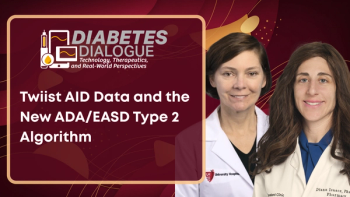
Diana Isaacs, PharmD, and Natalie Bellini, DNP, discuss a major breakthrough with the Twiist insulin pump and the recent ADA/EASD T2D guidelines.
Advertisement
Advertisement
Trending on HCPLive
1
FDA Approves Bepirovirsen for Chronic Hepatitis B
2
ASN Kidney Week 2026 Preview: 8 Late-Breakers We’ll Unpack With the Investigators
3
5-Year ADlong Data on Lebrikizumab for Eczema, With Stephan Weidinger, MD, PhD
4
Frespaciguat Misses 6MWD End Point in PH-COPD: Gabor Kovacs, MD, PhD
5