
Opinion|Videos|March 22, 2025
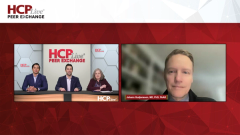
Role of IL-36 in GPP Pathogenesis and Treatment
Panelists describe the role of the IL-36 pathway in the pathogenesis of generalized pustular psoriasis (GPP) and discuss how IL-36 inhibition can be a key strategy in managing the disease.
Advertisement
Video content above is prompted by the following:
Episodes in this series
- Describe the role of the IL-36 pathway in the pathogenesis of GPP and how IL-36 inhibition can play a role in disease management.
Advertisement
Related to this article
Catch up on HCPLive’s second-half Fall Clinical 2026 coverage, from HS underdiagnosis in men and long-term acne data to advanced cutaneous SCC care.
In mice, liraglutide reduced steatosis through PPARα without needing iNKT cells, pointing to a possible GLP-1 RA plus PPARα combination.

In pooled, propensity-matched data, SC infliximab achieved week 54 endoscopic response in 65.7% of patients with ileal Crohn’s disease vs 27.1% with IV.
In ADtouch, lebrikizumab improved clearance, itch, and pain in hand and foot atopic dermatitis. Shawn Kwatra, MD, discusses what the data mean.
Phase 3 SHINE-2 data show 41.3% of children and adolescents with UC reached clinical remission after 12 weeks of mirikizumab induction.
A roundup of highlights from EADV Congress 2026 in Vienna, spanning dupilumab real-world data, pipeline biologics, and a first-in-class oral agent.

Among 155 patients aged 0 to 24 months, 96.1% of episodes were food-triggered and 90.4% of epinephrine recipients received only 1 dose.
In a LIBERTY post hoc analysis, most patients restarting infliximab as SC 240 mg after a drug holiday had prior ADAs, yet outcomes were similar.
Advertisement
Advertisement
Trending on HCPLive
1
Oral Icotrokinra Sustains UC Response Through 76 Weeks in ANTHEM-UC LTE
2
Guselkumab Sustains Histologic Healing in Ulcerative Colitis Over 3 Years
3
Rezpegaldesleukin Hair Regrowth Climbs Through 1 Year in AA: David Rosmarin, MD
4
EADV Congress 2026: 5 Atopic Dermatitis Headlines to Know
5