

News|Videos|November 26, 2025
Special Report: Inadequate Response and When to Switch Systemic Therapy in Atopic Dermatitis
Fact checked by: Patrick Campbell
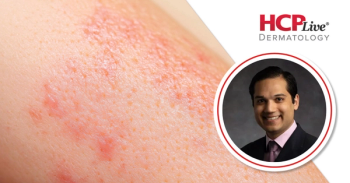
Clinicians discuss the importance of patient-centered treatment decisions and the need to address therapeutic inertia in managing chronic conditions.
Advertisement
Episodes in this series
Determining when to maintain, optimize, or switch systemic therapy in
In this video, expert guest Andrew Mastro, MS, PA-C, describes his approach to defining inadequate response by integrating objective thresholds and patient-reported outcomes. He views a failure to achieve deeper responses—such as EASI 90, IGA 0/1, and near-complete itch control (NRS 0–1)—by approximately 4 months on a biologic as a signal that optimal targets have not been met, especially for moderate to severe disease. He distinguishes primary failure (never achieving moderate or deeper levels of response) from secondary failure (loss of previously adequate control, increased flares, or greater day-to-day disease awareness) and emphasizes that patient dissatisfaction must accompany clinician concern for a switch to be appropriate.
In this video, part of a
A key evidence base discussed is the LEVEL UP study, which evaluated switching from dupilumab to upadacitinib. Shahriari describes the two-period design, beginning with a head-to-head comparison of upadacitinib and dupilumab, where upadacitinib demonstrated superiority at week 16 on a composite endpoint of EASI 90 plus near-complete itch control. The second phase focused on patients with inadequate response to dupilumab (defined as not reaching EASI 75) who then switched to upadacitinib 15 mg. Remarkably, within 4 weeks of switching, nearly 7 in 10 of these prior nonresponders achieved EASI 75, about one-third reached EASI 90, and many had started from a baseline of roughly EASI 50 at the time of switch. These findings reinforce that failure on one advanced therapy does not preclude robust response to another mechanism of action.
Relevant disclosures for Shahriari include AbbVie, Apogee, Arcutis, Bristol Myers Squibb, Dermavant, Galderma, Incyte, Johnson & Johnson, LEO, Lilly USA, Novartis, Regeneron, Sanofi-Genzyme, Takeda, UCB, Pfizer, and others. Mastro has no relevant disclosures to report.
References:
Silverberg JI, Gooderham M, Katoh N, et al. Combining treat-to-target principles and shared decision-making: International expert consensus-based recommendations with a novel concept for minimal disease activity criteria in atopic dermatitis. J Eur Acad Dermatol Venereol. 2024;38(11):2139-2148. doi: 10.1111/jdv.20229
Silverberg JI, Bunick CG, Hong HC, et al. Efficacy and safety of upadacitinib versus dupilumab in adults and adolescents with moderate-to-severe atopic dermatitis: week 16 results of an open-label randomized efficacy assessor-blinded head-to-head phase IIIb/IV study (Level Up). Br J Dermatol. 2024;192(1):36-45. doi: 10.1093/bjd/ljae404
Newsletter
Join thousands of clinicians staying current on new therapies, trial data, and expert insights—subscribe to HCPLive today.
SubscribeAdvertisement
Related to this article

A roundup of highlights from EADV Congress 2026 in Vienna, spanning dupilumab real-world data, pipeline biologics, and a first-in-class oral agent.
Raj Chovatiya, MD, PhD, discusses biologic choice in atopic dermatitis, pipeline strategies, and remibrutinib’s approval for symptomatic dermographism.

New ARCADIA and OLYMPIA LTE data show nemolizumab sustained skin clearance and itch relief for up to 3 years in atopic dermatitis and prurigo nodularis.

US claims data from Fall Clinical 2026 suggest hidradenitis suppurativa symptoms occur at similar rates in both sexes, hinting at underdiagnosis in males.

Jennifer Hsiao, MD, discusses HS treatment expectations, biologic selection, oral JAK inhibitors, and comorbidity screening.

Phase 3 extension shows oral denifanstat sustains acne lesion reductions through 52 weeks, with 57% IGA success and 77% fewer inflammatory lesions.

Catch up on HCPLive’s first-half Fall Clinical 2026 coverage, including new psoriasis and atopic dermatitis data and expert insights on HS and vitiligo.

In this session, Cheri Frey, MD, shared a framework for evaluating skincare products, from ingredient plausibility to clinically meaningful results.
Advertisement
Advertisement