
Opinion|Podcasts|November 15, 2024
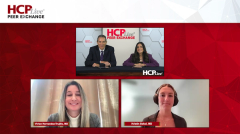
Treatment Goals and Guidelines for CSU
Key Takeaways
- Treatment goals are shaped by disease severity, patient preferences, and clinical guidelines, ensuring personalized care.
- Antihistamines are the first-line treatment, with updosing considered for insufficient response by altering dosage or interval.
Panelists discuss the factors influencing the development of treatment goals for chronic spontaneous urticaria (CSU) from both patient and physician perspectives, highlighting current international guidelines that recommend antihistamines as first-line treatment, with options for updosing, and outlining second-line therapies such as omalizumab and third-line options like cyclosporine, along with the recommendation to adjust treatment based on disease control levels.
Advertisement
Episodes in this series
Video content above is prompted by the following:
- What are the factors that shape the development of treatment goals, both for patients and physicians?
- What do international guidelines currently recommend for therapeutic approach? (
Zuberbier, J Allergy Clin Immunol, 2022 )- First-line treatment: antihistamine
- Patients with insufficient response, updosing should be considered, via shortening interview and/or increasing dosage
- Second-line treatment: omalizumab; start with 300 mg/4 weeks
- Third-line treatment: cyclosporine
- General recommendation to step-up and step-down treatment based on levels of disease control
Advertisement
Related to this article

Katherine Tuttle, MD, joins Brendon Neuen, MBBS, PhD, and Shikha Wadhwani, MD, MS, to unpack new FIND-CKD finerenone analyses from ASN 2026.

Jicheng Lv, MD, joins Brendon Neuen, MBBS, PhD, and Shikha Wadhwani, MD, MS, to discuss 2-year TELIGAN data for telitacicept in IgAN.
A PROTECT biomarker analysis shows sparsentan reduced urinary sCD163, BAFF, C5b-9, and IL-6 vs irbesartan through 110 weeks in IgA nephropathy.

Diana Isaacs, PharmD, and Natalie Bellini, DNP, review early MiniMed Vivera data on optional meal announcements and twiist's new type 2 diabetes clearance.

Real-world data in 1477 patients on dialysis show tenapanor reduced serum phosphate at 6 months with or without background phosphate binders.

Approval rests on the phase 3 AFFIRM trial, in which 56% of patients reached clinical remission at week 12 vs 30% with placebo.

Jean Elwing, MD, discusses what drove ralinepag's reduction in PAH clinical worsening in ADVANCE Outcomes and where the it could fit if approved.
Jean Elwing, MD, discusses a CHEST 2026 subgroup analysis showing ralinepag reduces clinical worsening in PAH even among patients with low-risk criteria.
Advertisement
Advertisement
Trending on HCPLive
1
Ralinepag's Benefit Spans Broad PAH Population, With Jean Elwing, MD
2
Sibeprenlimab Stabilizes eGFR Over 24 Months in IgA Nephropathy: VISIONARY
3
Retatrutide Lowers Albuminuria, Glomerular Pressure in Obesity and CKD
4
Ralinepag Cuts PAH Worsening in Low-Risk Patients, With Jean Elwing, MD
5