

Solomon explains how the health care system contributes to climate change and the direct health impacts seen as a result, based on her session at ACP.

Abigail Brooks is a strategic content lead overseeing HCPLive, RheumatologyLive, and Patient Care Online. She joined MJH Life Sciences in August 2023 shortly after graduating from Monmouth University where she earned her BA in Communication with a concentration in Public Relations/Journalism and later an MA in Interactive Digital Media. She enjoys traveling, running, and reading books. She can be reached at [email protected].
Solomon explains how the health care system contributes to climate change and the direct health impacts seen as a result, based on her session at ACP.

Branch provides an overview of the use of dual antiplatelet therapy and anticoagulants based on his session at the ACP Internal Medicine meeting.

Shah discusses the prevalence of psychiatric illness among hospitalized patients and highlights key considerations for their management from her session at ACP.

Nahas reviews key highlights from her session at ACP, emphasizing the importance of reviewing patient history and considering what other factors may be causing headaches.
Branch discusses key takeaways from his session at ACP and guideline recommendations for primary and secondary prevention of cardiovascular disease.

Contrary to previous research, findings point to similar decreases in weight and improvements in glucose homeostasis between time-restricted eating and usual eating pattern groups.

Markland discusses the use of anticholinergics, beta 3-agonists, and nonpharmacologic treatments for urge urinary incontinence, based on her session at ACP.

Wilt discusses the different screening methods recommended by ACP and explains how he talks about screening with his patients.

Berg discusses takeaways from his session at the 2024 ACP Internal Medicine meeting, including considerations for the diagnosis and management of acute coronary syndrome.

Cerceo discusses key topics from her session at the ACP Internal Medicine meeting about health care providers’ role in discussing climate-related health with their patients

In this Q&A, Kathuria explains the current state of smoking cessation programs and how health care providers can help patients combat their tobacco dependence.
Cerceo explains how the health care system contributes to climate change and the subsequent negative impact on patients, especially those in vulnerable or disadvantaged communities.

Lopez discusses the growing prevalence of obesity in the US and the need for improved, cross-specialty care based on patients’ metabolic health.
Wilt discusses ACP guidelines regarding what age to begin colorectal cancer screening and the benefits versus harms of screening at 45 compared to 50 years of age.

In recognition of World IBS Day, we spoke with Jeffrey Roberts about what led him to found the holiday in 2019 and took a closer look at the continued marginalization of the condition.

The modified difference-in-differences analysis found notable increases in DAA use after state Medicaid programs relaxed certain coverage restrictions.

The consensus calls for the recognition of kidney disease as a major non-communicable disease driver of premature mortality by the World Health Organization.

Incident use of anti-TNF therapy was linked to an increased risk of kidney function decline but not all-cause mortality in patients with newly diagnosed IBD.

Barratt discusses results from subgroup analyses of the phase 3 PROTECT trial based on baseline proteinuria and what they add to previous findings.
Barratt discusses the potential of targeting the alternative pathway for controlling inflammation and the significance of the new APPLAUSE-IgAN data.

Although the intervention did not reduce risk of CKD progression versus standard care, it addressed barriers to care and increased patients’ exposure to ACEi/ARBs.

Using the National Institutes of Health Toolbox Cognition Battery, results showed greater cognitive dysfunction across certain domains based on sex and CKD stage.

The proposed insulin glargine biosimilar (Basalin) showed comparable immunogenicity, efficacy, and safety to the originator (Lantus) in a phase 3 equivalence trial.

Although overall engagement in the HCV care cascade improved after the introduction of DAAs, vulnerable subgroups still received less testing and treatment.

Results showed poorly controlled HbA1C increased the risk of elevated ALT levels in children and adolescents with type 1 diabetes, suggesting an important link to MASLD.
RUBY-3 findings support povetacicept’s ability to induce remission, reduce UPCR, stabilize renal function, and resolve hematuria in patients with IgAN.

Findings demonstrate a similar postoperative safety profile for both tofacitinib and biologics in patients with medically refractory ulcerative colitis undergoing colectomy.

HBV DNA and HBsAg were not significantly associated with NAFLD in patients with treatment-naïve HBV, but age, BMI, comorbidities, and certain metabolic laboratory parameters were.

Findings call attention to the risk of complications in patients with CKD and UACR <30 mg/g, highlighting the dangers of elevated albuminuria even in the normoalbuminuric range.
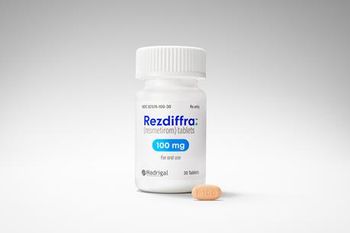
Madrigal Pharmaceuticals announced resmetirom is available in the US beginning on April 9, 2024, ushering in a new era of NASH management.