
NAFLD, ALD, liver fibrosis and cirrhosis, and recently diagnosed viral hepatitis were all associated with a greater risk of cataract.

Abigail Brooks is a strategic content lead overseeing HCPLive, RheumatologyLive, and Patient Care Online. She joined MJH Life Sciences in August 2023 shortly after graduating from Monmouth University where she earned her BA in Communication with a concentration in Public Relations/Journalism and later an MA in Interactive Digital Media. She enjoys traveling, running, and reading books. She can be reached at [email protected].
NAFLD, ALD, liver fibrosis and cirrhosis, and recently diagnosed viral hepatitis were all associated with a greater risk of cataract.

Dubinsky discusses findings from a post-hoc analysis of the head-to-head SEQUENCE trial of risankizumab versus ustekinumab in patients with Crohn disease refractory to anti-TNF therapy.

All patients who received an HCV+ organ achieved SVR12 and had lower rates of rejection and chronic lung allograft dysfunction compared to uninfected donor organ recipients.

Zhang discusses the consequences of stigmatizing language for substance use disorders and reasons gastroenterologists and hepatologists may be falling behind.

Results from the phase 3 trial showed seladelpar elicited biochemical response, normalized alkaline phosphatase, and reduced pruritus at a greater rate than placebo.
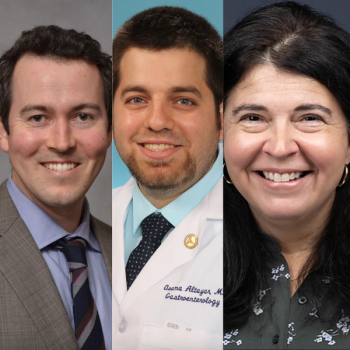
Investigators from the guideline panel discuss the AGA’s recommendations regarding the use of fecal microbiota-based therapies for CDI, IBD, and IBS.

The guideline recommends fecal microbiota transplant in most cases of recurrent Clostridioides difficile infection but does not suggest fecal microbiota-based therapies for IBD or IBS.

Adhering to a greater number of healthy lifestyle behaviors was linked to a decreased risk of incident IBS, suggesting lifestyle modifications may help prevent its onset.

Retreatment with voxilaprevir/velpatasvir/sofosbuvir in patients with HCV and prior DAA failure is effective but may be impacted by hepatocellular carcinoma, cirrhosis, and genotype 3.

Histological inflammation and clinical IBD activity were both associated with reduced fertility rates compared to histological remission and quiescent IBD.

Findings suggest segregated residential and transplant center neighborhoods contribute to racial disparities in access to living donor kidney transplantation.

The incidence of KRT for primary glomerular disease-induced kidney failure was greatest for IgA nephropathy and focal segmental glomerulosclerosis.
Stigmatizing language was found on 88% of transplant center websites and was most prevalent when discussing alcohol-associated hepatitis and cirrhosis.

Results confirmed the cost-effectiveness of Japan’s mandated school urinary screening strategy, also pointing to fewer patients progressing to ESKD compared to no screening.

Nearly 30% of patients were receiving potentially inappropriately prescribed medications at the start of the study and more than 20% were still receiving these medications 1 year later.

The review explored the global epidemiology of HCV in patients on dialysis, providing novel estimations of its prevalence and case fatality rate in this patient population.
Marla Dubinsky, MD, discusses the use of off-label upadacitinib in pediatric IBD patients and the importance of this research due to delays in pediatric drug approvals.
The investigational antisense oligonucleotide’s designation is based on data from the phase 2b trials B-Clear and B-Sure.
HealthFLD, a fully automated AI software for liver attenuation analysis from CT scans, has received FDA 510(k) clearance for use in the general population.
Marla Dubinsky, MD, discusses the use of segmental intestinal ultrasound to address screen failure associated with the SES-CD in clinical trials and for detecting transmural healing.

The analysis of several oral antidiabetic drugs revealed patients taking SGLT2 inhibitors had more NAFLD regression and fewer adverse liver-related outcomes.
The decision makes budesonide oral suspension (Eohilia) the first and only FDA-approved oral therapy for patients ≥ 11 years of age with eosinophilic esophagitis.
Findings suggest the risk of hepatocellular carcinoma may persist in patients with HCV, even after achieving SVR with direct-acting antiviral therapy.

A distinctive gene expression profile was identified in patients with IgA nephropathy using NanoString mRNA technology, suggesting inflammatory and fibrotic targets in the disease.

Patients who switched from originator adalimumab to a biosimilar experienced more treatment-emergent adverse events compared to those who stuck with the biosimilar or the reference drug.

HCV seroprevalence and antigen positivity were both low, suggesting universal birth cohort screening may not be necessary or cost-effective.

Stephen Harrison, MD, provides insight into the use of resmetirom for NASH with fibrosis ahead of the thyroid hormone receptor-β selective agonist’s March 14 PDUFA date.

Our January 2024 month-in-review spotlights some of our top coverage in nephrology, ranging from FDA news to clinical trial data and research about approaches to improving renal health.
Stephen Harrison, MD, discusses results from the phase 3 MAESTRO-NASH trial, highlighting resmetirom’s safety and efficacy for NASH resolution and fibrosis improvement.
Findings from this retrospective study help address challenges in distinguishing immunoglobulin A nephropathy from immunoglobulin A vasculitis-associated nephritis, overcoming their shared pathogenetic features.