

Some of the most impactful predictors of future asthma attacks include a history of prior attacks, depression, and vocal cord dysfunction, investigators found.
Some of the most impactful predictors of future asthma attacks include a history of prior attacks, depression, and vocal cord dysfunction, investigators found.

Onchocerciasis, also known as river blindness, may now be detectable through a urine diagnostic developed by investigators from Scripps Research Institute.
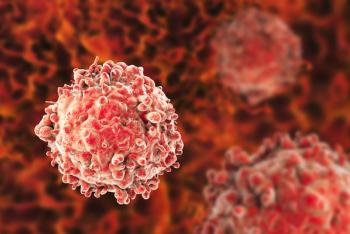
The FDA has granted an orphan drug designation to OBI Pharma, Inc.’s OBI-3424 for the treatment of acute lymphoblastic leukemia.

An increased morbidity risk has been found to be associated with central sleep apnea in infants with congenital heart disease by University of Arizona investigators.
The FDA has granted a rare pediatric disease designation to Lin BioScience’s LBS-008 for the treatment of Stargardt disease.

The FDA has granted an orphan drug designation to Cytori Therapeutics’ ATI-1123 chemotherapy drug for the treatment of small cell lung cancer.

Continuous positive airway pressure was previously defined as the primary treatment of OSA, as well as related issues like mask fits. Weight management has been continuously unaddressed in guidelines and literature.

The patient population tends to have a more unbalanced immune profile to that of European American patients, indicating a potential for tailored treatment options to combat inflammation.
BioLyte Laboratories is voluntarily recalling lots of their topical gel at risk of possible microbial contamination can result in increased infections that may require medical intervention and could be potentially life threatening to certain individuals.

The National Institutes of Health has launched the Cure Sickle Cell Initiative to accelerate the pace at which genetic-based curative therapies are developed for sickle cell disease.
Investigators found that active choice intervention correlated with a nearly 10% increased likelihood of patients receiving the seasonal flu vaccine.
The FDA has granted an orphan drug designation to Syntimmune Inc.’s SYNT001 for the treatment of pemphigus.
The FDA has granted a fast track designation to pamrevlumab for the treatment of patients with idiopathic pulmonary fibrosis (IPF).

An investigative team from St. Jude Children’s Research Hospital have identified weaknesses to target in rhabdomyosarcoma, leading to a promising precision medicine treatment that has already hit clinical trials.

After 10 days of transcranial magnetic stimulation, patients reported significant decreases in withdrawal symptoms like craving, quality of sleep, and mood status.
Pauline Funchain MD, shares how artificial intelligence may serve as a potential breakthrough for treating rare diseases in the future.
The FDA has granted a fast track designation to Immune Pharmaceuticals, Inc.’s bertilimumab for the treatment of bullous pemphigoid.

The FDA has denied accelerated approval for Pompe disease treatment, AT-GAA. However, plans for a pivotal study are still underway, so approval could be forthcoming.

Mice treated with ACE inhibitors demonstrated preservation of cognitive function, preserved dendritic complexity, a normal spine number, and significantly less microglial activation.
Stay up to date on the latest product recalls issued by the FDA this past week.
E. Anders Kolb, MD, discusses the exciting possibilities of using genomic technologies to stratify pediatric cancer patients.

Daniel Ontaneda, MD, provides insight into the implications of discovering a new subtype of multiple sclerosis: myelocortical MS.

Though previous research showed telemonitoring and pharmacist consultation helped patients manage blood pressure for about one year, researchers have been unsure whether it would provide sustained, long-term benefits in at-risk patients.

ProQR Therapeutics has announced positive interim results from its phase 1/2 clinical trial evaluating QR-110 as a potential treatment for Leber’s congenital amaurosis 10 (LCA10).

The first part of a recent phase 1/2a trial has met its primary objectives, demonstrating safety & tolerability of SYNB1618 in healthy volunteers & identifying a suitable dose to evaluate in patients with PKU.
The FDA has approved the first and only easy-to-swallow thickened riluzole liquid for the treatment of amyotrophic lateral sclerosis.

Bruce Trapp, PhD, discusses his team’s recent discovery of a new subtype of multiple sclerosis: myelocortical MS.
The FDA has granted an orphan drug designation to Antidote Therapeutics, Inc.’s ATI-1013 for the treatment of Buerger’s disease.

A recent study found the costs of medical, laser, and surgical interventions were 2.5% or more of the median annual household income for many patients worldwide.
The FDA has granted a tentative approval to Aquestive Therapeutics, Inc.’s clobazam (Sympazan) oral film for the adjunctive treatment of seizures associated with Lennox-Gastaut Syndrome (LGS) in patients 2 years of age or older.