

The FDA has approved pembrolizumab for the treatment of adult and pediatric patients with recurrent locally advanced or metastatic Merkel cell carcinoma (MCC).
The FDA has approved pembrolizumab for the treatment of adult and pediatric patients with recurrent locally advanced or metastatic Merkel cell carcinoma (MCC).

The FDA has approved Shire’s prucalopride (Motegrity) for the treatment of chronic idiopathic constipation (CIC).

Preventative medicine dominated the focus for C difficile treatment; however, a new reactive therapy also emerged.

The FDA has approved romiplostim for the treatment of pediatric patients with immune thrombocytopenia (ITP).

Mohamad Mohty, MD, PhD, discusses the investigational therapy cytotoxic T lymphocytes (CTLs) therapy for the treatment of Epstein-Barr virus associated post-transplant lymphoproliferative disorder (EBVPTLD).
An early prophylaxis in combination with an assistant device like myPKFit can improve the outcomes of treatment.
The FDA has approved Atlantic Therapeutics’ INNOVO, the first non-invasive therapy device for stress urinary incontinence.
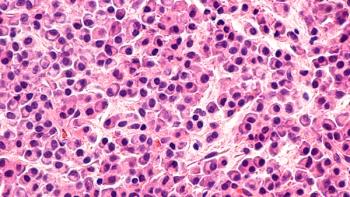
Nizar Bahlis, MD, highlights the phase 3 POLLUX trial evaluating daratumumab plus lenalidomide and dexamethasone for the treatment of patients with relapsed/refractory multiple myeloma.
The Regeneron Pharmaceuticals and Sanofi-collaborated biologic became a tour de force in pulmonological care in 2019.

The leading etiologies for chronic-liver-disease-related-deaths over the last decade can be explained by NAFLD and alcoholic liver disease.

Among the highlights, significant and sustained increases in hemoglobin without transfusions stood out.

Lead investigator, John Leonard, MD, reviews the phase 3 AUGMENT trial investigating lenalidomide plus rituximab for the treatment of relapsed/refractory follicular lymphoma.

Jorge Cortes, MD, highlights the phase 3 QuANTUM-R trial results and explains their clinical implications for patients with FLT3-ITD-mutated relapsed/refractory acute myeloid leukemia (AML).

Jasmine Zain, MD, recaps the current and upcoming treatments in T-cell lymphoma and highlights the key clinical trials playing a role in the rare disease.

The pediatrician discusses key differences between treating pediatric and adult patients with hemophagocytic lymphohistiocytosis (HLH) with the recently FDA-approved emapalumab.

Among the highlights observed in the data, the single-agent oral demonstrated significant improvement in progression-free survival (PFS).
Full results from the phase 3 MURANO trial showed a reduced risk in disease progression and 87.9% overall survival in relapsed/refractory chronic lymphocytic leukemia patients treated with venetoclax/rituximab.
Justin Taylor, MD, explains new and unique data that show cases in which a solid tumor can become a hematologic malignancy, or leukemia.

Males with myeloproliferative neoplasms (MPN) were found to have inferior survival compared to females in a well-defined, prospective, observational cohort.

Long-term data shows familial haploidentical stem cell transplantation (HISCT) improves quality of life and neurocognition in sickle cell disease patients.
The FDA has approved gilteritinib (XOSPATA) for the treatment of adult patients with relapsed or refractory acute myeloid leukemia (AML) with a FLT3 mutation as detected by an FDA-approved test.
The FDA has approved rituximab-abbs (Truxima) for the treatment of adult patients with non-Hodgkin’s lymphoma. This indication stands as the first FDA-approved biosimilar for the rare blood cancer.

Cirrhotic patients with variceal bleeding were found to have greater morbidity in association with obesity.

The FDA has granted an accelerated approval to larotrectinib (Vitrakvi, Bayer and Loxo Oncology, Inc) for the treatment of pediatric and adult solid tumors with neurotrophic receptor tyrosine kinase (NTRK) gene fusion.

Not sure what’s been recalled, withdrawn from the market, or had safety updates? Catch up on the US Food and Drug Administration’s (FDA's) recalls and safety news from this past week.

The FDA has expanded Novartis’ eltrombopag (Promacta) to include first-line treatment for adults and pediatric patients aged 2 years and older with severe aplastic anemia (SAA) in combination with standard immunosuppressive therapy (IST).

Here’s a round-up of recent designations granted by the FDA to products developed to treat rare diseases.
Brentuximab vedotin (ADCETRIS, Seattle Genetics) is approved in combination with chemotherapy for adults with previously untreated systemic anaplastic large cell lymphoma (sALCL) or other CD30-expressing peripheral T-cell lymphomas (PTCL), including angioimmunoblastic T-cell lymphoma and PTCL not otherwise specified.

Norah Terrault, MPH, MD, explains how the use of cannabis can affect a patient's status on the liver transplant list.

Norah Terrault, MPH, MD, discusses gaps in treatment in people who are infected with hepatitis C virus and what steps clinicians should take when treating these patients.