

In a recent webinar, geneticist Debra Regier, MD, provides an overview of the importance of genetic testing in the rare disease space.
In a recent webinar, geneticist Debra Regier, MD, provides an overview of the importance of genetic testing in the rare disease space.

Mechanisms underlying the disease pathology of Alexander disease, a rare leukodystrophy affecting the nervous system, have been uncovered by City of Hope investigators.

A new study has found that, based on the complexities of the EHR system they're required to use, physicians have a nearly equal chance of shortening or extending their career.

Harvard Medical School investigators have discovered a molecular link between aging and a genetic cause of amyotrophic lateral sclerosis and frontotemporal dementia.

The FDA has approved Bayer’s antihemophilic factor [recombinant] PEGylated-aucl, BAY94-9027 (Jivi), for routine prophylactic treatment of hemophilia A in previously treated adults and adolescents aged 12 years or older.

The investigative therapy reported a relative difference of 48% in brain atrophy reduction versus placebo, but investigators are still uncertain of its benefits.

Stem cell research from the University of Michigan reveals dangerous cardiac effects of a gene mutation in patients with Dravet syndrome.

Investigators from McGill University have discovered a new link connecting immune cells and the development of gastric tumors in those with Peutz-Jeghers Syndrome.
The FDA has granted an orphan drug designation to ReflectionBio's AAV-based gene therapy, the RBIO-101 program (AAV.CYP4V2), for the treatment of Bietti's crystalline dystrophy (BCD).

The FDA has granted a rare pediatric disease designation to AAV-CNGA3 for the treatment of patients with achromatopsia due to mutations in the CNGA3 gene.

In a 15,000-plus patient analysis that spanned more than 7 years, aspirin reduced vascular risks in patients—but also increased their rate of major bleeding events.

A contributing mechanism responsible for the development of idiopathic pulmonary fibrosis has been identified.

Howard Levy, MBBCh, PhD, MMM, highlights phase 2/3 trial of MarzAA for the treatment of hemophilia.

A type of electrical stimulation directed at the brain and spine may help treat the symptoms of rare movement disorders like neurodegenerative ataxias.

The FDA has granted a rare pediatric disease designation to Krystal Biotech’s KB105 for the treatment of patients with TGM-1-deficient autosomal recessive congenital ichthyosis.

Investigators have discovered a mechanism that could reduce the toxic aggregation of huntingtin protein, which is responsible for neurodegeneration in patients with Huntington’s disease.

In an analysis of 118 clinical trials since 2001, investigators found females and minorities comprised just 27% and 22% of the total patient population, respectively.

A rapid genetic diagnostic tool coupled with a sustained release therapeutic is being developed for lower-grade gliomas by a team of investigators.
The FDA has approved pembrolizumab to be used in combination with pemetrexed and platinum as first-line treatment for patients with metastatic, non-squamous non-small cell lung cancer, with no EGFR or ALK genomic tumor aberrations.
The FDA has granted an orphan drug designation to Immune Pharmaceuticals, Inc.’s bertilimumab for the treatment of bullous pemphigoid.
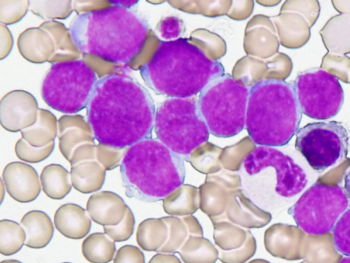
The FDA has granted an orphan drug designation to ASLAN Pharmaceuticals’ ASLAN003 for the treatment of acute myeloid leukemia.

The FDA has approved Bristol-Meyers Squibb Company’s nivolumab (Opdivo) for the treatment of metastatic small cell lung cancer (SCLC) that has progressed after platinum-based chemotherapy and at least 1 other line of therapy.

A peer-reviewed manuscript outlines the preclinical validation for the use of QR-110 in the treatment of Leber’s congenital amaurosis 10 (LCA10).
The FDA granted an orphan drug designation to Rafael Pharmaceuticals, Inc.’s CPI-613 for the treatment of peripheral T-Cell lymphoma (PTCL).
The FDA has granted an orphan drug designation and a rare pediatric disease designation to Wave Life Sciences Ltd.’s WVE-210201 for the treatment of Duchenne muscular dystrophy (DMD).

Relatives of individuals with certain types of blood cancer may harbor inherited genetic changes that could influence their risk of developing diseases that arise from myeloid cells.

The phase 2 STARS trial evaluating OV101 as a treatment for Angelman syndrome achieves its primary endpoint of safety and tolerability.

The first patients have been treated in a phase 2 trial evaluating ALLN-177 in adults and adolescents with primary hyperoxaluria or enteric hyperoxaluria with advanced chronic kidney disease (CKD) and elevated plasma oxalate.
The FDA has granted an orphan drug designation in a second indication to Martin Pharmaceuticals’ trimetazidine dihydrocholoride (LIVANTRA) for the treatment of pulmonary arterial hypertension (PAH).
The FDA has granted an orphan drug designation to Onspira Therapeutics’ OSP-101, the first and only inhaled interleukin-1 receptor antagonist (IL-1Ra) for the treatment of bronchiolitis obliterans.