

In this Lungcast segment, Bludorn speaks on commonly-seen heat-related illnesses amid a changing climate as well as how to screen for related risks.
Tim Smith joined the MJH Life Sciences team in 2022 and is currently an associate editor for HCPLive. He is also the executive producer of two podcasts: Skin of Color Savvy and The Medical Sisterhood. Previously, he was the producer of the Lungcast podcast. He graduated from UC Berkeley and worked in multimedia journalism as a staff writer prior to joining MJH. You can contact him at [email protected].
In this Lungcast segment, Bludorn speaks on commonly-seen heat-related illnesses amid a changing climate as well as how to screen for related risks.

This designation was based on the ORCA-V1 trial’s phase 2 findings indicating that cytisinicline more than doubled patients’ odds of e-cigarette cessation versus placebo.

This interview segment involved a discussion with Gooderham regarding the implications of recent clinical trial findings for patients with scalp and body psoriasis.
In this interview, Gooderham highlights the ARRECTOR study findings which led to roflumilast foam’s supplemental new drug application to the FDA.

These data highlight gender differences related to dysmorphic concern and the prevalence of body dysmorphic disorder among those with various dermatologic disorders.

In this episode of Crisis Point, 3 experts in dermatology discuss ways in which those in the field are working to improve visibility of diverse skin types within dermatology education.

This announcement follows roflumilast’s July 9 approval for the once-daily treatment of adults and children with mild to moderate atopic dermatitis.

These data indicate the need for future analyses of possible chronic urticaria activity biomarkers, as well as other elements of patient response to omalizumab treatment.

These findings support delgocitinib’s clinical benefit as a possible medication option for individuals with moderate to severe chronic hand eczema.
Adults with severe alopecia were shown to have statistically significant efficacy across 2 phase 3 clinical studies highlighted in this announcement.

These new data were announced by Aquestive Therapeutics and if approved, Anaphylm Sublingual Film could be the first orally-delivered, non-invasive severe allergy treatment.

These data highlighted new findings on the experiences of children aged 6 to 11 with uncontrolled type 2 asthma treated with dupilumab.

These new phase 3 findings from ARCADIA 1 and 2 highlight the effects of nemolizumab in combination with either topical corticosteroids or topical calcineurin inhibitors.

This meta-analysis was conducted to compare the efficacy and safety of lebrikizumab to other systemic treatments for patients with atopic dermatitis.

These data highlighted the association of moderate air pollution exposure during pregnancy, infancy, and early childhood on pulmonary function at school age.
This model and its service components may be implemented in the future to allow for improvements to primary care programs, with the goal being benefits to patients with COPD.

Following this pooled analysis, there may be a need for additional research conducted to identify other targets for achievement of optimal repigmentation.
This supplemental new drug application for once-daily roflumilast foam follows positive results of the ARRECTOR phase 3 study.
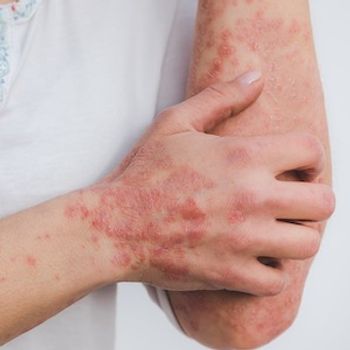
These findings represent the first comprehensive research into the greater frequency of APS autoantibodies linked with treating psoriasis with TNF inhibitors.

These data suggest that the introduction of the concept of circadian syndrome contributes to greater understanding of risk management for those with psoriasis.

These data highlight results on efficacy, quality of life, and tolerability of DMF within routine clinical practice among those with plaque psoriasis.

These findings suggest that those with atopic dermatitis exacerbations may need to limit their oral corticosteroid duration for the purposes of limiting AEs.

In this Q&A interview, Stein Gold discusses new phase 3 findings regarding ruxolitinib cream 1.5% for patients 2 to 11 years old with atopic dermatitis.

These data suggest that risk of developing psoriatic arthritis among patients with different variants of psoriasis vary based on race and sex as well.

In this interview, Rosmarin discussed the results of a new post-hoc analysis of the TRuE-V1 and TRuE-V2 studies on treating younger vitiligo patients with ruxolitinib cream.

Awareness of these data may allow for dermatologists to better care for patients with anogenital pruritus as well as their families.
In this analysis, investigators highlighted the results of treating psoriasis with deucravacitinib in the phase 3 POETYK PSO-1 and PSO-2 trials.
This analysis was done to verify the hypothesis that psoriatic arthritis is primarily genetically predetermined and distinct from the condition of psoriasis.

These findings highlight clinician versus patient perceptions of chronic pruritus assessment using patient-reported outcome measures.
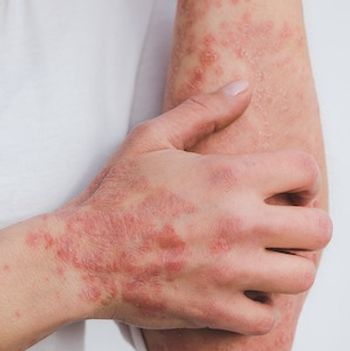
These data highlight the association between risk of developing polyneuropathy and the presence of psoriasis and psoriatic arthritis.