






Allergy
Latest News
Advertisement
Latest Videos





CME Content




























































Advertisement
More News
In the allergy news space, this Month in Review highlights some of the most significant stories covered by the editorial team.

Individuals with comorbid asthma and food allergies saw no loss of efficacy in this post hoc analysis, suggesting omalizumab’s potential for such patients.
The announcement follows July’s approval of the nasal spray, also known as neffy, for patients with Type 1 allergic reactions such as anaphylaxis.

Kerri Aronson, MD, MS, describes her team's research efforts to create educational resources that address the profound lack of patient knowledge around HP.

People living with HP generally experience a profound lack of knowledge about their disease, driving poorer health-related quality of life. A study sought to create educational resources to curb this effect.

This approval expands the drug’s age range and follows recent positive phase 3 findings on dupilumab treatment for patients aged 12 to 17 with CRSwNP.

These real-world findings highlight the benefits of sustained dupilumab therapy for individuals with chronic rhinosinusitis with nasal polyps.

The FDA approved neffy for treating severe allergic reactions in people over 33 kg in August 2024.

This analysis evaluated the long-term follow-up and risks linked to the self-reported penicillin allergy persistence after a successful oral penicillin challenge and allergy label removal.
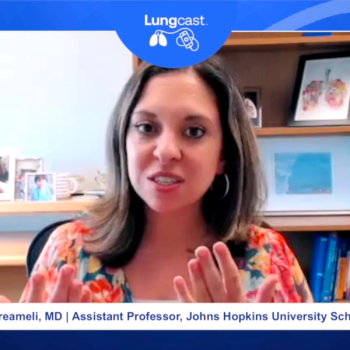
In this Lungcast episode, Mora and Sadeameli highlight Asthma Action Plans as well as Asthma Peak Weak considerations for children in the new school year.
In this interview, Kim speaks about the significance of the FDA approval of neffy for patients who face the threat of anaphylaxis and other severe allergic reactions.
Mora and Sadreameli join Lungcast to provide a back-to-school health blueprint, including topics like rescue inhalers, vaccination, vaping and air quality.
The FDA approved epinephrine nasal spray (Neffy) for the emergency treatment of allergic reactions, including anaphylaxis, in adult and pediatric patients who weigh at least 30 kg.

These data also suggest that personalized nutritional advice may be necessary for different individuals, due to the clinical diversity and the impact of differences.

These new data were announced by Aquestive Therapeutics and if approved, Anaphylm Sublingual Film could be the first orally-delivered, non-invasive severe allergy treatment.

Chehade reviews key findings from the phase 3 EoE kids trial and how they inform dupilumab’s use in children 1-11 years of age with eosinophilic esophagitis.
After a busy first half to 2024, a number of high-impact FDA decisions await the healthcare industry through December.

These data highlight the results of an international sample of adult patients with allergies to certain food products and caregivers of children with food allergies.

This analysis looked at children 1 to 11 years of age with eosinophilic esophagitis, highlighting the impacts of dupilumab on EoE.

Aquestive Therapeutics announced positive topline data from the trial on June 25, 2024.

Cerceo, Peden, and Ziska joined HCPLive to speak on the imminent threat posed by climate change, highlighting the impact especially on individuals with allergic disease.

In an announcement by Aquestive Therapeutics, these new findings demonstrated the potential of this orally-administered epinephrine treatment.
James Palmer, MD, provides perspective on the FDA's decision to approve fluticasone propionate nasal spray for adults with chronic rhinosinusitis without nasal polyps.
On March 15, 2024, the FDA approval of fluticasone propionate nasal spray marks the first approval in agency history for treatment of chronic rhinosinusitis without nasal polyps.
New data show sensitization among children with allergic contact dermatitis may be significantly influenced by their age and gender, among other demographic details.
Advertisement
Advertisement
Trending on HCPLive
1
The Case for Routine Kidney Screening, With Pranav Garimella, MBBS, MPH
2
FDA Approves Obinutuzumab (Gazyva) for Idiopathic Nephrotic Syndrome
3
The HCPFive: Top News for Healthcare Providers from the Week of 09/20
4
What The FDA Psychedelic Hearing Means for Psychiatrists
5