

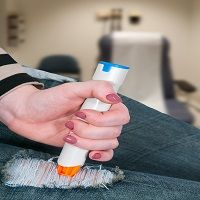






























































Research using mouse models may offer clues to potential prophylactic approaches for patients with venom sensitivity.
Research using mouse models may offer clues to potential prophylactic approaches for patients with venom sensitivity.
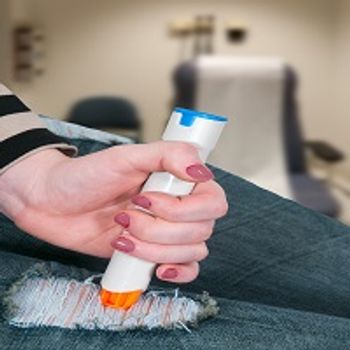
Recent studies of anaphylaxis and other allergic reactions induced by medications have informed a new set of guidelines for the diagnosis and treatment drug hypersensitivity.

Michigan State University (MSU) researchers have created the first map to predict rotavirus (RV) prevalence on a global scale.

A novel virus from Peru and the Republic of Congo called enterovirus C105 is now suspected in last year's wave of mysterious cases of sudden childhood paralysis.

Vitamin D insufficiency can be like the slippery suspect in a network procedural: It's probably up to no good on any number of counts, but pinning the crime on it with airtight evidence can still prove elusive.

A 15-year analysis of ticks has shown a change in their migration patterns, which was linked to fluctuating disease risks.

Hepatitis C virus screening is a challenge, and strategies must be implemented to make diagnoses and treatment therapies easier, according to a JAMA study.
In March, the television news show 60 Minutes devoted a segment to a clinical trial using polio virus to treat glioblastoma multiforme. The segment called "Killing Cancer" did a good job of illustrating the potential power of this new treatment as well as the problems associated with glioblastoma multiforme which typically kills patients in a matter of months.

Teen girls in rural areas more often have undiagnosed asthma than their male counterparts, and are at an additional higher risk for depression.
New research indicated adolescents are twice as likely as younger kids to suffer from anaphylaxis and other severe allergic reactions while they are in school.

Fluticasone furoate/vilanterol (Breo Ellipta/GlaxoSmithKline and Theravance Inc) approved for the once-daily treatment of asthma in patients aged 18 years and older.

In this video interview, Palak Trivedi, BSc, MBBS, MRCP, from the University of Birmingham Centre for Liver Research, United Kingdom, discussed the implications his research findings have for IBD patients at The International Liver Congress 2015 in Vienna, Austria.

Study results show that incorrect use of inhalers and epinephrine autoinjectors is widespread among patients, which should prompt treating physicians to focus more on educating patients on proper use.

How could an effective, inexpensive hepatitis C virus (HCV) drug have been available at local pharmacies without clinicians and patients knowing it? Researchers from the National Institutes of Health (NIH) have the answer.

In the inner cities some children do not have the resources at their disposal to get the care they needed. Recently considerable effort has been made to helping keep them healthy and able to function in their daily lives.

Study results indicate that the increasing rate and severity of obesity in western nations has rendered today's epinephrine autoinjectors an ineffective anaphylaxis treatment for many people.

The relationship between a blood thinner and the body's natural defense against HIV was discussed in new research published in the Journal of the American Chemical Society.

Being just a few blocks from such entertainment icons as Broadway and the Metropolitan Opera House the Voice Center at Voice Center at the NYU Langone Medical Center doctors treat everyone from stars to understudies to the salesmen on 5th Avenue.

Clinicians have several options when it comes to treating their allergic patients with subcutaneous (SCIT) or sublingual (SLIT) immunotherapy.
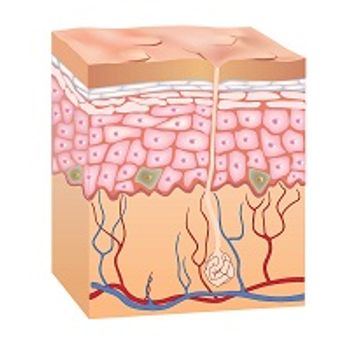
Clinicians have several guidelines, algorithms, and other tools at their disposal that can assist them in the differential diagnosis and management of chronic urticaria.

Fears about toxic mold have spawned unqualified and useless testing, both of buildings and people, the US Centers for Disease Control and Prevention says. In a case history of an incident last year, Melody Kawamoto and Elena Page MD describe a costly case that yielded no proof of mold.

Results from a recent survey indicate that efforts to educate American doctors about the diagnosis and treatment of anaphylaxis have achieved mixed results.
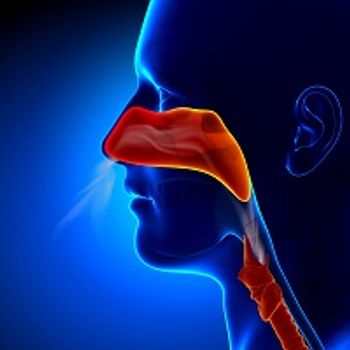
Endoscopically guided removal of bridging tissue between ostia can alleviate sinusitis, congestion, and other symptoms caused by mucous recirculation.
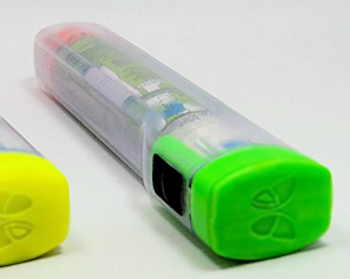
Aterica Digital Health, based in Waterloo, Canada, has designed an EpiPen case that's difficult to lose or leave behind.The "Veta smart case" uses sensors, Bluetooth radios and other technology to broadcast its location and perform several other tricks that could help users survive anaphylaxis. The case itself works with an app that runs on either Apple iOS or Google Android. Whenever a user's smartphone and case get too far apart to communicate, an alert appears on the phone. If a user misplaces a case, the app can reveal its exact location by tracking the signal it emits.

Four separate cases of fatal anaphylaxis, all within days of each other, vividly illustrate both the extreme difficulty of avoiding known food allergens and the potential consequences of any given exposure.