




Age-Related Macular Degeneration
Latest News
Advertisement
Video Series


Latest Videos










Podcasts



CME Content























































Advertisement
More News

The Q3 recap for ophthalmology spotlights major FDA decisions and major clinical trial updates in a variety of diseases.

Based on 3 propensity-matched control groups, patients with psoriasis can have anywhere from a 40% to 56% higher risk.

Outlook Therapeutics has expressed plans to meet with the FDA to address regulatory issues, as well as expand into European markets.

A brief history of intravitreal implants; where we started and how far we can still go to reduce treatment burden for patients and clinicians alike.

This HCPLive Five episode focuses on 5 key ophthalmology updates from the ASRS2025 conference.
A month with few regulations instead saw significant research advancements presented at the American Society of Retina Specialists’ 2025 meeting.

Results from the DAVIO 2 trial have shown the equivalence of a single dose of EYP-1901 to aflibercept Q8W in visual acuity over 6 months.

Post hoc analyses of the TENAYA and LUCERNE phase 3 trials indicated important endpoints that could signal the potential for treatment interval extension.

Patient responses indicate that the device is simple and easy to use, and clinical data reflects its effectiveness in recognizing hallmark signals of AMD.

Our recap of the first half of 2025 highlights 5 regulatory updates, 5 trial announcements, and 3 top perspectives in eyecare.
Our Q2 2025 recap for ophthalmology highlights 5 regulatory updates, 5 important trial announcements, and top perspectives in eyecare.
June was characterized by HCPLive’s coverage of the AOA 2025 Conference in Minneapolis and a host of cross-specialty disease indicators and drug uses.

New research has associated complement factors from both the classical and terminal pathways with progression from intermediate to advanced age-related macular degeneration.

GLP-1 RAs, one of the most common medications for obesity and diabetes, have several inherent risks that are often overlooked in favor of their efficacy.
This May was characterized by HCPLive’s coverage of the ARVO and Envision conferences, as well as a slew of FDA approvals towards the end of the month.
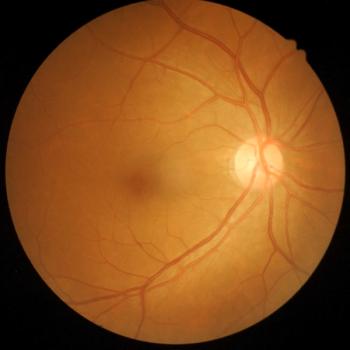
Type 2 macular neovascularization, reductions in outer nuclear layer and central foveal thickness, and intraretinal fluid may indicate higher odds of retinal atrophy.

While aflibercept 8 mg and faricimab both trigger intraocular pressure, the effects are transient and no more significant than other anti-VEGF treatments.

Stay updated with the latest healthcare breakthroughs, including cholesterol treatments and innovative therapies for AMD and psoriasis, in this week's roundup.

Data released by Cognition Therapeutics shows that oral zervimesine resulted in substantially reduced lesion growth over 18 months compared to placebo.

This post hoc analysis of the two trials also indicated a greater mean increase in best-corrected visual acuity and greater total loss of subretinal fluid than aflibercept.
April sees mixed outcomes in FDA approvals, with promising gene therapies advancing while others face setbacks, highlighting ongoing challenges in ocular treatments.

Clinical evidence may not reflect the incidence of IOI in real-world applications treating age-related macular degeneration and diabetic macular edema.

Gene therapy could revolutionize retinal disease treatment, promising consistent dosing, fewer injections, and improved patient outcomes, as highlighted by expert Christina Y. Weng.

Katherine Talcott, MD, discuss the impact of intravitreal injections on intraocular pressure, emphasizing monitoring and patient safety in treatment.
Christina Y. Weng, MD, breaks down emerging gene therapy programs poised to change how retina specialists treat chronic eye disease.
Advertisement
Advertisement
Trending on HCPLive
1
New Injectable Substantially Reduces Visceral Adipose Tissue in Obesity
2
Remibrutinib Receives FDA Approval for Symptomatic Dermographism
3
ZUPREME-2: Petrelintide Outperforms Placebo for Weight Loss in T2D and Obesity
4
Why "Normal" Ferritin Can Miss Iron Deficiency, With Jacquelyn Powers, MD, MS
5