





Age-Related Macular Degeneration
Latest News
Advertisement
Latest Videos






CME Content























































Advertisement
More News

Individuals in racial and ethnic minority groups and those with lower socioeconomic status were less likely to consent to participate in ophthalmic clinical studies.

24-month results from OAKS and DERBY show that pegcetacoplan significantly reduced GA lesion growth with both monthly and every-other-month dosing.

In a new study, the effect of smoking did not impact treatment response of anti-VEGF injection for patients with neovascular age-related macular degeneration.

A convolutional neural network accurately predicted eyes that progressed from intermediate AMD to GA within 1 year using volumetric SD-OCT scans.

Racial and ethnic disparities in ocular comorbidities significantly contributed to US deaths from 2000 to 2019, particularly among American Indian or Alaska Native and Hispanic individuals.

Patients with nAMD and their relatives experience a significant burden due to treatment-related time commitments, but most have no issues traveling to the eye clinic.

An analysis in Denmark projects an equal increase in anti-VEGF injections given to patients with RVO and nAMD, with a minor increase for patients with DME.

An update from Apellis reports 10 confirmed events of retinal vasculitis and 2 suspected events associated with pegcetacoplan injection for geographic atrophy.
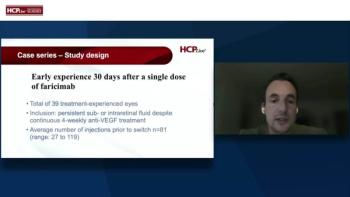
Moritz Pettenkofer, MD, presents a case of a 75-year-old male patient with nARMD who has had 53 injections of anti-VEGF therapy over 4 years.
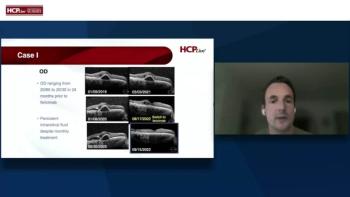
Moritz Pettenkofer, MD, discusses the mechanisms of faricimab and presents a case study of a 66-year-old female with nARMD

In a recent case series, a substantial percentage of patients with GA experienced "floaters" from presumed intravitreal silicone oil droplets after pegcetacoplan injection.
Application of subretinal bevacizumab and tPA effectively removed subretinal hemorrhage secondary to nAMD, but anti-VEGF treatment must be continued.
The analysis reports clinical characteristics and the GA progression rate in an Asian population differ from those previously reported in White populations.

Artificial intelligence use is growing across medicine. From imaging to chatbots, ophthalmology is the center of one of these transformations.
Announced by Iveric Bio, topline results from the phase 3 GATHER2 clinical trial indicate monthly avacincaptad pegol significantly slowed GA growth compared to sham at 24 months.

Patients were treated with fewer anti-VEGF injections in 2020 compared to the previous year, but these changes did not significantly impact BCVA outcomes.

A post hoc analysis of the PREVENT trial suggests quarterly ranibizumab did not appear to affect drusen volume, drusen area, or GA progression compared to sham.
Faricimab shows improved visual and anatomic outcomes in eyes with nAMD previously treated with aflibercept or brolucizumab.

A posthoc analysis of the phase 3 HAWK and HARRIER trials shows brolucizumab outperforms aflibercept at reducing SHRM thickness in eyes with nAMD.
Results from a cross-sectional analysis of NHANES data found a short sleep duration was associated with an increased risk of early AMD.

New data suggest patients with nAMD on prior anti-VEGF therapy experienced improved visual acuity and macular OCT parameters after switching to faricimab.
Findings from two recent studies provide insight into the association between anti-VEGF treatment for retinal diseases and the risk of kidney injury.
The study evaluated 10-year outcomes of anti-VEGF therapy using a PRN treatment regimen for eyes with neovascular AMD in real-world clinical practice.

Outlook Therapeutics announced receipt of the CRL exactly one year after resubmission of their BLA for ONS-5010 as a treatment for wet age-related macular degeneration, which would have been the first indication for a retinal disease given to an ophthalmic version of bevacizumab.

Advertisement
Advertisement
Trending on HCPLive
1
New Injectable Substantially Reduces Visceral Adipose Tissue in Obesity
2
Remibrutinib Receives FDA Approval for Symptomatic Dermographism
3
ZUPREME-2: Petrelintide Outperforms Placebo for Weight Loss in T2D and Obesity
4
Why "Normal" Ferritin Can Miss Iron Deficiency, With Jacquelyn Powers, MD, MS
5