





























































Low lifestyle scores were driven by non-adherence to the Mediterranean diet, with low vegetable and fish intake being most prominent.
Low lifestyle scores were driven by non-adherence to the Mediterranean diet, with low vegetable and fish intake being most prominent.

The reported complications of high myopia included myopic maculopathy, glaucoma, retinal detachment, and macular neovascularization.

There were also significant social determinants including race and religion discordance between the healthcare provider and patient and caregiver responsibilities toward others.

In the Archway trial, 93.2% of patients preferred treatment with ranibizumab delivered via the PDS compared to only 1.3% of patients who preferred intravitreal injections.

The study popuation had a higher visual acuity at 12 months, despite receiving fewer aflibercept injections.

Data show myopic children experienced higher scores of depression than normally-sighted children.

Data show 1 g per day of marine ω-3 fatty acid for 5.3 years showed no effect on incident clinically diagnosed DED or reported severe DED symptoms.

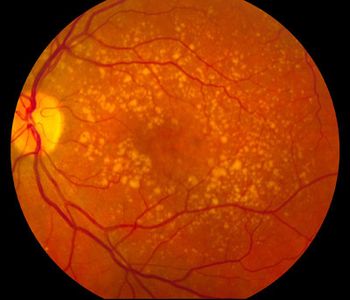
The HTRA1 and CFH risk alleles, family history of AMD, the LOC387715 risk allele, and cardiovascular disease were all linked to an increased risk of AMD.

The NDA submission is based on results from the Phase 3 DERBY and OAKS studies and the Phase 2 FILLY study.

The meta-analysis included more than 11,000 patients with between 8 and 9 years of mean follow-up periods.

However, the presence of residual IRF was associated with substantially worse BCVA at last study observation and less improvement of BCVA from baseline.

After more promising long-term data, Apellis announced plans to seek regulatory approval. An investigator explains what value it could bring to patients.

Phase 3 data show the C3 inhibitors' sustained benefit for the common form of vision loss. A primary author explains the significance of the new findings.

Post hoc data from GATHER1 show the complement inhibitor's 18-month benefit in regions including the central fovea.

Data show ≥60% of eligible faricimab patients with DME could extend treatment to every 4 months, while 95% of ranibizumab implants in wetAMD treatment maintained a six-month schedule.

Steffen Schmitz-Valckenberg, MD, explains the close association between disease progression and uncovered risk alleles.

Veeral S. Sheth, MD, MBA, discusses the potential value of complement inhibitors for the at-need patient population.

New findings observing links between visual acuity, disease progression and risk loci could inform new clinical studies of the leading cause of irreversible vision loss.

Monthly IV pegcetacoplan was associated with 39% reduced risk of progression from incomplete to complete RPE and outer retinal atrophy.

The approved indication is a first-of-its-kind for a novel therapy—a bispecific antibody injection treatment for the leading causes of blindness.

Dr. Modi discusses the pending approval of faricimab for nAMD, DME treatment and highlights important observations from phase 3 data.

Outlook Therapeutics is expected to submit a BLA to the FDA for the investigative ophthalmic bevacizumab-vikg formulation (ONS-5010).

TENAYA and LUCERNE show reduced treatment burden in nAMD patients, while vision gains and extended durability for DME patients were observed in YOSEMITE and RHINE.