


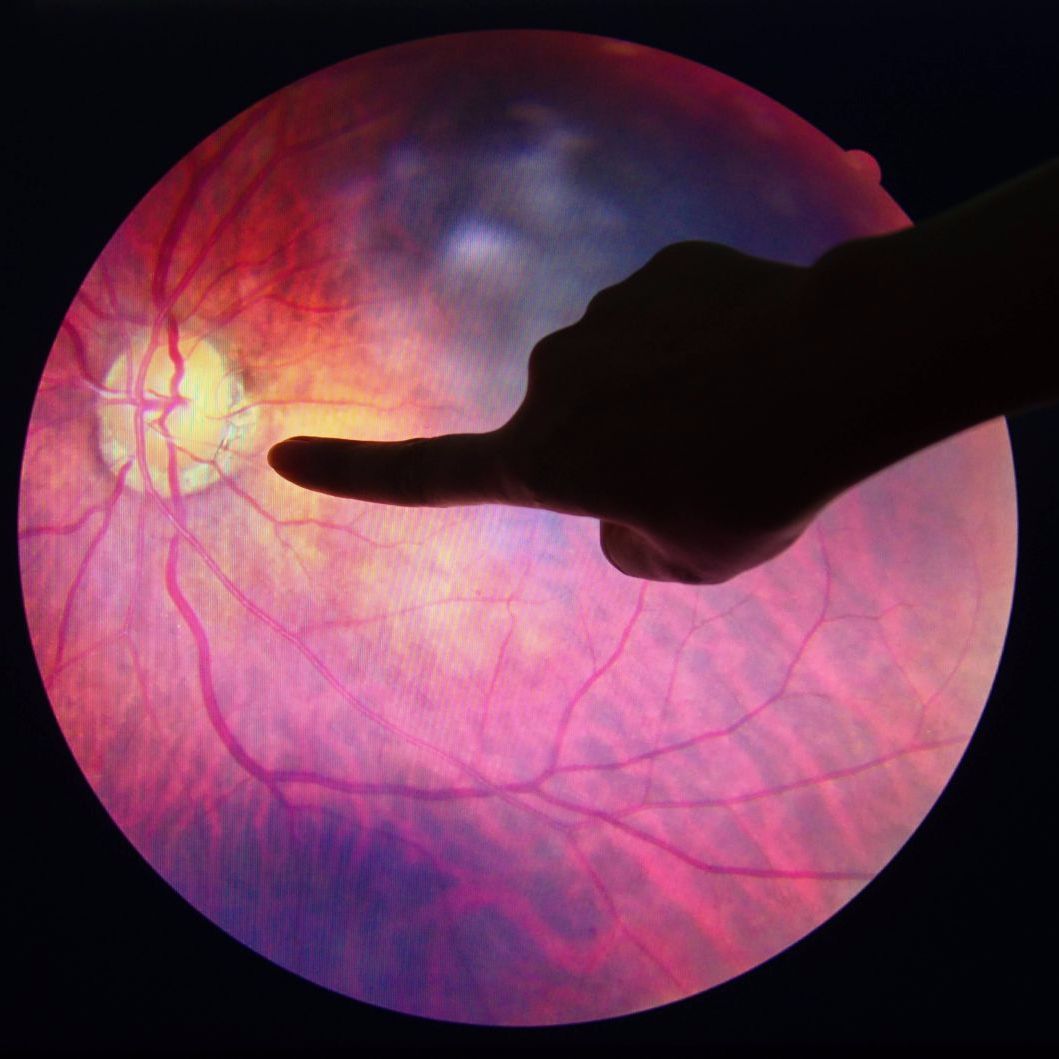



Age-Related Macular Degeneration
Latest News
Advertisement
Latest Videos





CME Content























































Advertisement
More News
Serious forms of cardiovascular diseases were observed to be connected to a specific form of AMD with subretinal drusenoid deposits.

The novel investigational complement C5 inhibitor is the only product for treatment of geographic atrophy to achieve two positive phase 3 pivotal trials with statistical significance.

The apolipoprotein E ε2/ε3/ε4 variant was associated with a significant linearly increasing trend for risk of AMD from ε4 to ε3 to ε2.

Similar visual and anatomical outcomes were observed through 1 year, despite fewer injections in the mandated quarterly treated group.
Anti-brolucizumab ADAs may be a risk factor for intraocular inflammation and retinal occlusive vasculitis in patients treated with brolucizumab.

Approximately 20 million individuals in the US were living with AMD in 2019, including 18.34 million with early-stage AMD and 1.49 million with late-stage AMD.

Drs Eleonora M. Lad, David R. Lally, Jayanth Sridhar, and Nancy M. Holekamp discuss numerous ways geographic atrophy can impact the caregiver’s quality of life.

An expert panel reviews the burden of geographic atrophy, and the various tools patients can use to help manage that burden.

Intravitreal aflibercept, bevacizumab and ranibizumab were each associated with comparable significant decreases in RGCL thickness in nAMD.
A retrospective comparative trial showed that agents including bevacizumab, ranibizumab and aflibercept are linked to similar likelihood of RPE tears.
Jayanth Sridhar, MD, Nancy M. Holekamp, MD, FASRS, and David R. Lally, MD, share their thoughts on measuring visual changes to determine how their patients’ geographic atrophy is progressing.

Drs Eleonora M. Lad, David R. Lally, Jayanth Sridhar, and Nancy M. Holekamp provide an overview of age-related macular degeneration and risk of developing geographic atrophy (GA).

An analysis of over-the-counter products show not all AMD-targeting supplements match the recommended dosage from the National Institutes of Health.
The need for repeat laser peripheral iridotomy was comparable in the study, at 10.0% in the nepafenac group compared to 15.4% in the bromfenac group.

High IOP variability was independently associated with retinal nerve fiber layer thinning rate in patients with glaucoma.

Genentech indicates faricimab-svoa achieved its primary endpoint of non-inferiority to aflibercept in RVO treatment in the phase 3 BALATON and COMINO trials.

The meta-analysis estimated a dry eye prevalence of 8.1% and MGD prevalence of 21.2%.

Cataract surgery–related risk of CME among patients with RP may be 4 times greater than those without RP.

The findings hypothesize that MNV may protect against the progression of atrophy.

The study data show prechoroidal cleft was found in 15% of Caucasian nAMD patients treated with anti-VEGF injections and was related to greater retinal and PED height.

The monitoring strategy used a self-operated artificial-intelligence–enabled home monitoring system in conjunction with standard care for early detection of nAMD.

The findings indicate a discrepancy between racial and ethnic demographic data in RCTs of DME and RVO and the 2010 US Census population.
Genetic factors previously known to predispose people to hyperopia were not risk factors for clinically significant depression in the study.
Fifteen out of 17 studies in a systematic review indicated that the HRD number decreased after DME treatment.

A post-AAO 2022 discussion on avacincaptad pegol in GA and what this groundbreaking treatment represents in filling a currently unmet need.
Advertisement
Advertisement
Trending on HCPLive
1
New Injectable Substantially Reduces Visceral Adipose Tissue in Obesity
2
Remibrutinib Receives FDA Approval for Symptomatic Dermographism
3
ZUPREME-2: Petrelintide Outperforms Placebo for Weight Loss in T2D and Obesity
4
Why "Normal" Ferritin Can Miss Iron Deficiency, With Jacquelyn Powers, MD, MS
5