






Age-Related Macular Degeneration
Latest News
Advertisement
Latest Videos







CME Content























































Advertisement
More News

At 1-year follow-up, intravitreal aflibercept and brolucizumab reportedly improved vision in treatment-naïve patients with submacular hemorrhage secondary to AMD, unless vitreous hemorrhage developed.

Retrospective analyses suggest the feasibility of using FAF images, OCT volumes to predict GA growth rates and area using a multitask deep learning approach.

In the case of another situation similar to COVID-19 home confinement, the majority of the patients with nAMD in a Swiss study would prefer a visit to the clinic over telemedicine to monitor their disease.
Compared with individuals with normal glycemic status, a recent analysis found AMD risk increased with higher glycemic status and longer duration of diabetes.
Announced today by Horizon Therapeutics, the positive and statistically significant data supports the efficacy of teprotumumab across a spectrum of patients with TED regardless of disease activity or duration.

From a novel topical gene therapy to a multi-pathway targeting HF drug, the second quarter of 2023 is laden with interesting regulatory decisions.
A new analysis of OCT biomarkers may help elucidate the utility of OCT biomarkers as therapeutic predictors of ranibizumab treatment among eyes with diabetic macular edema.
After a two-year intensive therapy period, visual acuity was maintained or improved in nearly half of the ranibizumab-treated group and more than half of the aflibercept-treated group, but severely declined during the post-intensive period.
Our highlights from March 2023 included a teaser episode of a new KOL-led podcast, a feature elucidating a rare eye disease, and a look at the development of new therapies for geographic atrophy.

In families carrying very rare AMD-causing variants, the analysis found two proteins that may be the driving force behind AMD pathology in affected patients.
The presence of IRF at baseline harmed treatment response, while other factors were negligible on how well patients with nAMD responded to a loading dose of aflibercept.

Our latest podcast offering is an in-depth dive into ophthalmology hosted by Dr. Sheth, featuring conversations with experts on the latest research, conference news, and daily practice.

OCT features including a thin double-layer sign and cRORA in the fellow eye were associated with an increased risk of progression to cRORA over 2 years in eyes with iAMD.

Combination therapy of brolucizumab and monthly aflibercept monthly appeared well-tolerated and may be considered for eyes with macular fluid on every-8-week brolucizumab.
Higher serum 25(OH)D level was related to an increased risk of early AMD in those aged 60 years or younger, and decreased risk of late AMD in individuals older than 60 years.

The analysis of AMD progression found significant associations between worse initial visual acuity, the presence of wet AMD subtype in fellow eyes, and thyroxine treatment with disease development.

An analysis of optic nerve status in young adults suggests the largest RNFL deficits were found in those exposed to tobacco smoke during both fetal life and childhood.

Rates of change measured via macular OCT may prove beneficial for monitoring the progression of glaucoma in eyes with suspected glaucoma.
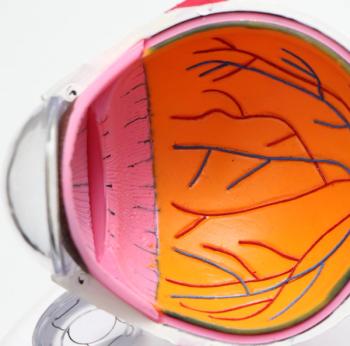
A new review considered the progression of 4 treatment options being researched and developed for the treatment of the progressive form of vision loss.
A deep learning model can identify both iRORA and cRORA lesions at a similar sensitivity compared with human graders, according to a new analysis.

Estimates of DR incidence and progression were lower than previously reported for American Indian and Alaska Native individuals served by the Indian Health Service, suggesting the potential for longer intervals between evaluations.

A new study from China shows predictive value of baseline PCV presence and PED characteristics among patients with nAMD receiving conbercept.

A new study supports an individualized treatment plan for aflibercept, showing its improved efficacy with fewer injections over 2 years.

The BLA for Regeneron's wet AMD and DME treatment was supported by two pivotal trials demonstrating non-inferior vision gains to aflibercept Injection, with most patients maintaining extended dosing regimens through 48 weeks

A prospective cross-sectional and community-based study from Hong Kong reported statistically significant biomarkers in predicting the risk of lower VA.
Advertisement
Advertisement
Trending on HCPLive
1
New Injectable Substantially Reduces Visceral Adipose Tissue in Obesity
2
Remibrutinib Receives FDA Approval for Symptomatic Dermographism
3
ZUPREME-2: Petrelintide Outperforms Placebo for Weight Loss in T2D and Obesity
4
Why "Normal" Ferritin Can Miss Iron Deficiency, With Jacquelyn Powers, MD, MS
5