





Age-Related Macular Degeneration
Latest News

Advertisement
Latest Videos



CME Content























































Advertisement
More News
Ocuphire's end-of-phase 2 meeting with the FDA supports APX3330's phase 3 advancement, with 3-step worsening in binocular DRSS score as the primary endpoint.

Retina specialists evaluate the effectiveness of the two new therapies for neovascular AMD and DME by analyzing their respective clinical trial methodologies and outcomes.

Presented at AAO 2023, a new analysis indicates racial and ethnic minoritized individuals may have a higher likelihood of neovascular glaucoma.

Rishi P. Singh, MD; and Michael A. Klufas, MD, discuss how to gain both physician and patient trust when it comes to using biosimilars to treat ophthalmologic conditions.

Retina specialists highlight the safety data of both faricimab and high-dose aflibercept for use in treating nAMD and DME.
M. Ali Khan, MD, FACS, FASRS, reviews the PULSAR and PHOTON clinical trials of high-dose aflibercept for treatment of nAMD and DME.
Retina specialists review the current challenges with biosimilars in ophthalmology, commenting on insurance coverage and patient assistance programs.

Most ophthalmology teaching faculty noted their lack of awareness about available resources or training as a barrier, rather than a lack of time, perceived benefit, or funding.

An analysis of the AI tool showed it could help translate complex ophthalmology research for various patient levels of comprehension.

An analysis of interest at matriculation and graduation suggests significant disparities, based on race and income, could be contributing to the diminishing workforce in ophthalmology.

At AAO 2023, Korobelnik provides insight into the efficacy and safety of aflibercept 8 mg in patients with nAMD observed over 2 years of the PULSAR study.

At AAO 2023, Kay shares insight into the topline results of the TEASE-1 study investigating the effect of gildeuretinol (ALK-001) on the inherited retinal disease.
Rishi P. Singh, MD; and Michael A. Klufas, MD, provide an overview of the 2 currently available ophthalmology biosimilars, ranibizumab-eqrn and ranibizumab-nuna, as well as discuss which patient populations will benefit from these treatments.
Rishi P. Singh, MD; and Michael A. Klufas, MD, comment on the reasoning behind a shorter primary end point for biosimilar studies.

After years 1, 3, and 5, patients with diabetic retinopathy patients had increased odds of depression and suicide, patients with glaucoma had increased odds for all mental health conditions with higher odds for suicide or suicide ideation, and patients with AMD had increased odds for depression.

Findings from a retrospective cohort study highlighted the impact of bariatric surgery on postoperative ocular disease incidence, reducing the risk of future ocular morbidity.

Per the FDA, Kilitch Healthcare India Limited voluntarily recalls 27 eye drop items, including those distributed by CVS, Rite Aid, and Target, due to potential safety issues.

Retina specialists evaluate the effectiveness of the two new therapies for neovascular AMD and DME by analyzing their respective clinical trial methodologies and outcomes.

At the end of year 2, 80% of patients on faricimab reached > q12 week dosing, and 63% achieved q16 dosing.

Despite recommendations to consult with ophthalmologists prior to initiating semaglutide, the cardiometabolic drug was not found to be linked to worsened DR outcomes.

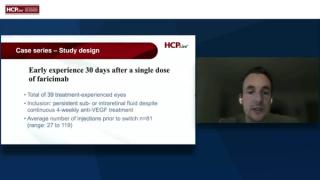
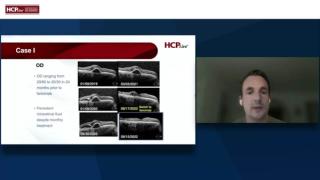
New data from the Cleveland Clinic Cole Eye Institute showed patients not responding to anti-VEGF inhibitors could improve clinical and regimen parameters with short-term faricimab.
Expert retina specialists discuss the latest therapies that could reduce the treatment burden and provide superior clinical outcomes in retinal diseases.

Individuals in racial and ethnic minority groups and those with lower socioeconomic status were less likely to consent to participate in ophthalmic clinical studies.

24-month results from OAKS and DERBY show that pegcetacoplan significantly reduced GA lesion growth with both monthly and every-other-month dosing.

In a new study, the effect of smoking did not impact treatment response of anti-VEGF injection for patients with neovascular age-related macular degeneration.
Advertisement
Advertisement
Trending on HCPLive
1
New Injectable Substantially Reduces Visceral Adipose Tissue in Obesity
2
Remibrutinib Receives FDA Approval for Symptomatic Dermographism
3
ZUPREME-2: Petrelintide Outperforms Placebo for Weight Loss in T2D and Obesity
4
Why "Normal" Ferritin Can Miss Iron Deficiency, With Jacquelyn Powers, MD, MS
5