






Diabetic Macular Edema
Latest News
Advertisement
Latest Videos









CME Content




























































Advertisement
More News

The field has a growing demand of care, and dropping rate of new specialists. The solution can start at medical schools.

Investigator Lim sees hope that the EyeArt AI system will be able to screen more patients for diabetic retinopathy and help prevent blindness.
The artificial intelligence system, EyeArt, was able to detect diabetic retinopathy with a sensitivity of 95.5% and specificity of 86%.
After training the EyeArt system on thousands of images of eyes with diabetic retinopathy, investigators tested the AI in a clinical trial.
With 8.5% of the global population having diabetes, there is a growing unmet need for diabetic retinopathy screening. Artificial intelligence may help close the gap.

Aflibercept not only significantly improved patients’ DRSS scores, but it also reduced vision-threatening complications by 75% compared to placebo.
The trial examined 2 doses of aflibercept versus sham in patients with good visual acuity and no center-involving diabetic macular edema.
PANORAMA is the first prospective study of high-risk patients with non-proliferative diabetic retinopathy, but not DME, in the anti-VEGF era.
Approximately half of all patients with diabetes suffer from keratopathy, yet diagnoses are still underwhelming. Annual screenings need to become more standard.

Jason Hsu, MD, and his colleagues at the Wills Eye Hospital presented a study at ARVO 2019 regarding short-term outcomes of patients, with nAMD, who switched from afliberecept to ranibizumab.
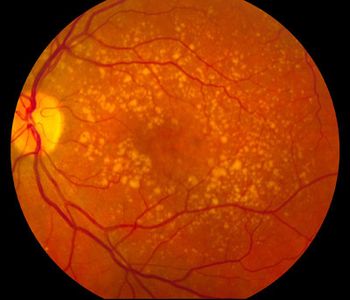
Investigators examined more than 600 fellow eyes in a secondary analysis to identify 2 imaging features and 1 genetic variant linked to conversion.
In a 15-year study, investigators found that moderate consumption of eggs can significantly reduce a patient’s risk of developing incident, late-stage age related-macular degeneration

After a Mendelian analysis, investigators found that the genetic variants examined explained 4.4% of the variance in refractive error in their patient sample.

The humanized single-chain antibody fragment could become the first of its kind approved for the common eye condition.
One month after ripasudil treatment, investigators saw the mean foveal thickness decrease significantly and noted decreases in intraocular pressure.
Study finds that patients who received as-needed injections saw a significant anatomical and functional improvement.
Investigators found that intravitreal administration of aflibercept might alter the corneal endothelium within 6 months of their first injection.

Retrospective study assesses real-world outcomes of treating patients with chronic DME with Iluvien implant.

The best way to diagnose diabetic macular edema is using optical coherence tomography, but it is costly.
The investigative solution improved patient metrics for itching, and could be considered for FDA submission later this year.
More than 80% of patients saw maintenance or improvement of BCVA, with a mean improvment of 7 letters or more, according to the ETDRS system.

Though it has been shown to not be harmful to patients at risk for the opitcal condition, calcium may still play a protective role in these patients.
Investigators from Johns Hopkins examined 16 RCTs to determine efficacy of three anti-VEGF agents for patients with neovascular age-related macular degeneration.

How soon could support vector machine learning be integrated into a retina specialist’s clinical practice?

While the diseases appear to be unrelated, there may be underlying factors that link them together.
Advertisement
Advertisement
Trending on HCPLive
1
The Case for Routine Kidney Screening, With Pranav Garimella, MBBS, MPH
2
Anti-Alpha-Gal Antibodies Block IgE Binding in Alpha-Gal Syndrome
3
Nearly 9 in 10 US Adults With CKD Don't Know They Have It, With Pranav Garimella
4
Weekly Insulin Efsitora Alfa (Onswik) Gains FDA approval for Type 2 Diabetes
5